
Authentication
1995 Detroit Tigers Alan Trammell
There’s nothing more exciting than a “barn find”.
Discovering something of incredible value hidden in plain sight is the stuff that novels are written about, movie plots are built upon, and TV shows like “Antiques Roadshow” depend on to get millions to tune in each week.
What follows is a story that stokes the hope that there are still treasures out there just waiting to be found.
Read on for the full story.
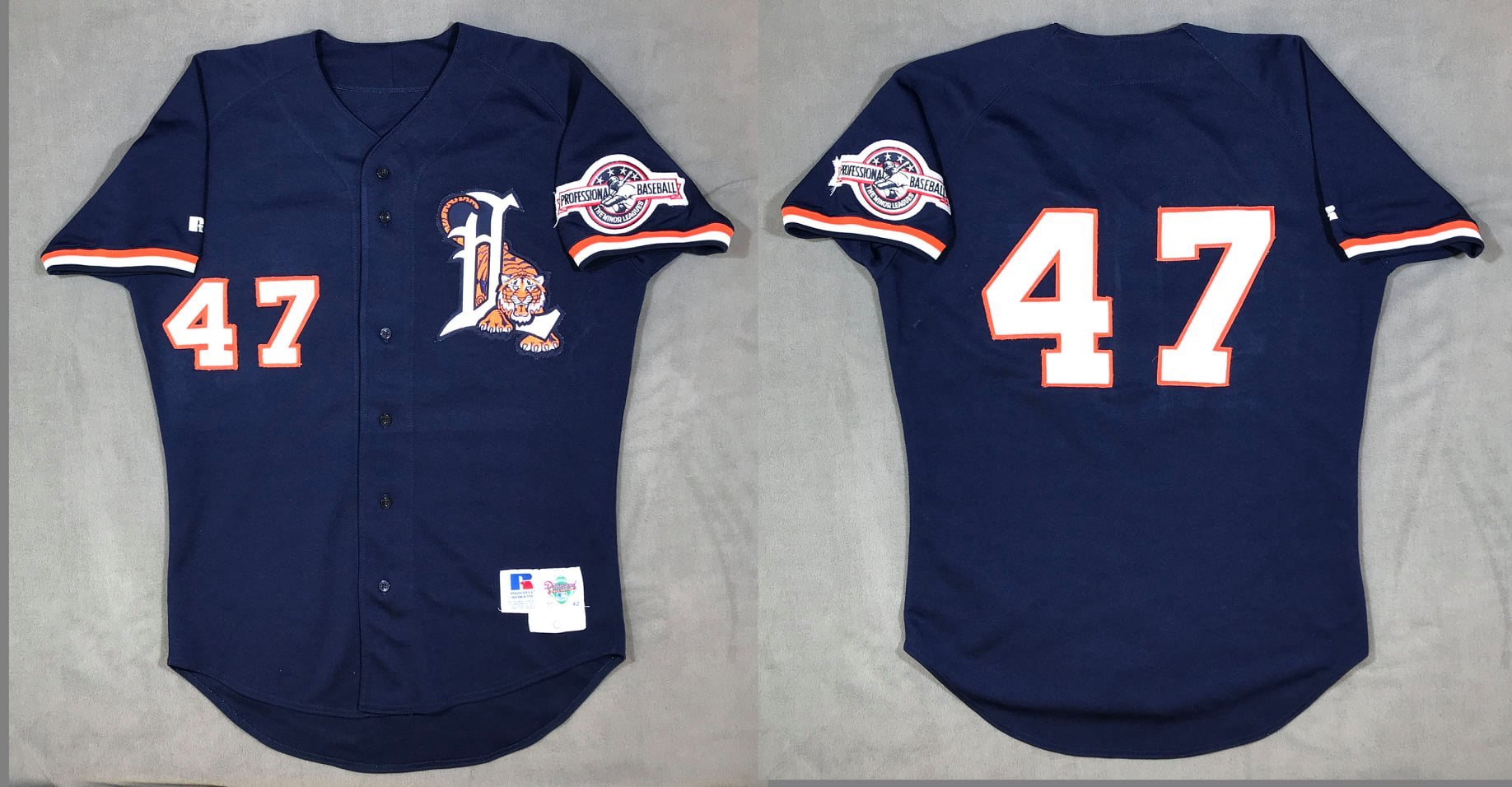
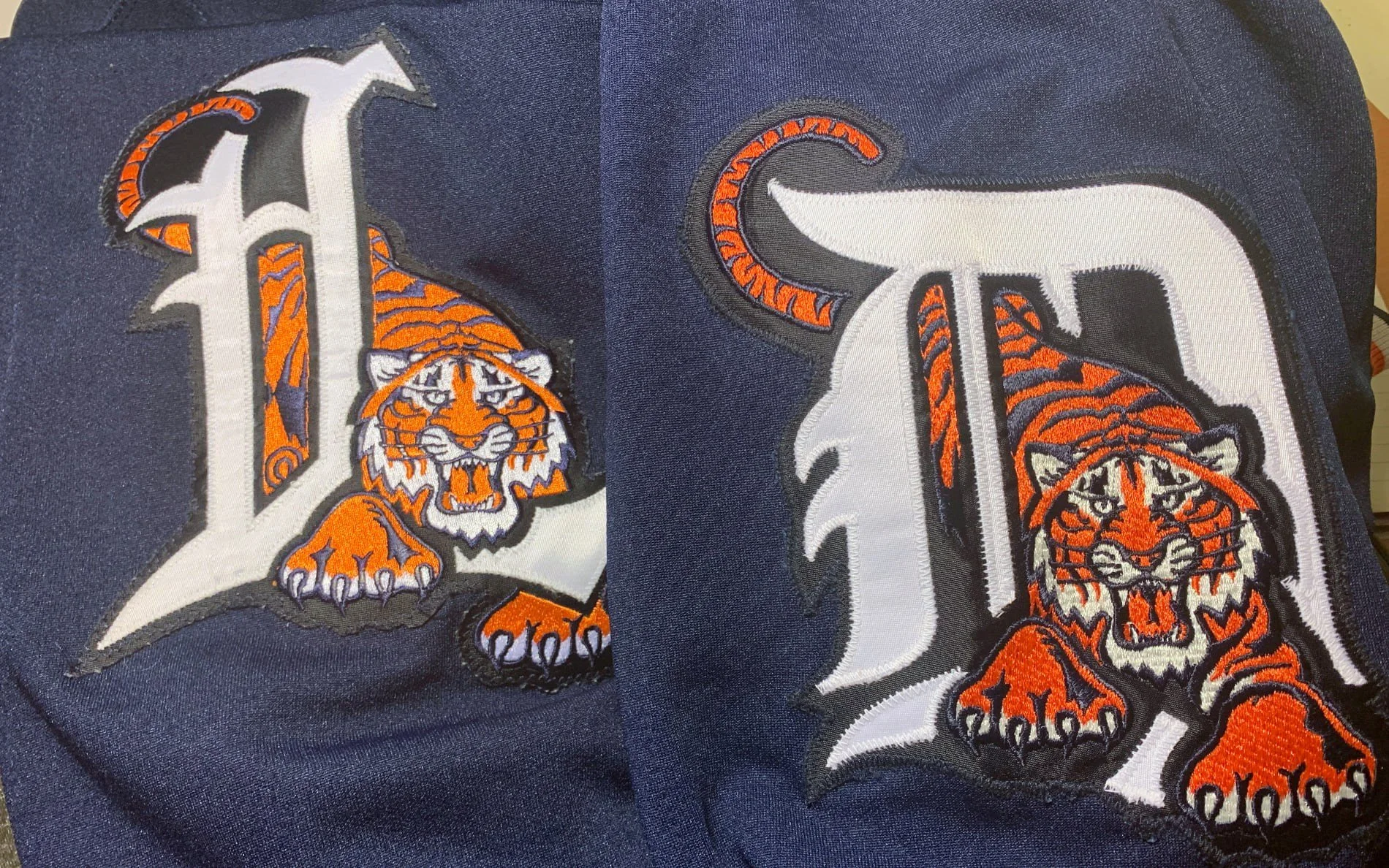
Collector Stephen K. was perusing jerseys for sale online when he stumbled on this Lakeland Tigers late 1990s jersey. It was generally the same style as the Tigers’ one-game 1995 alternate, except it had the Lakeland Tigers’ logo on the chest and smaller numbers on the back, along with a Minor League Baseball anniversary patch on the sleeve. But a faded tag, barely legible, was on the front below the Russell tag— which said it was a “Diamond Collection” jersey… Russell’s branding for authentic on-field MLB wear in the mid to late 90s. And while it’s true that a few minor league clubs wore jerseys with Diamond Collection tagging, most of these were repurposed MLB jerseys. He decided to take a gamble and bought it without asking too many questions. He figured that if it turned out to be a “nothing”, he could easily resell it the same way as he had purchased it.
He wondered— could it be?? It’s only been comparatively very recently that MLB teams have stopped sending their hand-me-downs to the minors. I’d wager some teams may still do it somewhere, but not until the 1990s did MLB wake up to the collectability of its game used uniforms,. Then, in a complete reversal suddenly nearly everything began to go right from the playing field to the game-used shop. I’ll suggest that they went a bit too far, judging from the number of Mother’s Day and other crazy event jerseys that were going unsold in teams shops and on MLB.com recent years.
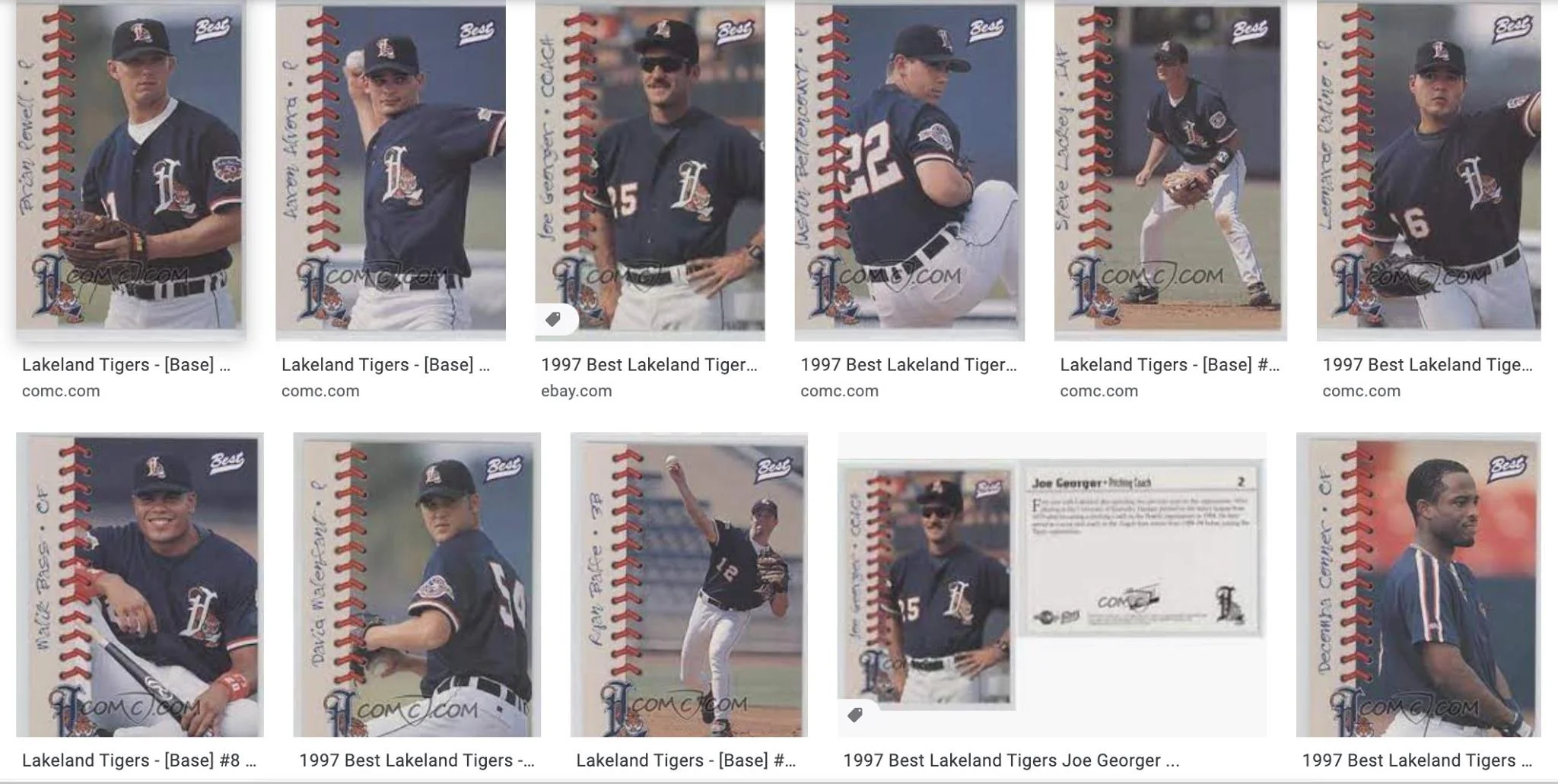
The Tigers were a team that wasted nothing, and at the start of 1990s they were still sending their used jerseys and pants to the minors to be used and used until they were worn out and discarded. Besides being the Spring Training home of the MLB club, Lakeland Florida is home to the Class A Lakeland Tigers (since 2007 known as the Flying Tigers). The Lakeland Tigers wore uniforms in the 1990s that had a stylized variant of the big club’s gothic logo, except theirs was a Gothic “L” instead of the Detroit D. Tigers’ home jerseys were often repurposed in this way for them to use.
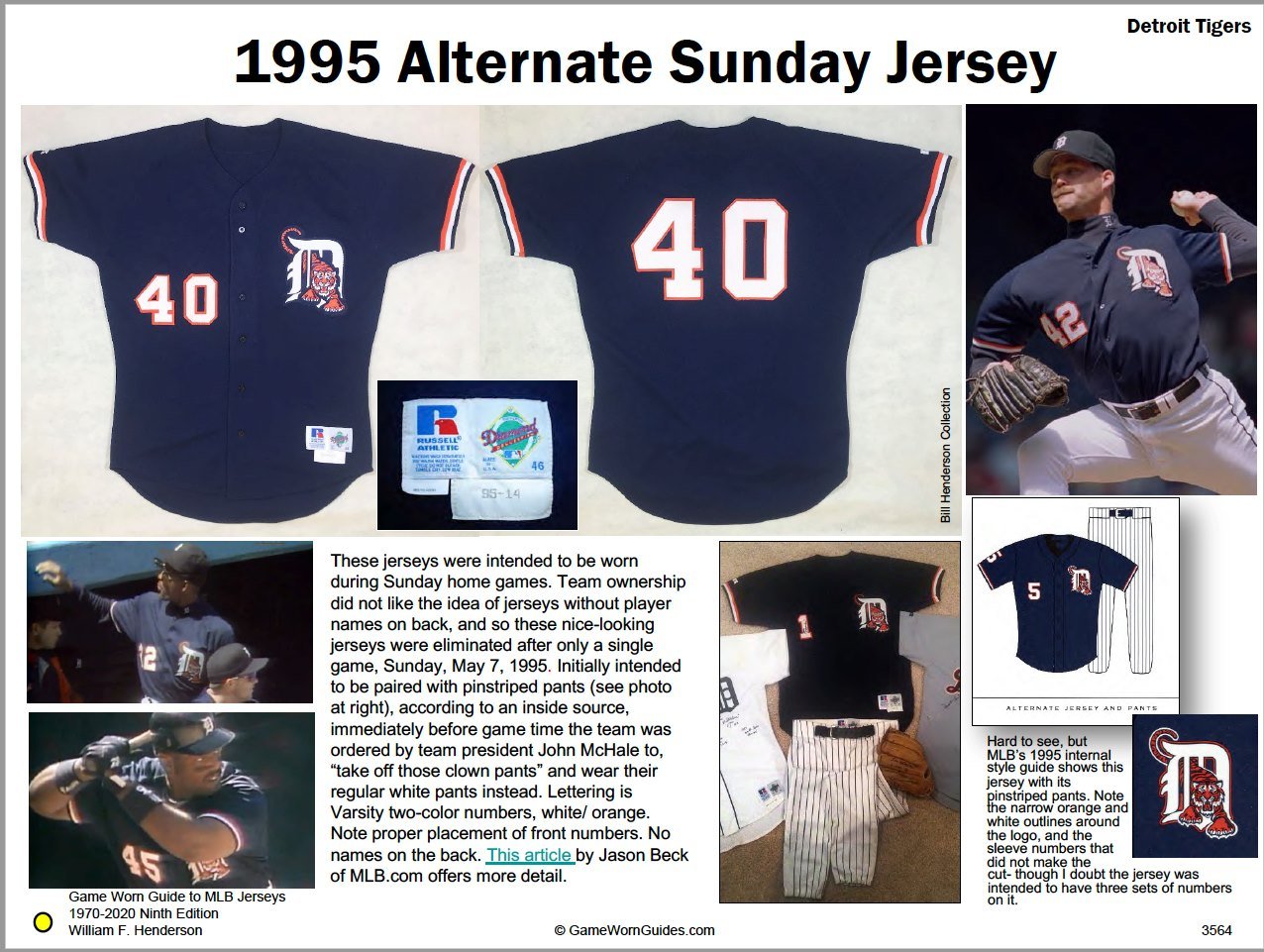
The year was 1995. Hardcore Tigers fans know the story of the “one-game” 1995 Navy Blue alternates. I cover them in some detail in my book, and that’s my #40 jersey of pitcher Jose Lira at the top. ********* Closely resembling the team’s blue batting practice jerseys, they featured the jumping tiger alternate logo on the left chest. Orange/white/navy knit trim ringed each sleeve end. Player numbers were on the right chest and the back, and no player names were used. They were planned to be paired with special pinstriped pants
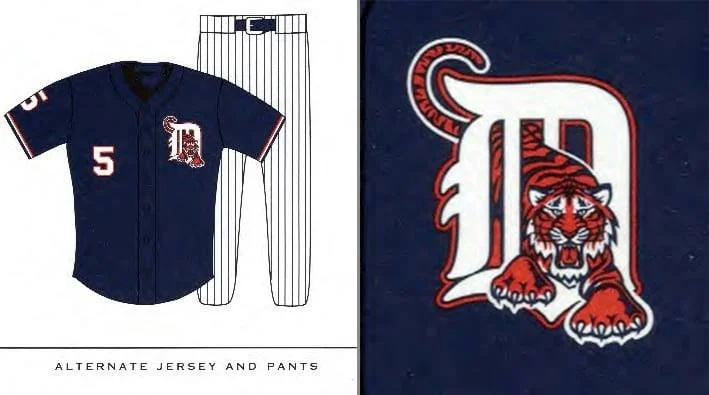
These special uniforms should truly have been a surprise to no one. Apparently the team went through the formal process to submit to the league and have approved an alternate uniform for use in 1995. It described everything, including the pants. These jerseys were intended to be worn during Sunday home games. ********* Hard to see, but MLB’s 1995 internal style guide shows this jersey with its pinstriped pants. Note the narrow orange and white outlines around the logo, and the sleeve numbers that did not make the cut- though I doubt the jersey was intended to have three sets of numbers on it.
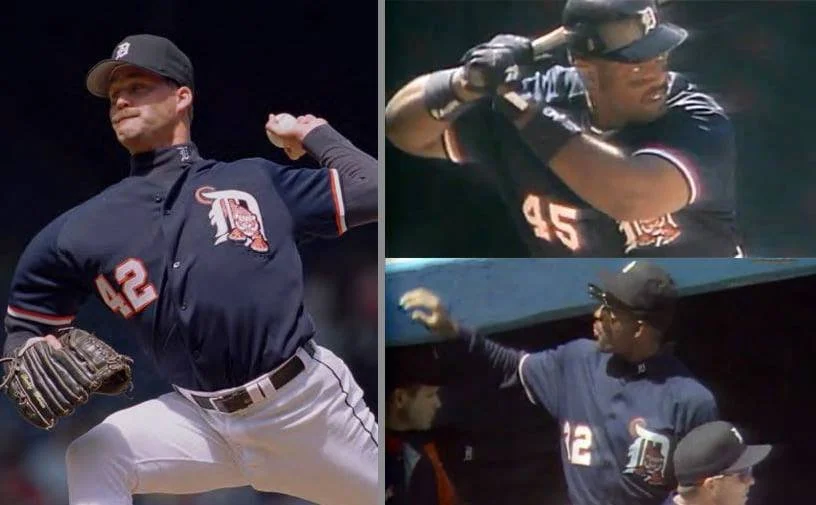
However, on May 7, 1995, the very day they were supposed to be worn the first time, the senior management was surprised and displeased. They did not like the look, or the idea of jerseys without player names on back, according to an inside source, immediately before game time the team was ordered by team president John McHale to,“take off those clown pants” and wear their regular white pants instead. ****** And so these nice-looking jerseys were eliminated after only a single game. Now, normally, Jim Schmakel ,clubhouse equipment manager since 1978, would personally mark the manufacturer locker tag on the front of each game worn jersey with his initials, and the letter “G” signifying that the item was game worn. But not these jerseys. They had created such an unpleasant stir that they disappeared without a trace.
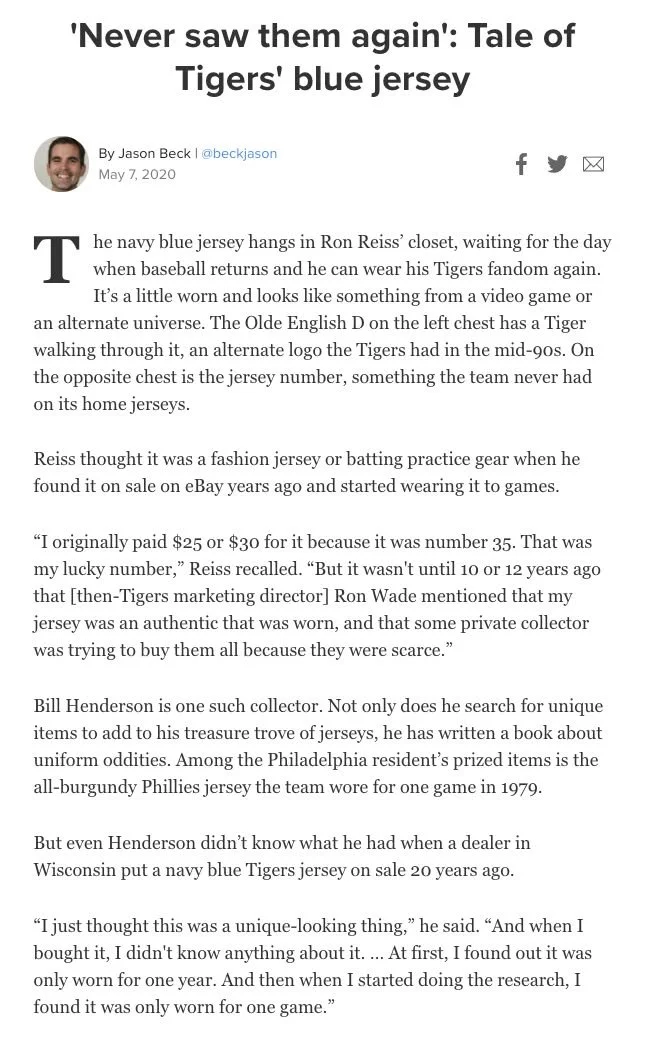
For their 25th anniversary, Baseball writer Jason Beck wrote a detailed story on these jerseys for which I was interviewed. You can read it here. https://www.mlb.com/news/featured/tigers-1995-blue-alternate-jerseys Excerpting from that article, Beck writes: “…Clubhouse manager Jim Schmakel, now in his 43rd year, saves every style of jersey the Tigers wear, from their traditional uniforms to special events to throwbacks. But he didn’t save the blue ones.“I never saw them again,” (club president) McHale said. “I don't know what happened. There didn't seem to be an enormous amount of affection to them.”“They might have burned them,” (TV analyst Jim) Price joked. What happened to them after that game is a mystery. But somehow, they ended up in the wild.”
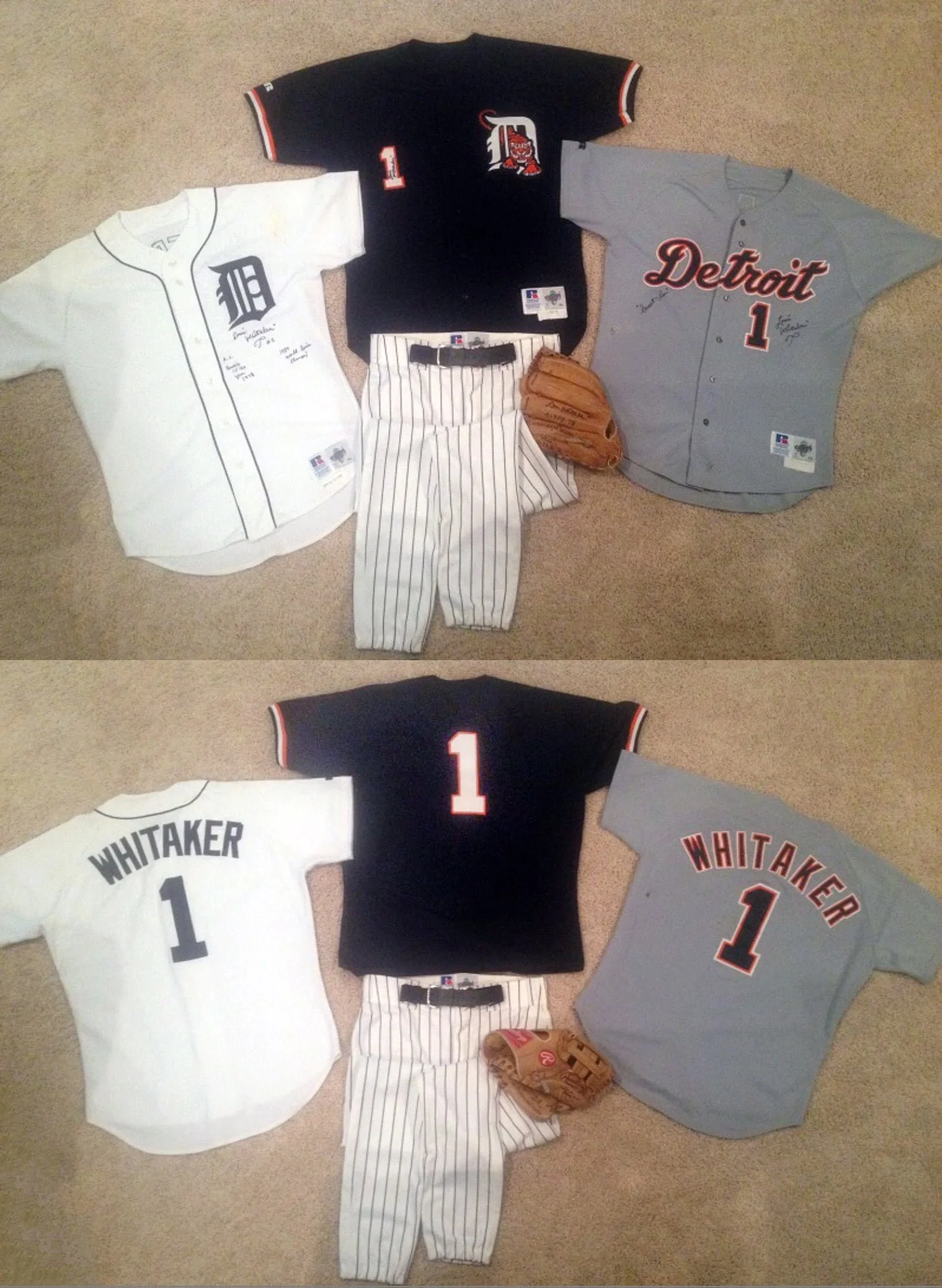
Well, I was just lucky when I ended up with one. I purchased it from used equipment dealer Murf Denny back around 1997, as an oddity. I had never seen one before and I know I don’t pay very much for it. But I can honestly say in all my years of searching, while the retail sale authentic version of this jersey shows up on eBay every so often, and I’ve lettered a handful for customers, I’ve probably only seen two offered at auction. Here, this one was offered as a set of three of Lou Whittaker’s 1995 uniforms.
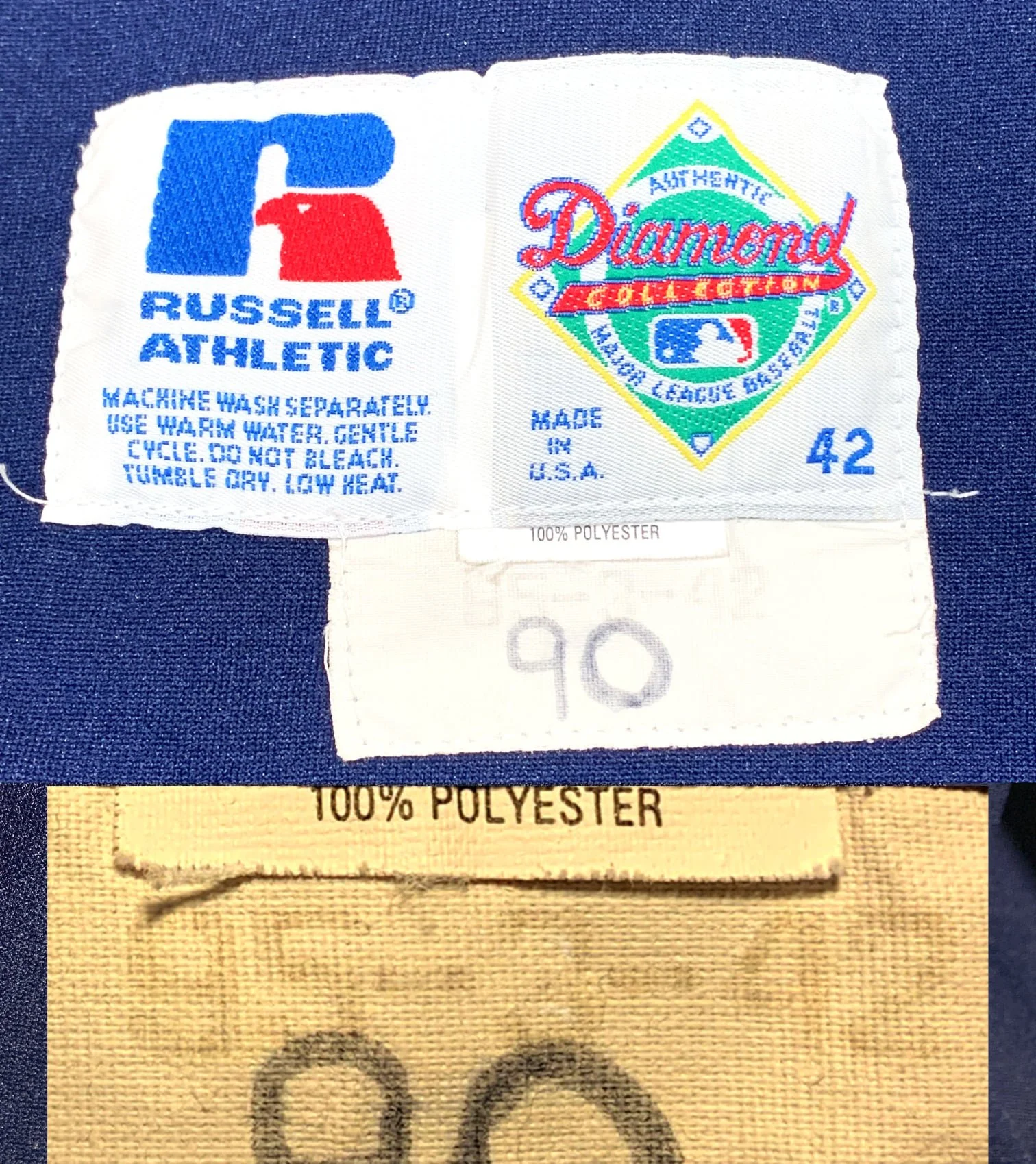
When he received it, he could see that the well-worn MLB tag had some printing on it, but it was so faded it was nearly impossible to make out. He sent it me and asked me to take a look at it. The first thing I did was to take a high resolution scan of the tagging and apply my Photoshop filters to it… and when I did, the writing popped right out. 95-3-42. That’s 1995, #3, size 42. As in #3 Alan Trammell… 20 years with the Tigers, 2017 Hall of Fame-Inductee Alan Trammell… are you kidding me?
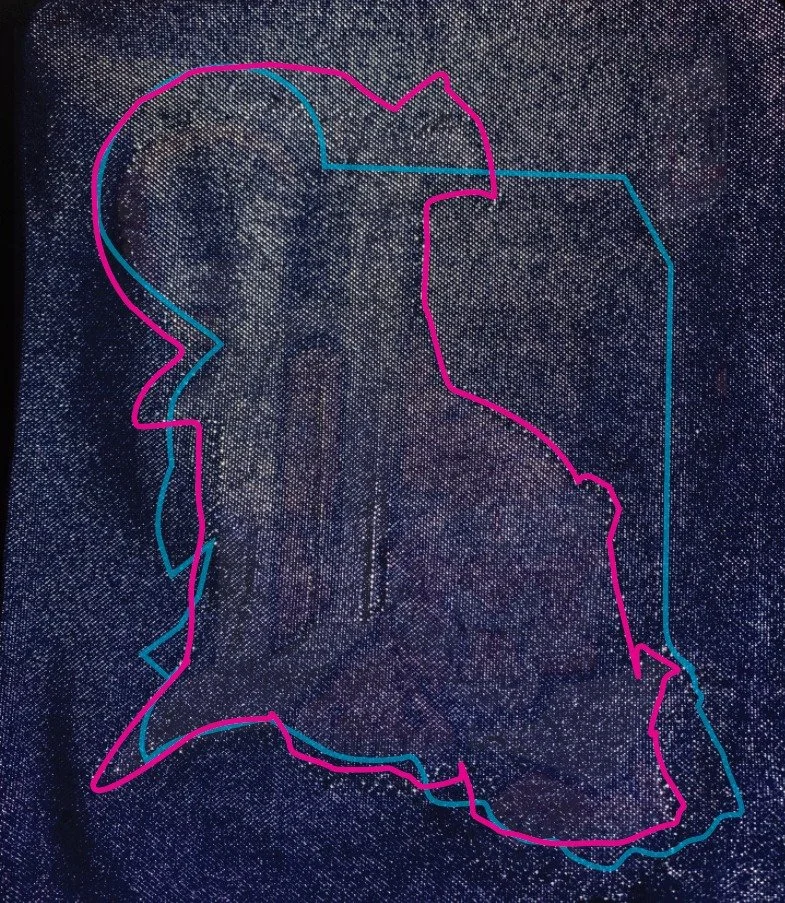
The next step was to look for evidence that this had indeed been a 1995 Tigers jersey that had been converted to minor league use. I put it on the light table and I could see a few marks where the front crest had been sewn, but I could not see any evidence of old numbers being there. And, that didn’t really surprise me. Fabric ghosts and shadows come to exist mostly from repeated washings and uniform wear in the sun, left behind adhesive, plus the addition of years of time. In this case, we knew that if this had indeed been a Tigers jersey it was only ever worn and washed once in its original configuration. And things sewn on then nearly immediately removed twenty five years ago were not bound to have left a lot of marks. The current logo and numbers had been on there for a quarter century and the jerseys showed evidence of being worn and washed perhaps hundreds of times. This was going to take some sleuthing. ****** Click here to see a video clip that shows the evidence of front team crest history! https://www.dropbox.com/scl/fi/p8zh0q8jrj2kmqjyuf69o/15-Screen-Recording-2020-12-30-at-8.16.31-PM.mov?rlkey=9lq0kiwgagfq8kicm5h7kdbbm&e=1&dl=0 ****** The first thing we needed to do after taking exacting photos of the jersey in its minor league configuration was to strip it completely, then photograph it again on the light table, superimposing images of the proposed original numbers and team crest onto it, and see if we could find any points of intersection: holes, pulls and fading that matched what once may have been there a quarter century ago. ****** I carefully removed the numbers, the crest, and the sleeve patch and went back to the light table. Taking a series of photographs with different exposures and applying my photoshop filters I was indeed able to clearly see edges of where the original (smaller) Tigers crest had been sewn on the left front. I’ve highlighted the two outlines here in pink and blue. Stephen found a retail version of this jersey and sacrificed it for the restoration. I carefully removed the front “D” from the donor noting how tightly was stitched in place, the edge bound with a satin embroidery stitch. This method of attachment left ample pinholes to show where it came off. It neatly covered the original outline on the Lakeland jersey like the missing piece of a jigsaw puzzle.
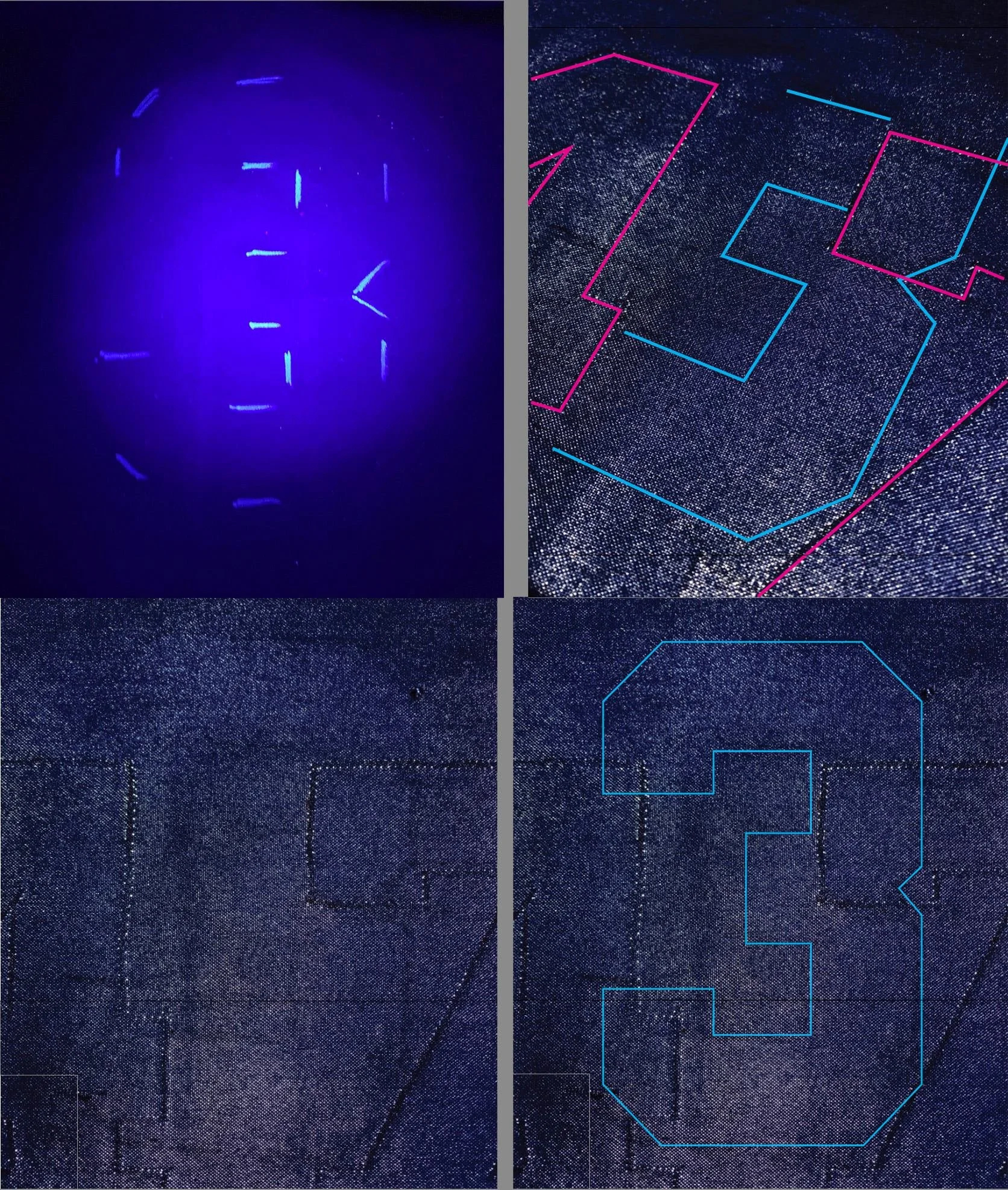
The numbers were much more difficult to see, looking straight on I could see nothing clearly, but I found if I tipped the light table at a very sharp angle, I could see faint lines of where fabric threads had been compressed closer together with sewing machine stitching. I used a black-light pen to lightly mark those lines in the spots where I saw them, and behold— a pattern began to emerge. The number 3, centered on the jersey back, and in the proper size to match the team template! I did the same on the front, and there had been a 3 there as well, too. We had a positive match!
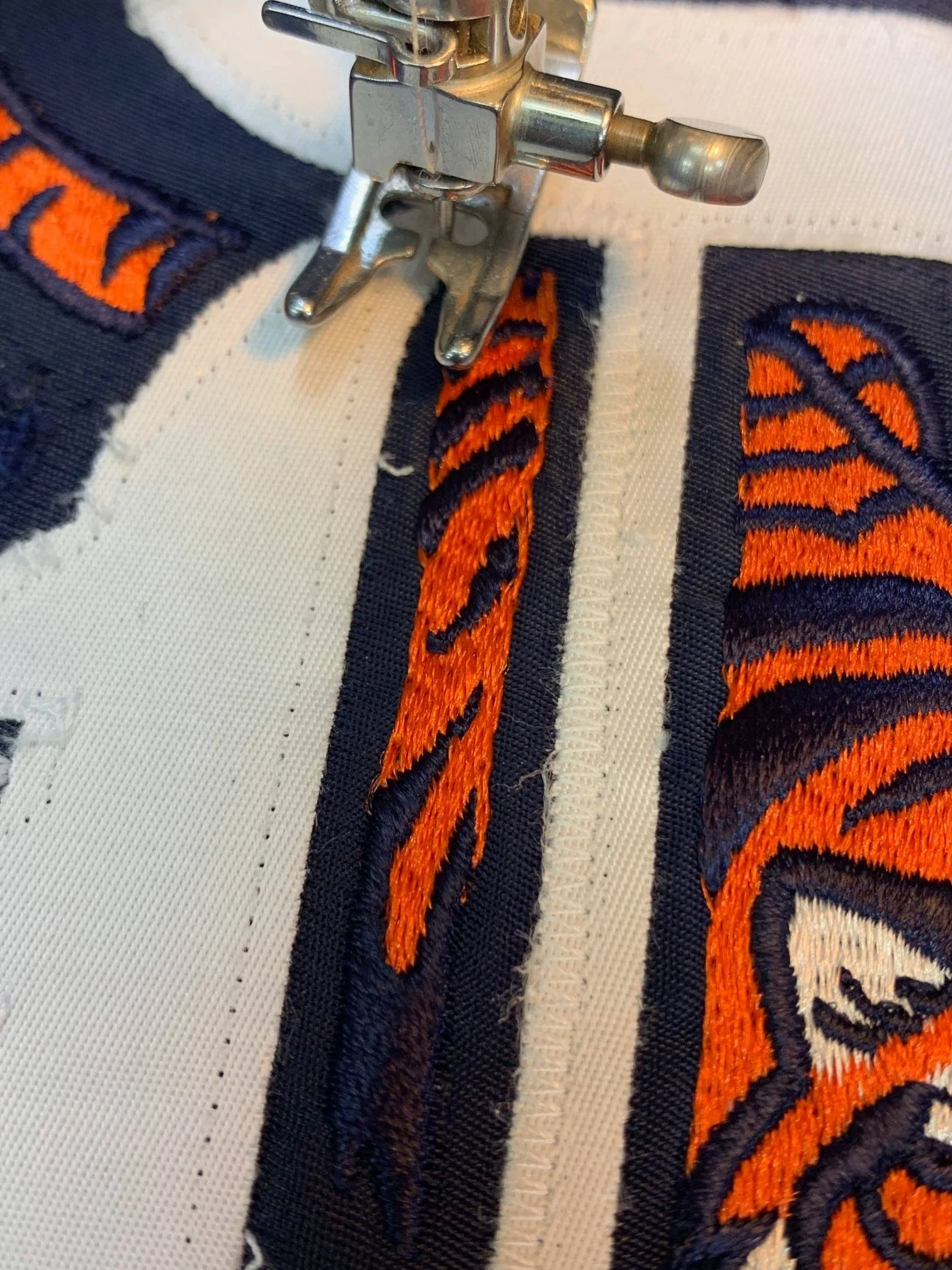
Using my own game jersey as a positive match for the sizes of the numbers back and front, I cut new ones. I stitched everything onto the historic jersey using the light table for placement.
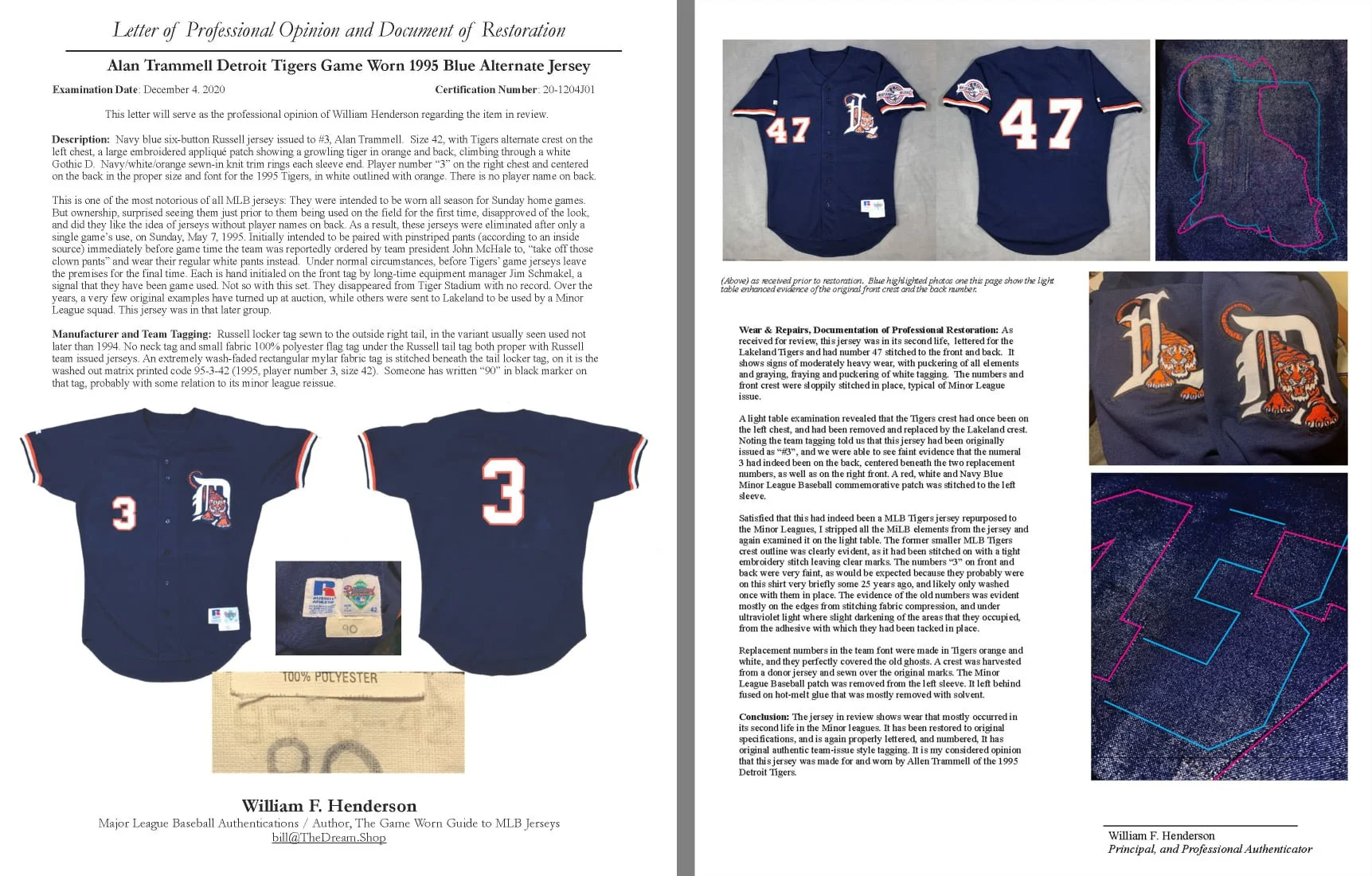
I fully documented the restoration and wrote up the authentication so that they next person looking at this on a light table would understand why there were ghosts of a 47 and a different team crest on the front. Without this step, the value of this historic jersey would possibly be lost. After all, who would believe that this wasn’t simply a Lakeland Tigers jersey converted to look like one belonging to a Hall of Fame player?
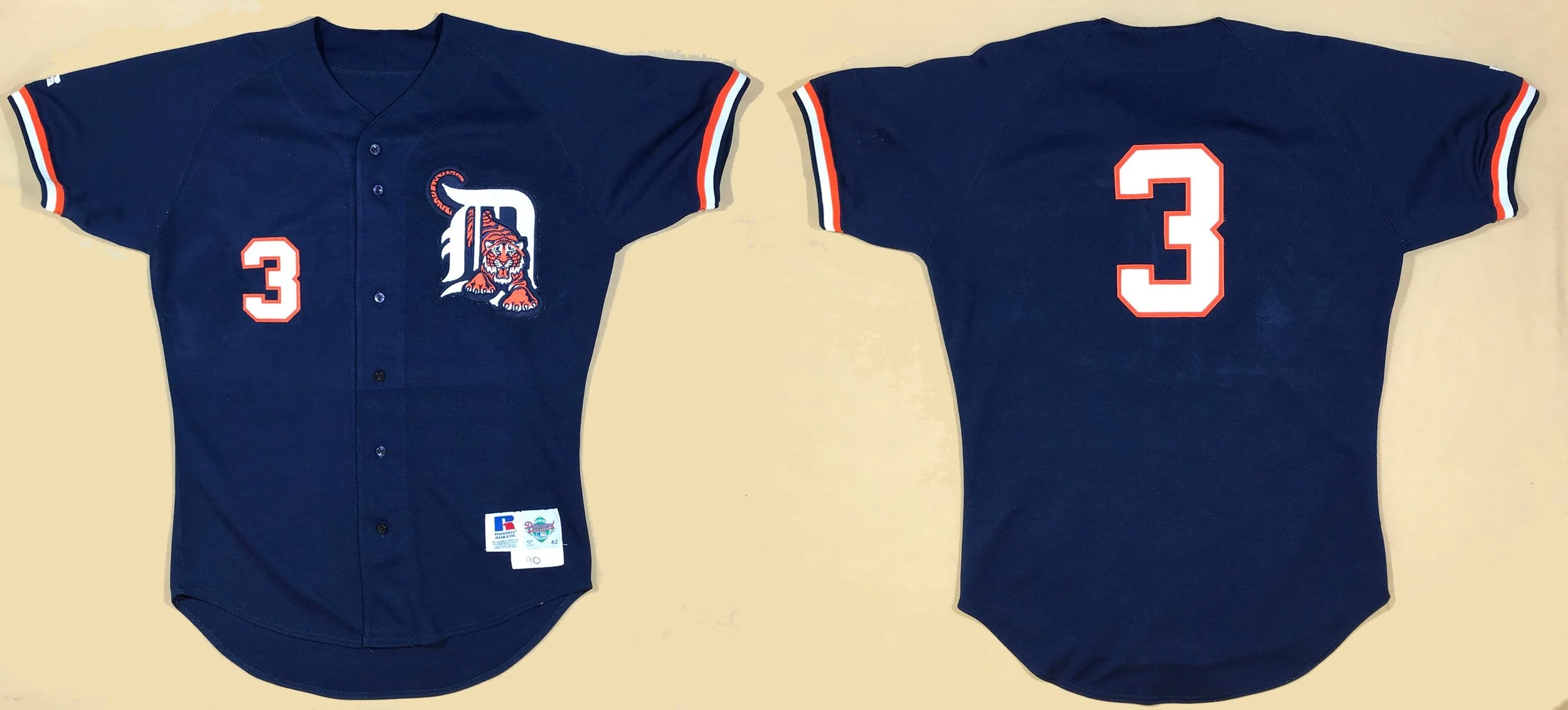
Here it is completed- restored back to original. Stephen is justifiably pleased with his barn-find prize. And I am satisfied to have been able to help answer a question about “what happened to these Tigers jerseys after all?” So, keep your eyes open for diamonds in the rough like this one. Many minor league jerseys from the 1990s and before started life as MLB jerseys. On to the next project!