
Restoration
1973 Mets Jerry Koosman
Road Jersey
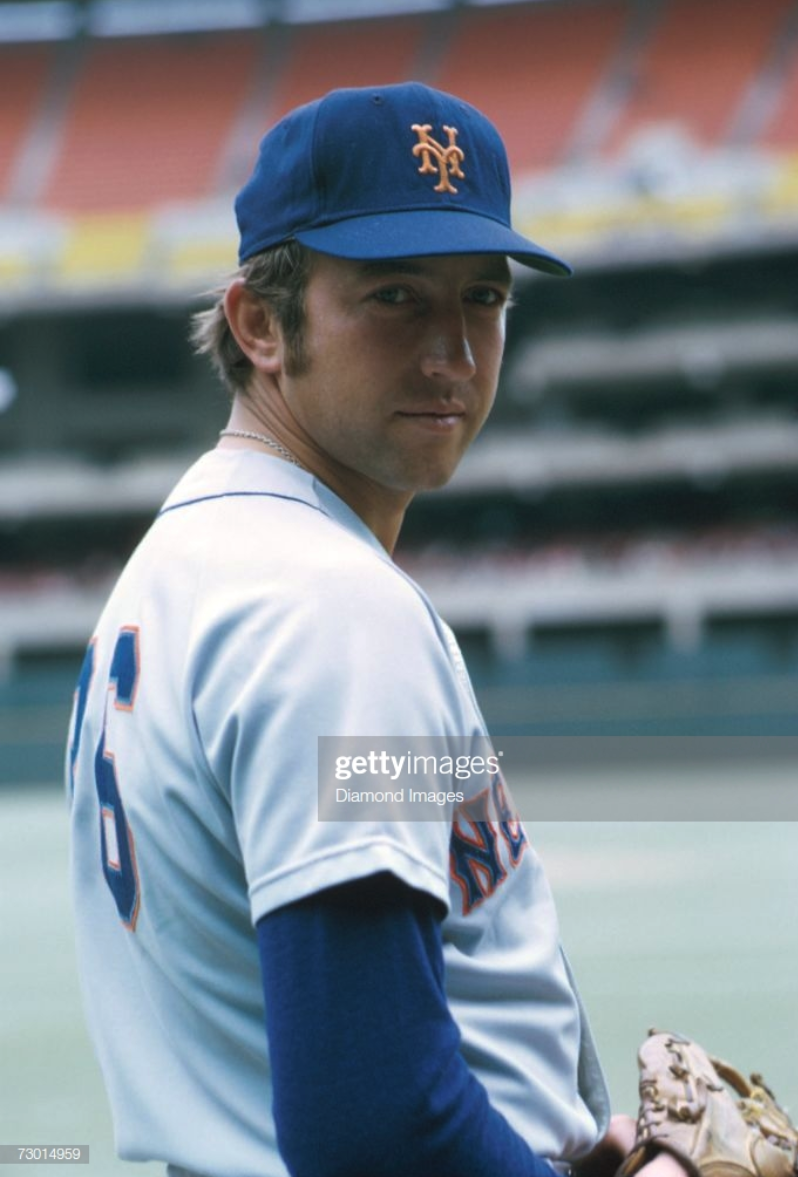
Jerry Koosman had an illustrious twenty-year career, much of it with the Mets. He is shown here in 1973 in his road uniform (I'd recognize those seats in Philadelphia's Veterans' Stadium anyplace!) It is this very jersey that has been sent to me by Mets collector Andrew L. asking for it to be restored to original so it could be displayed at Citi Field during the 2020 season.

The Mets, like most other clubs in the 1970s-80s, sent their used uniforms to the minor leagues to be reused. The original appearance of Koosman's road jersey was the arched fancy "New York" at left. How it appeared when I received it is at right; while the back numbers had been left alone, the front had been completely changed. (Click to enlarge)
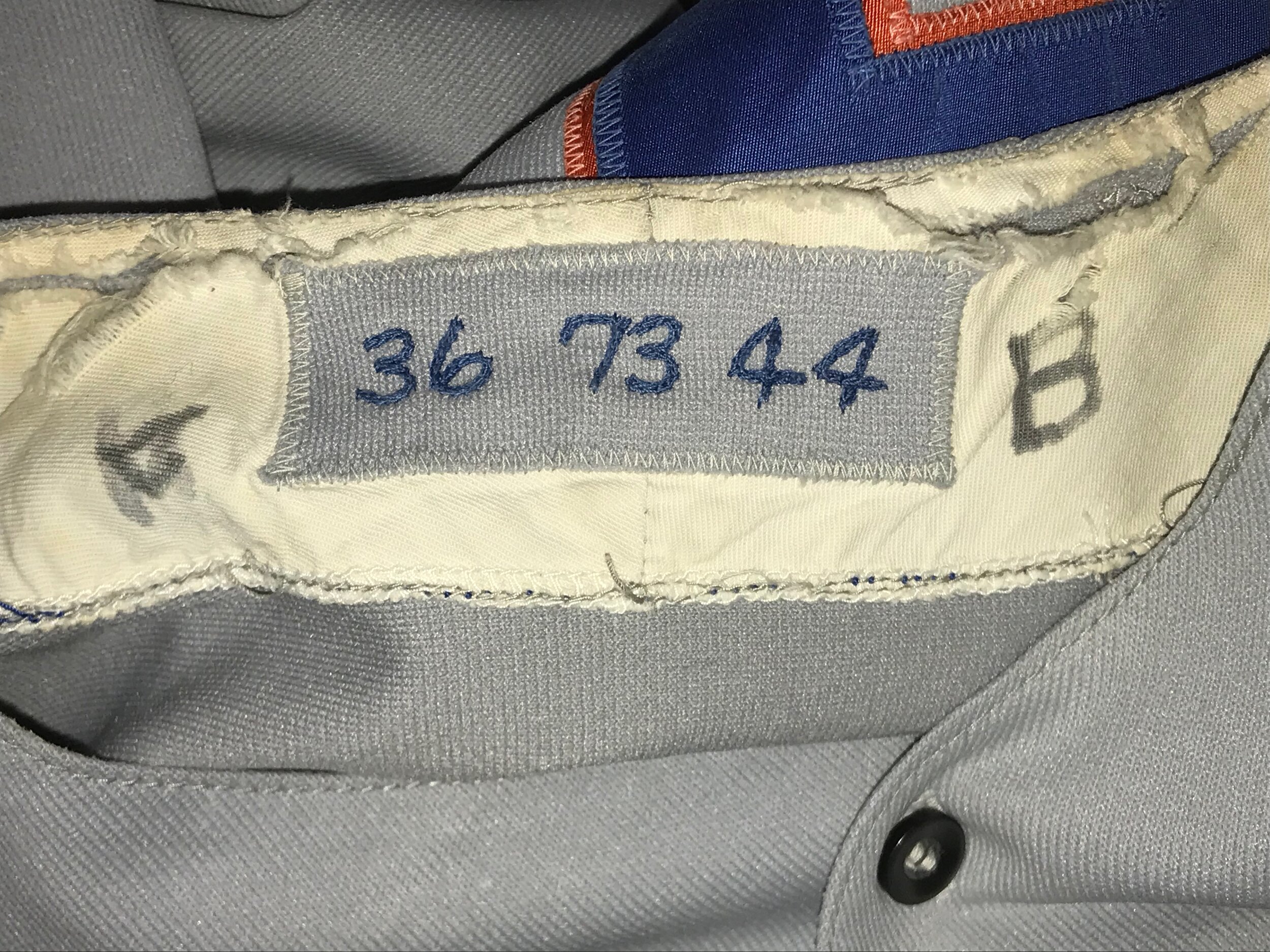
The neck tag tells the story: player number 36, 1973 season, size 44. The magic marker scrawl on either side must have had some later, minor league significance.
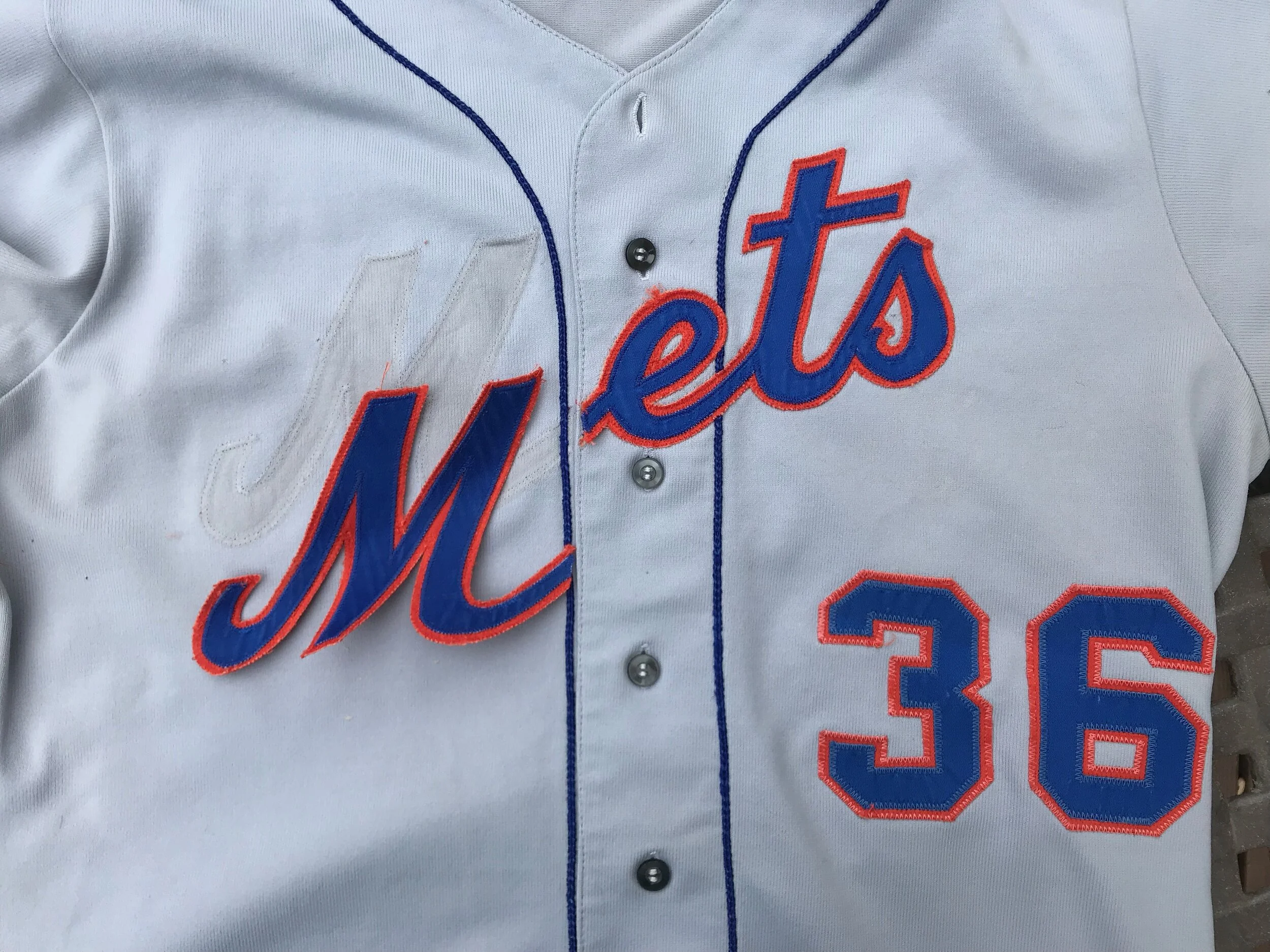
Like most Mets jerseys of the era, once their While the Mets' farm team might use the parent club's name, displaying the MLB city name on the front of team jerseys wouldn't do. Therefore, it was very common for the original "New York" to be stripped from the front and replaced with the home script. Here, I have begin the removal of the replacement lettering to begin the restoration.
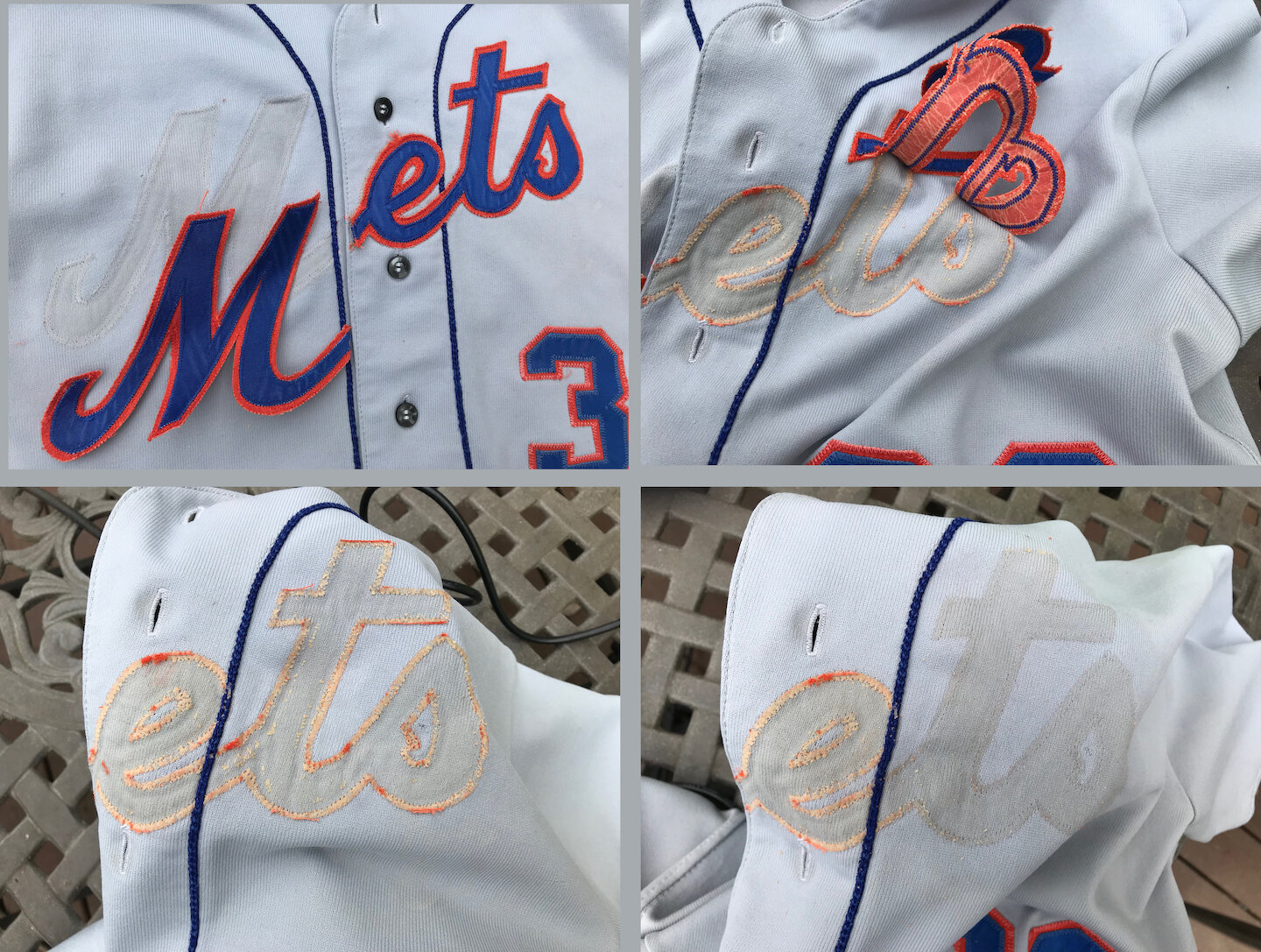
There is heavy glue and some dye transfer to the fabric below. In photo four, you can see how we used an intense stream of dry cleaning fluid from a high pressure gun to remove nearly all of the residue.
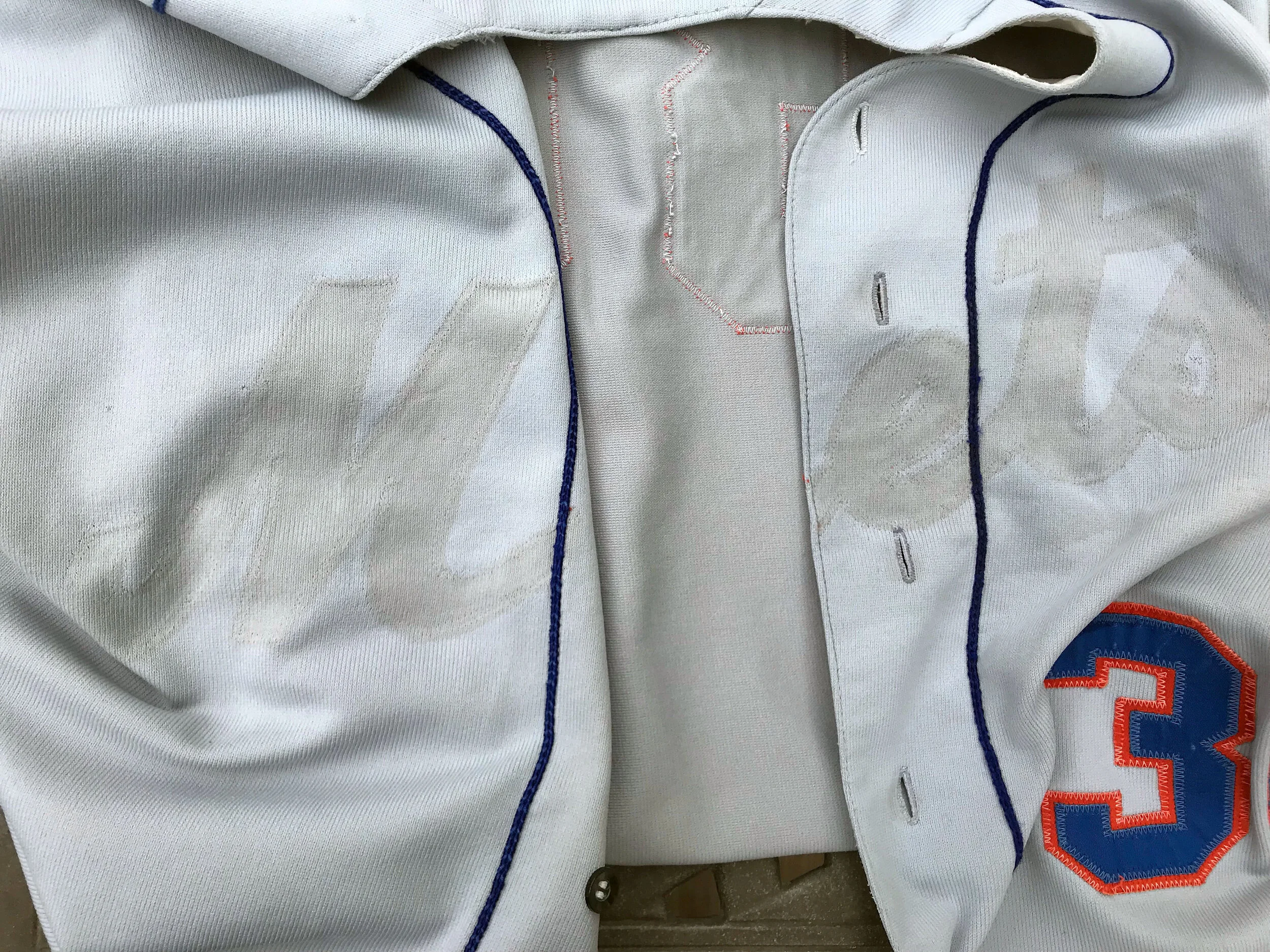
With all of the lettering removed, we have an issue: the ghosts of the old lettering are quite visible. Note that this is not a stain; rather all of the rest of the fabric has faded from use in the bright sunlight over many years. Look carefully, and you will see that the color of the fabric underneath the "Mets" wordmark is the same as the unfaded inside of the jersey!

We need to recreate the 1973 vintage wordmark, so we pulled a scan of a 1971 Mets road jersey from our archives. The top photo shows the exact copying of the design; the one on the bottom is softened and repaired to remove some of the distortion of the scanned art. (Click to enlarge)
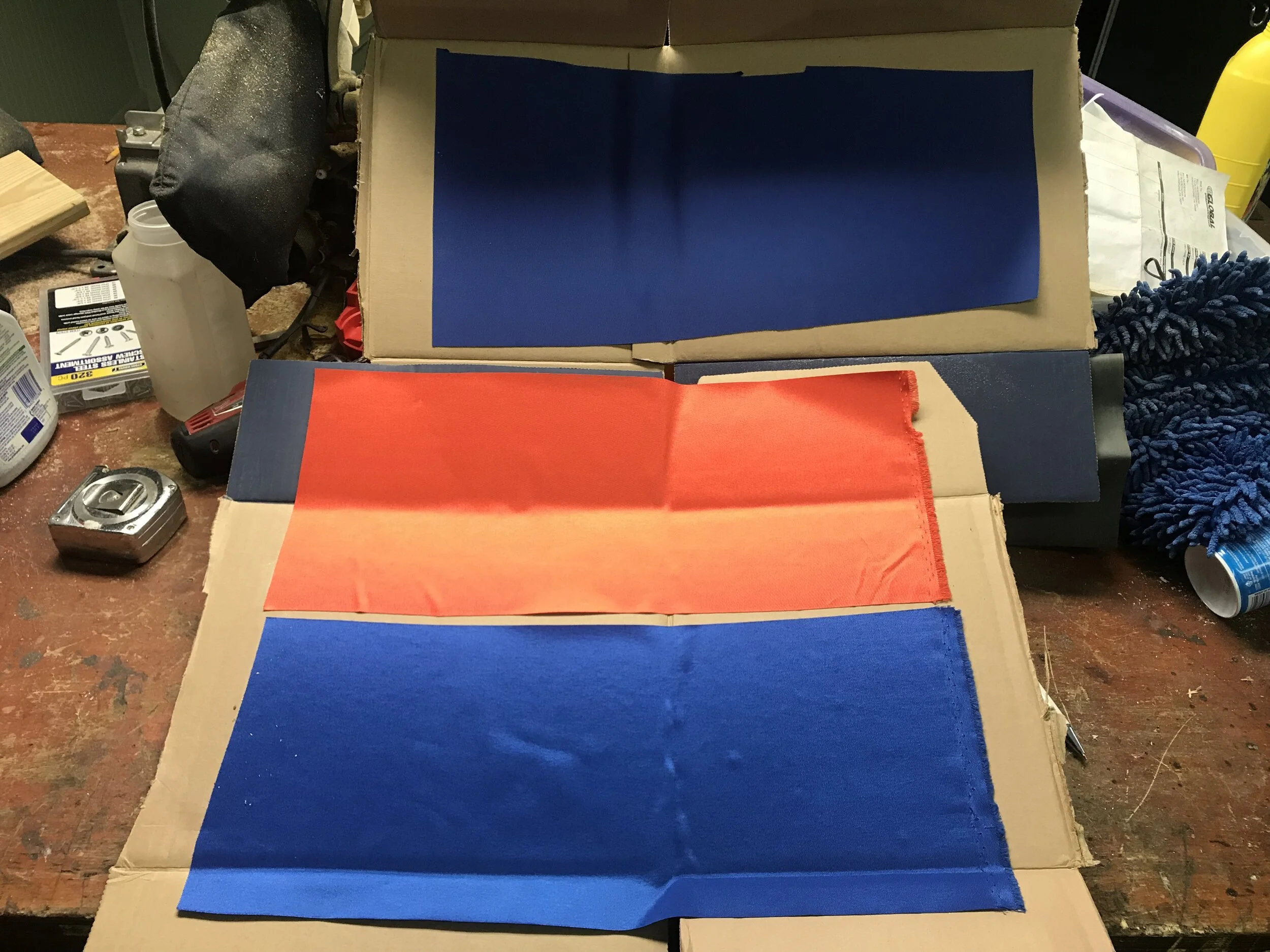
The twill lettering of the old jersey is about as worn as any I have seen. The colors are muted by the complete lack of sheen that can only come from being used daily in the hot sun and washed hundreds of times. To simulate this wear, I will distress the fabric by sandblasting it with baking soda, then dyeing (if necessary) in any one of my home-brewed solutions.
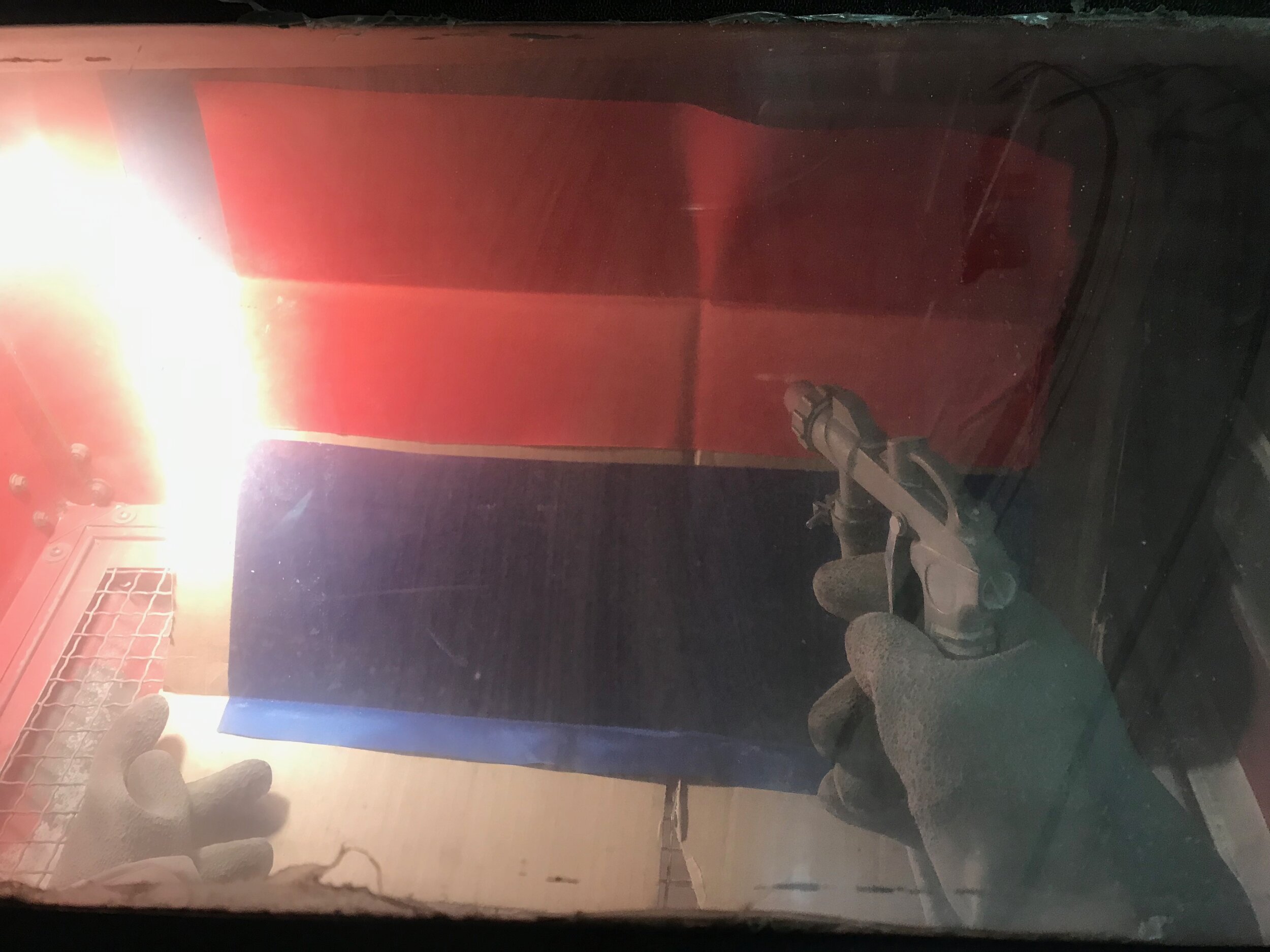
Here, we sandblast the twill inside the blasting cabinet. Baking soda shot at 150 PSI can remove paint from a fender, so imagine what it does to this fabric. The fact that it simply dulls the sheen versus blasting right through it is testament to how strong tackle twill is!
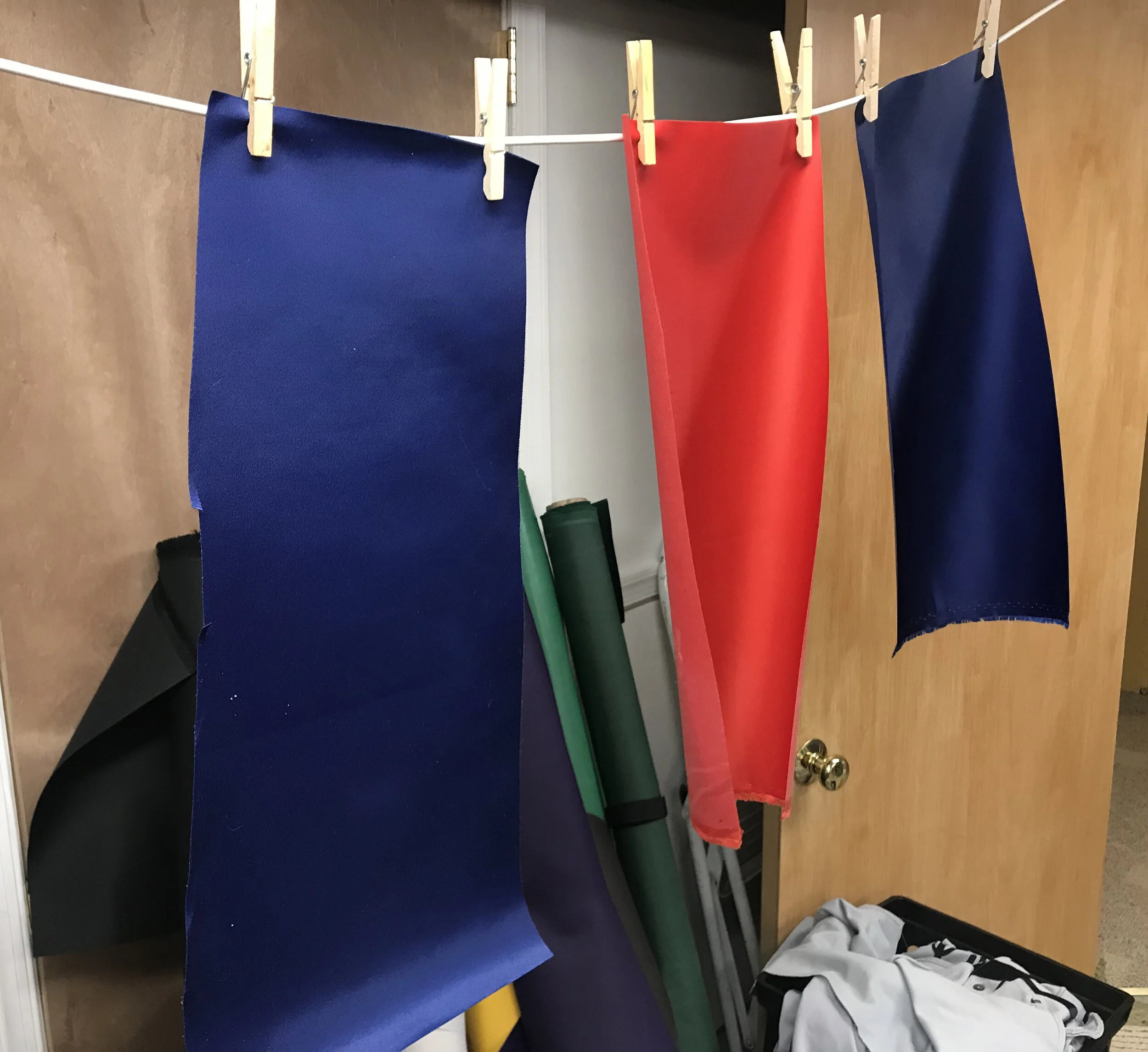
After sandblasting, we wash and dry the fabric, then dye it to change the shade slightly (if needed.) Notice how I prepared two different shades of blue -- I will choose the one that more closely matches the original, aged lettering, once these have dried.
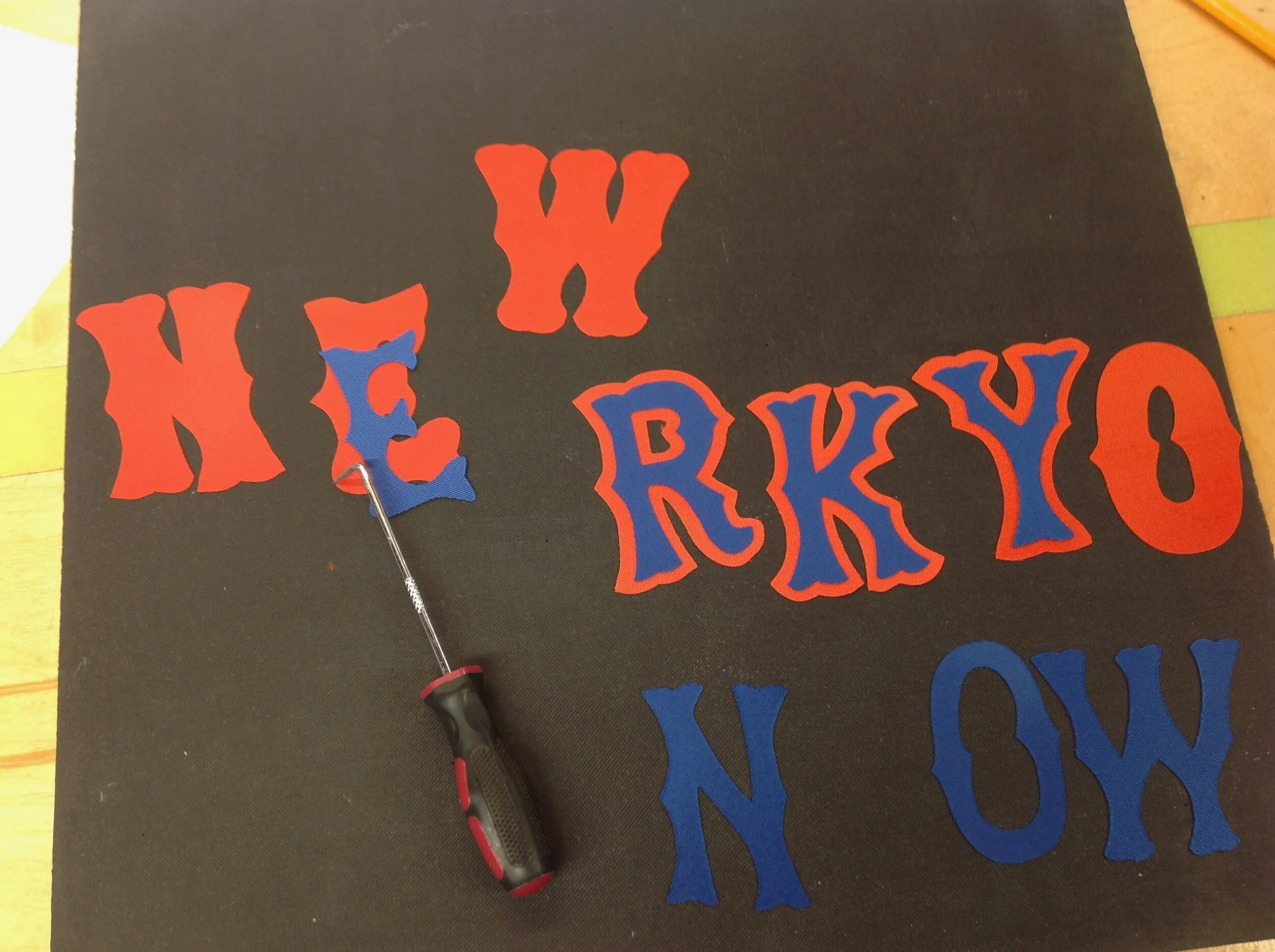
Using the computer-driven cutter, we cut the letters one color at a time, align by hand and then heat press them together.
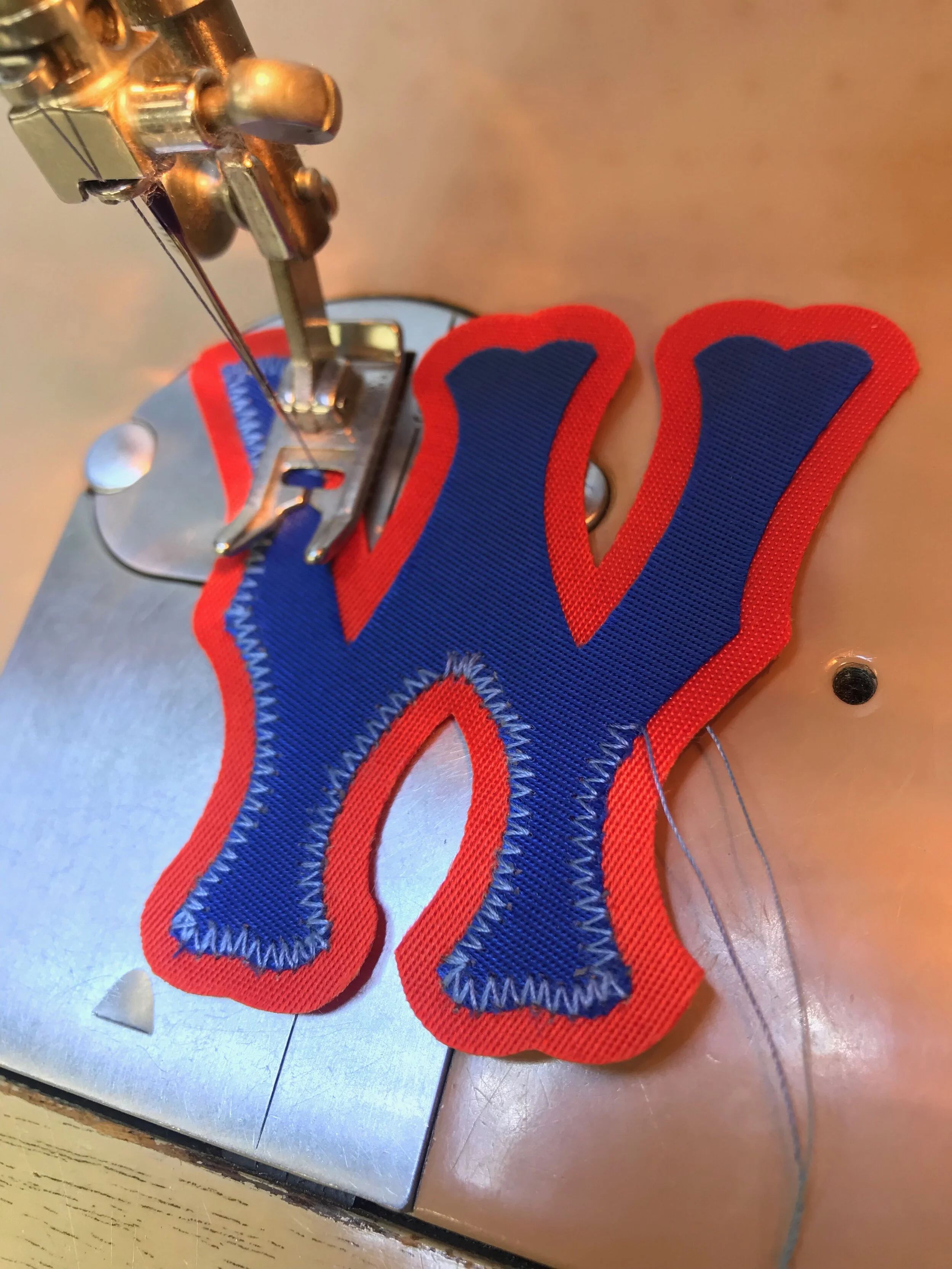
To match the bleached thread that secures the adjacent player numbers, I use new thread that color-matches the original. This bleached-blue thread is from my grandmother's thread box and is probably sixty years old.
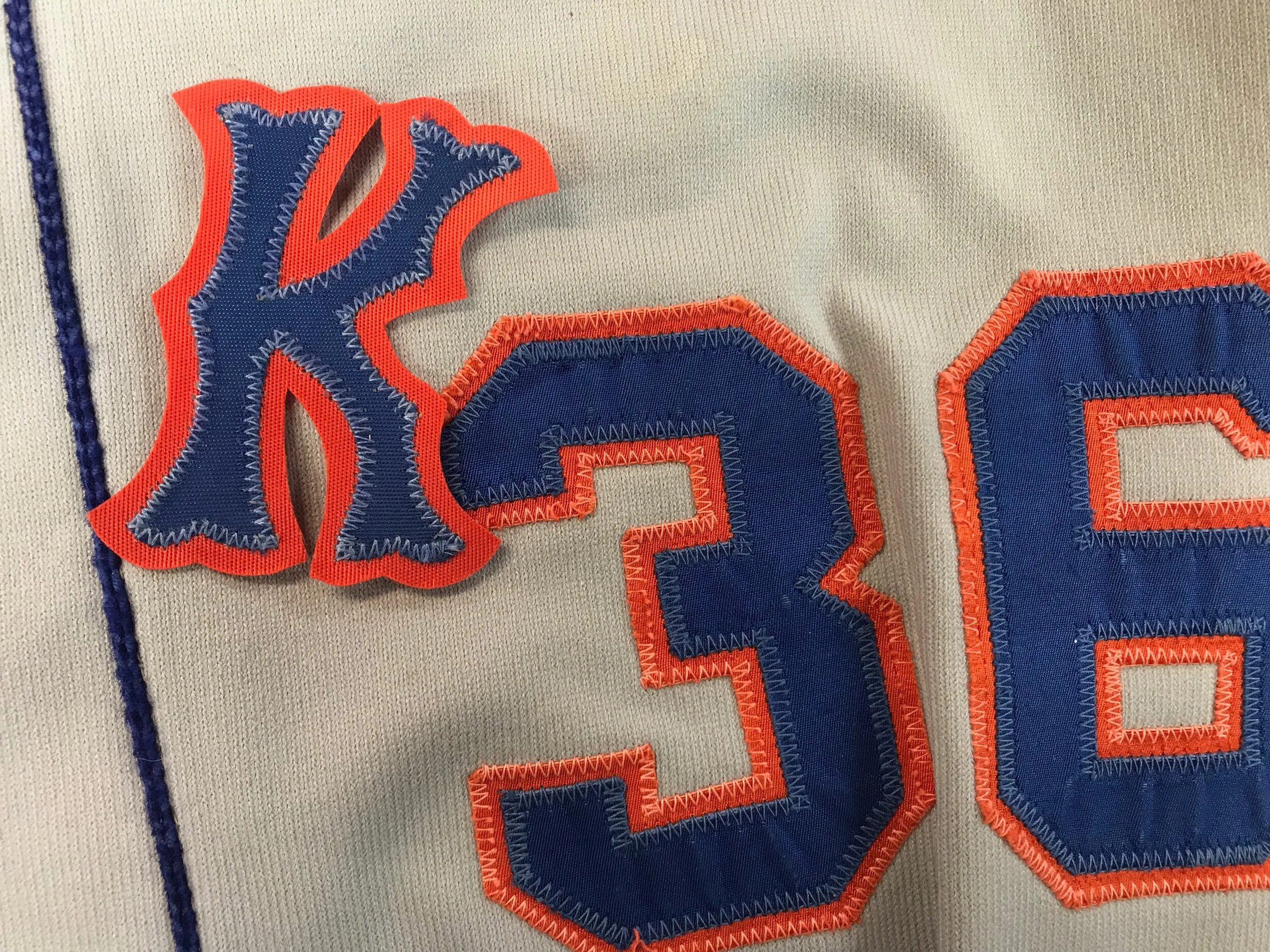
Compare the new (the K) with the old (the 36.)

Now, we can apply the lettering. I placed the actual jersey on the light table to make a template, which shows me ghosts of where the original lettering was sewn. This way, there is no guesswork when applying the replacement lettering. (Click to enlarge)

Here is the old stitching next to the new. I am very pleased with the match of the fabric colors, lack of sheen and the thread / stitching match. The best compliment is that you'd never notice the difference between new and old. Had I used new, shiny fabric and dark thread, the restoration would have stuck out. (Click to enlarge)
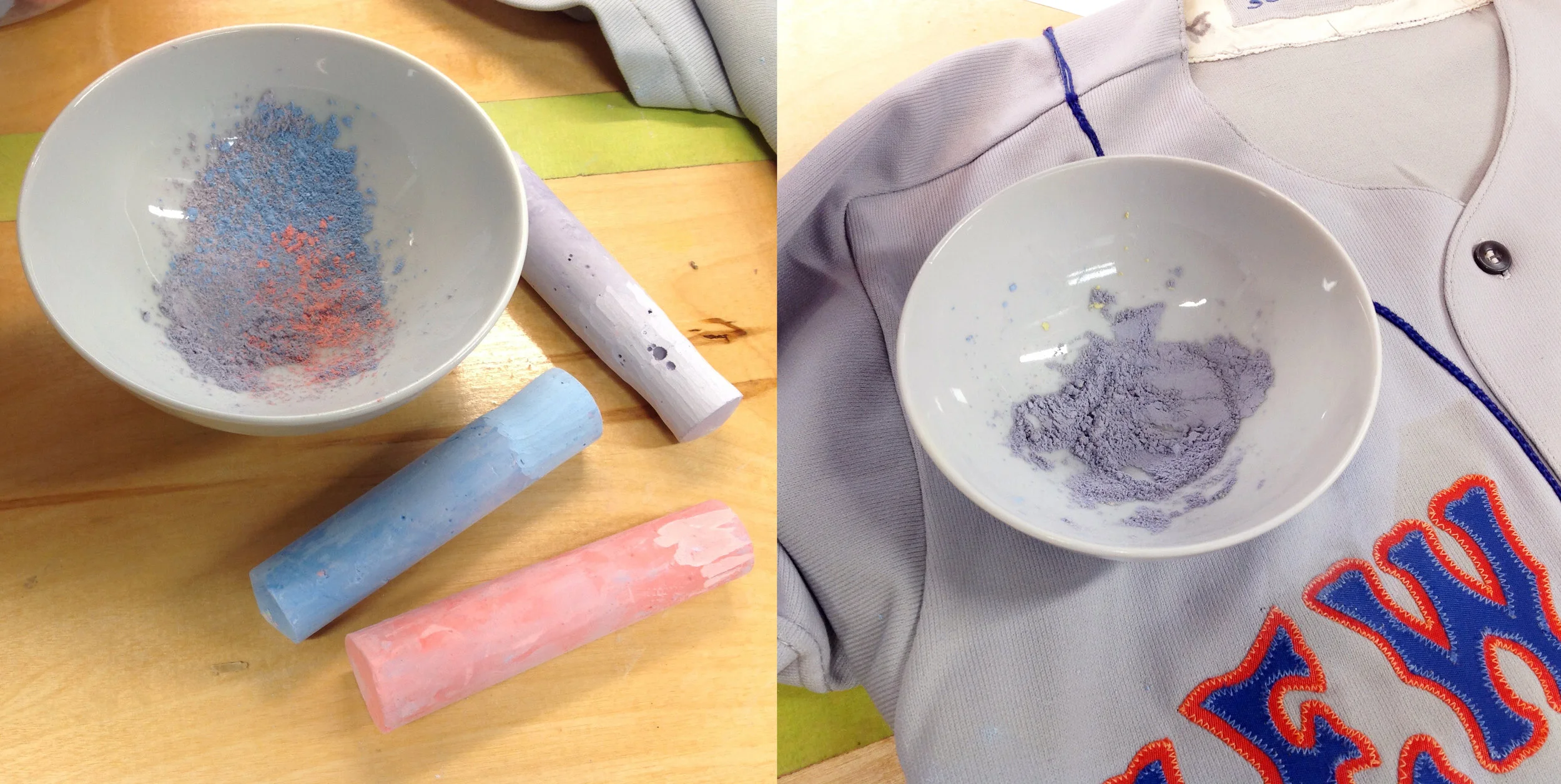
Now we want to deal with the noticeable sun-bleaching discoloration. Since this jersey is destined for museum display and will not be worn, there is a method we can use. Here's a museum trick designed to enhance the display. Using ordinary sidewalk chalk, I grind and mix purple, blue, red and yellow chalk dust until I have perfectly matched the color of the bleached jersey fabric.
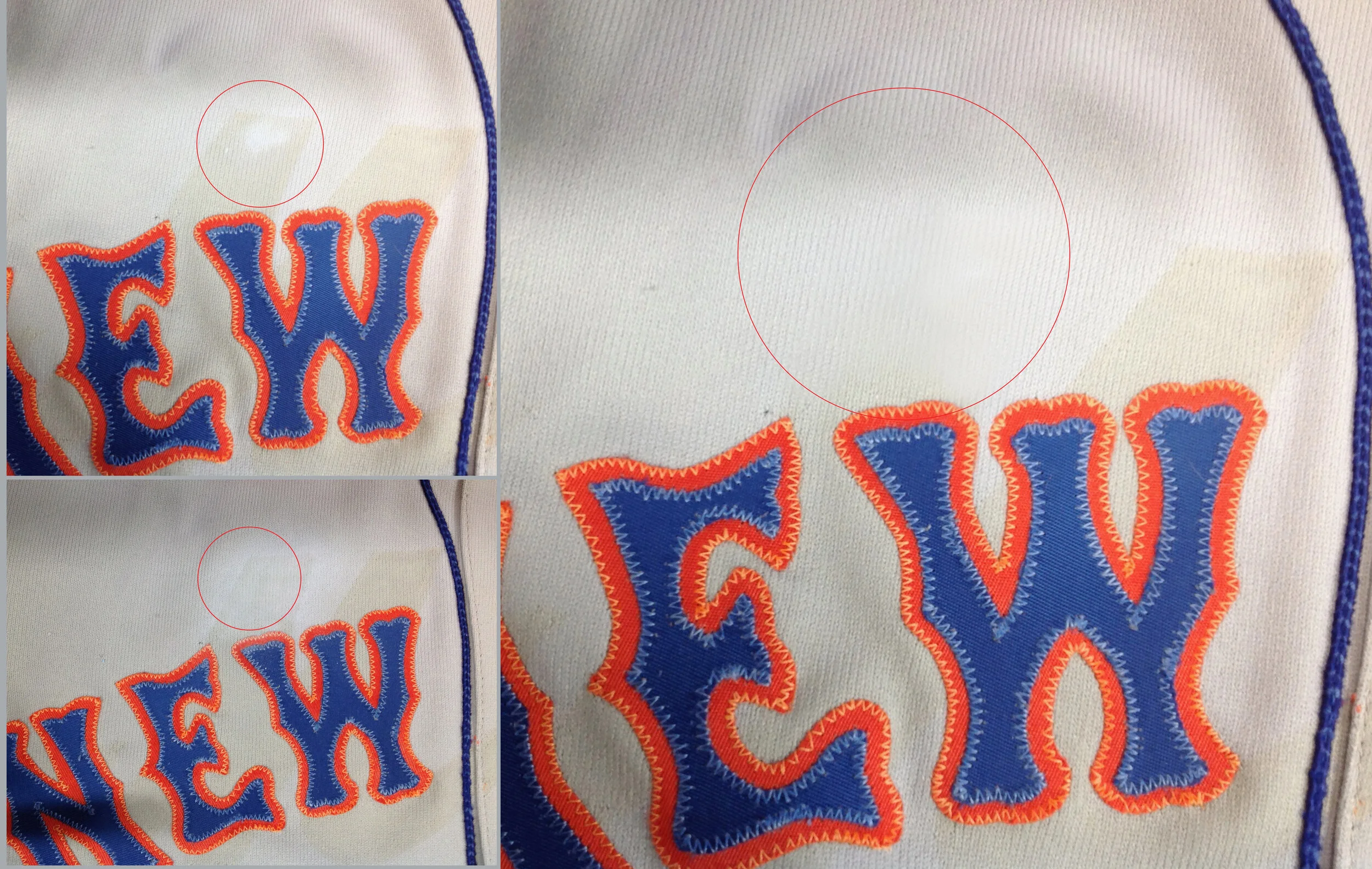
Using a blush-application brush, we carefully daub the colored chalk only onto the dark area of the fabric. While this is certainly not a permanent repair, it will make the museum display more striking. And truthfully, leaving some evidence of the old shadow is not undesirable; every jersey has a story to tell, and this one's trip to the minors is a part of its history. I put the powder in a jar and sent it to the collector with his completed jersey.

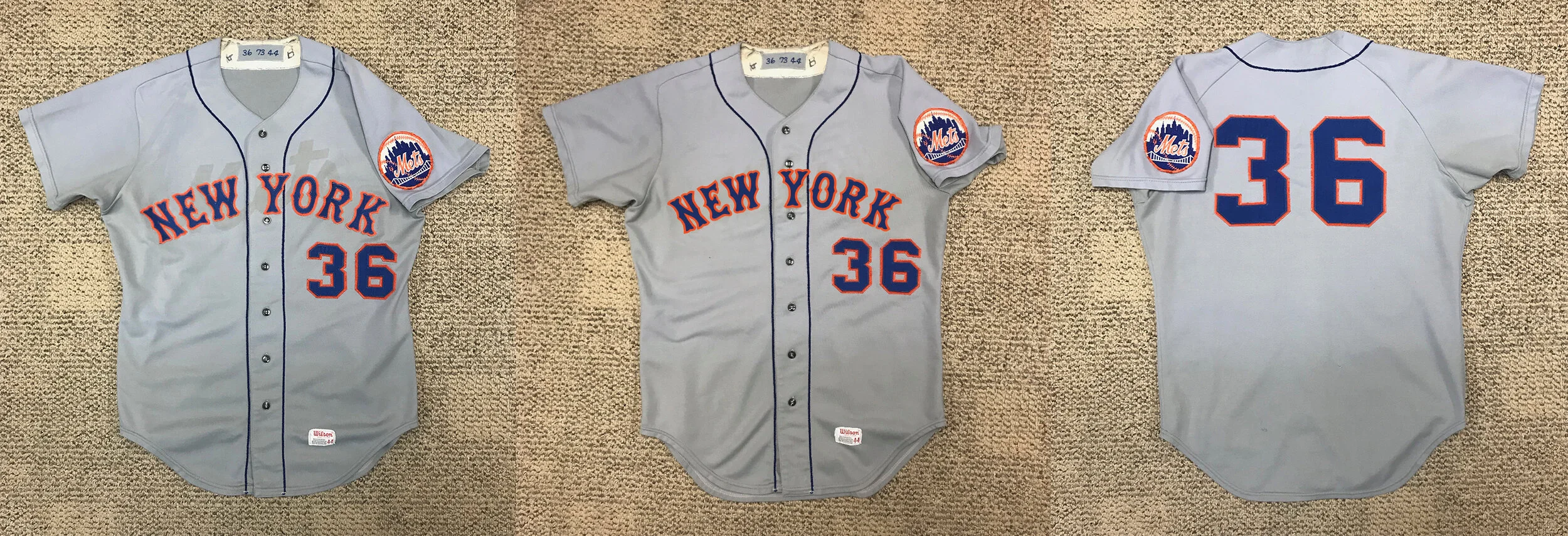
Here is the finished result... the first photo is the jersey without the blending powder applied, the second simulates what it would have looked like had I done the whole front with the blending, and the third is the unchanged back of the jersey with Koosman's number 36. This jersey is ready for display at Citi Field!