Restoration
1927 Mystery Jerseys
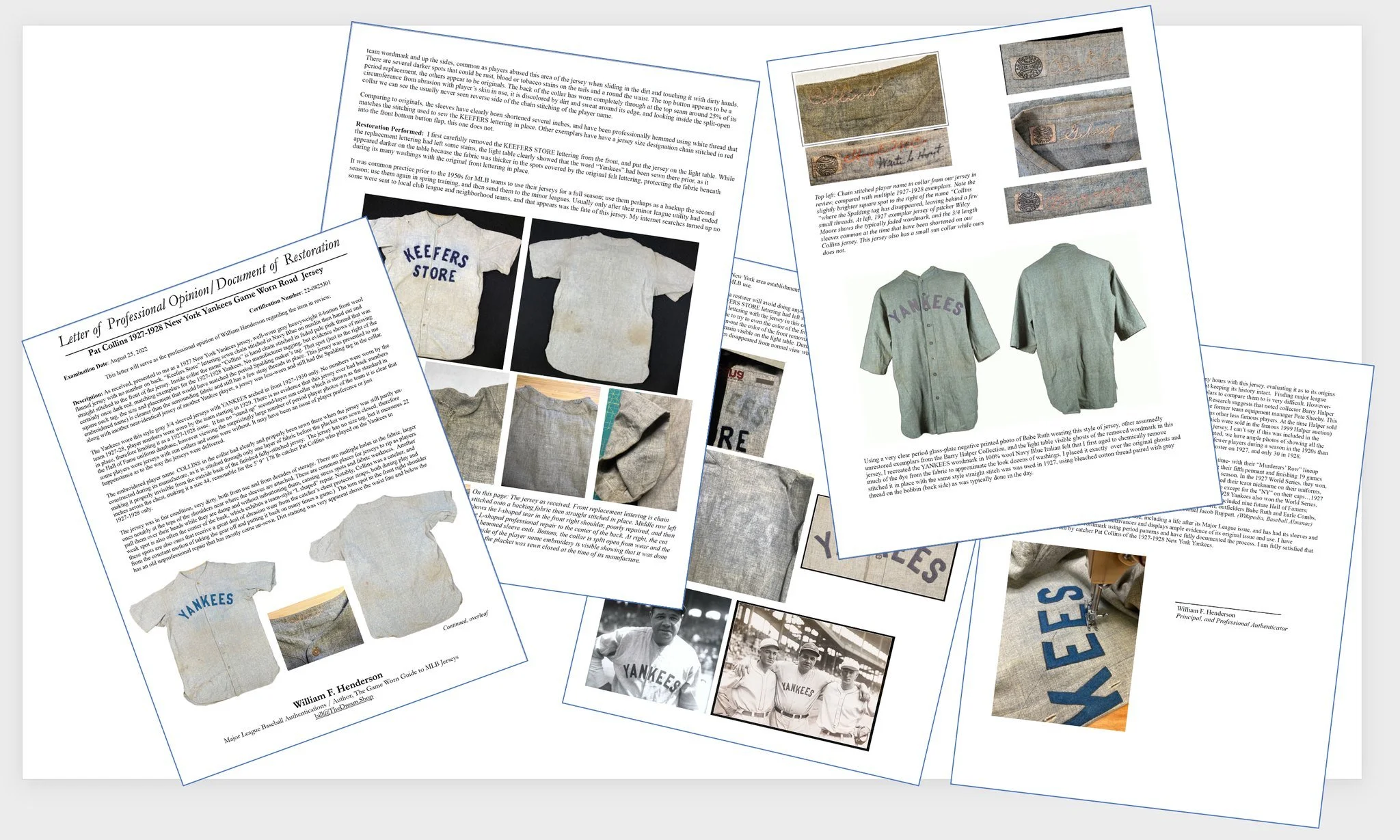
Royalty again visits the Dream Shop and we humbly accept the task. This unassuming, anonymous pair of jerseys that were sent our way have a fascinating hidden history that has to be seen to be believed. No spoilers in this one— to learn the answer you’ll have to read to the end.
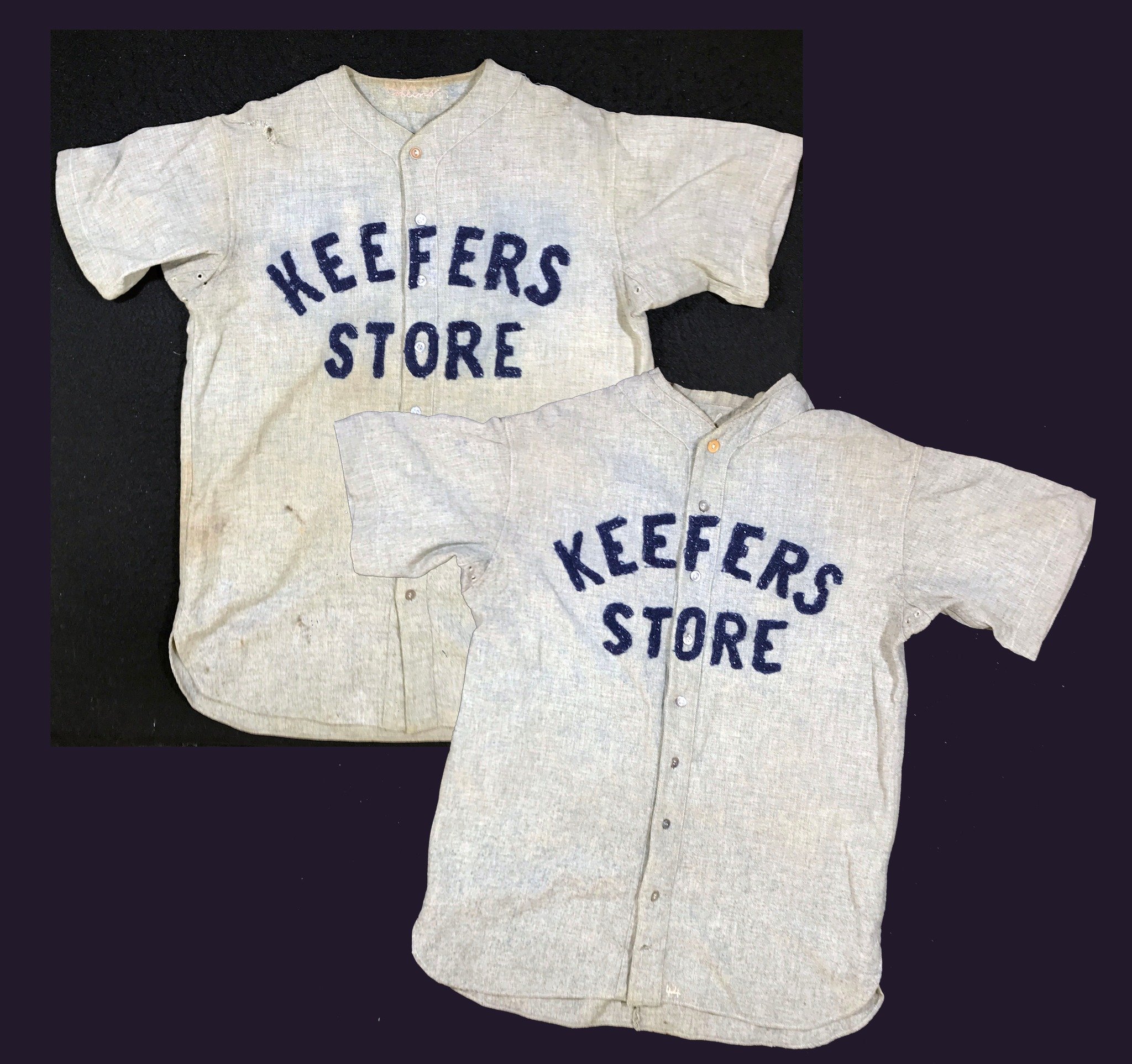
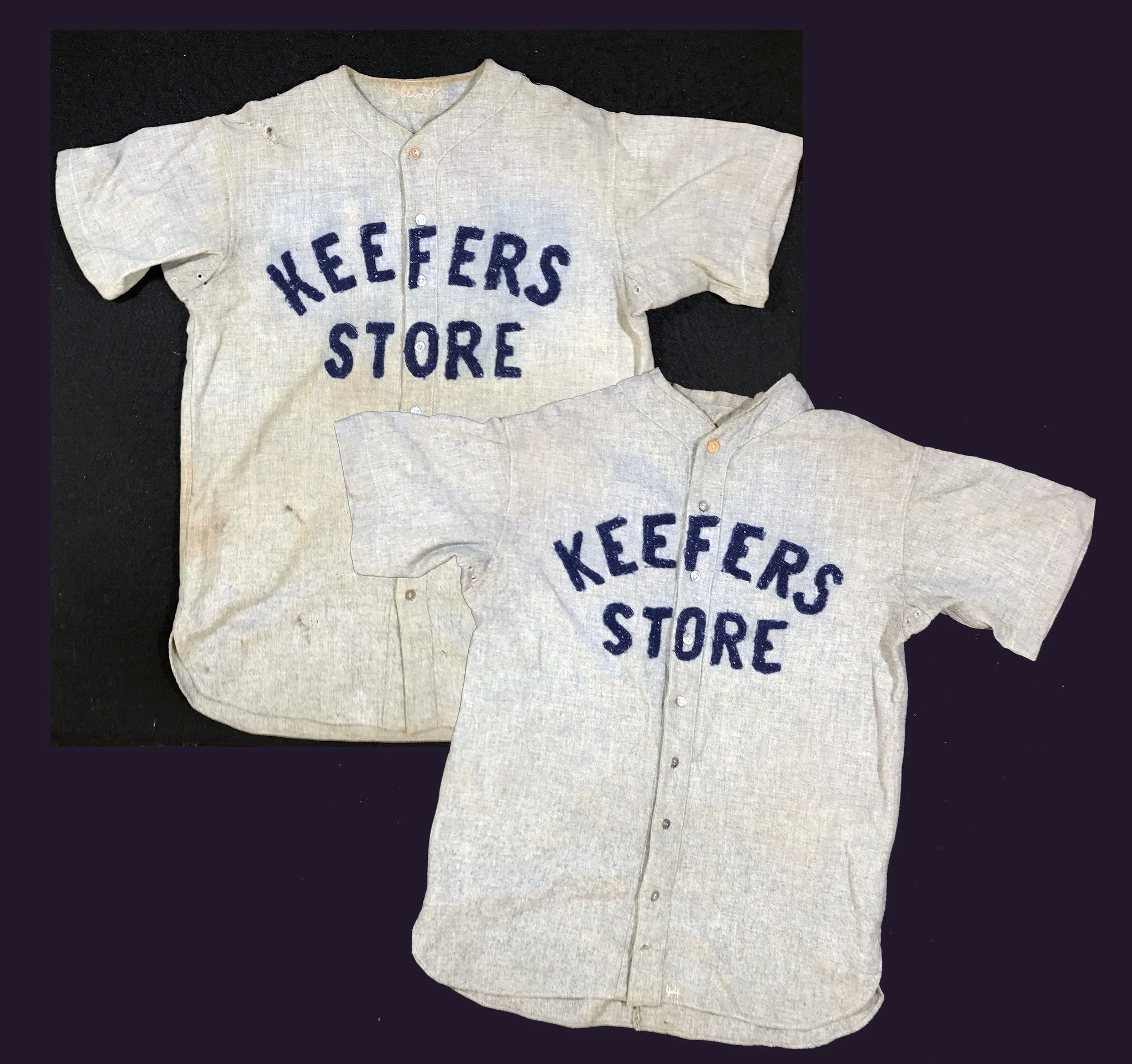
A century ago, all the gear required to outfit a baseball team was expensive and hard to acquire. Bases, bats, balls, catcher’s equipment, uniforms— all had to be sourced and purchased at great expense and without the aid of the tools that we take for granted today: the internet, credit cards, or even long distance telephone. Minor League or town club-teams considered themselves very lucky if they were able to work out a deal with another, more prestigious team to somehow acquire their cast-offs and hand me downs, where everything would be pressed into service for another year or more, getting every last bit of utility out of the discarded goods. So was the case with these two uniform jerseys, plain drab-gray heavy wool affairs. One had a tiny stand-up sun collar, the other did not. While I can’t find any record of the establishment, Keefer’s Store was surely a club team, sponsored by a local merchant, playing other such teams that dotted the countryside of America in the early part of the 20th century. Playing ball was what young men did for entertainment, in those days before television, shopping malls or even talking movies. Every town had at least one team, often employers had company teams.
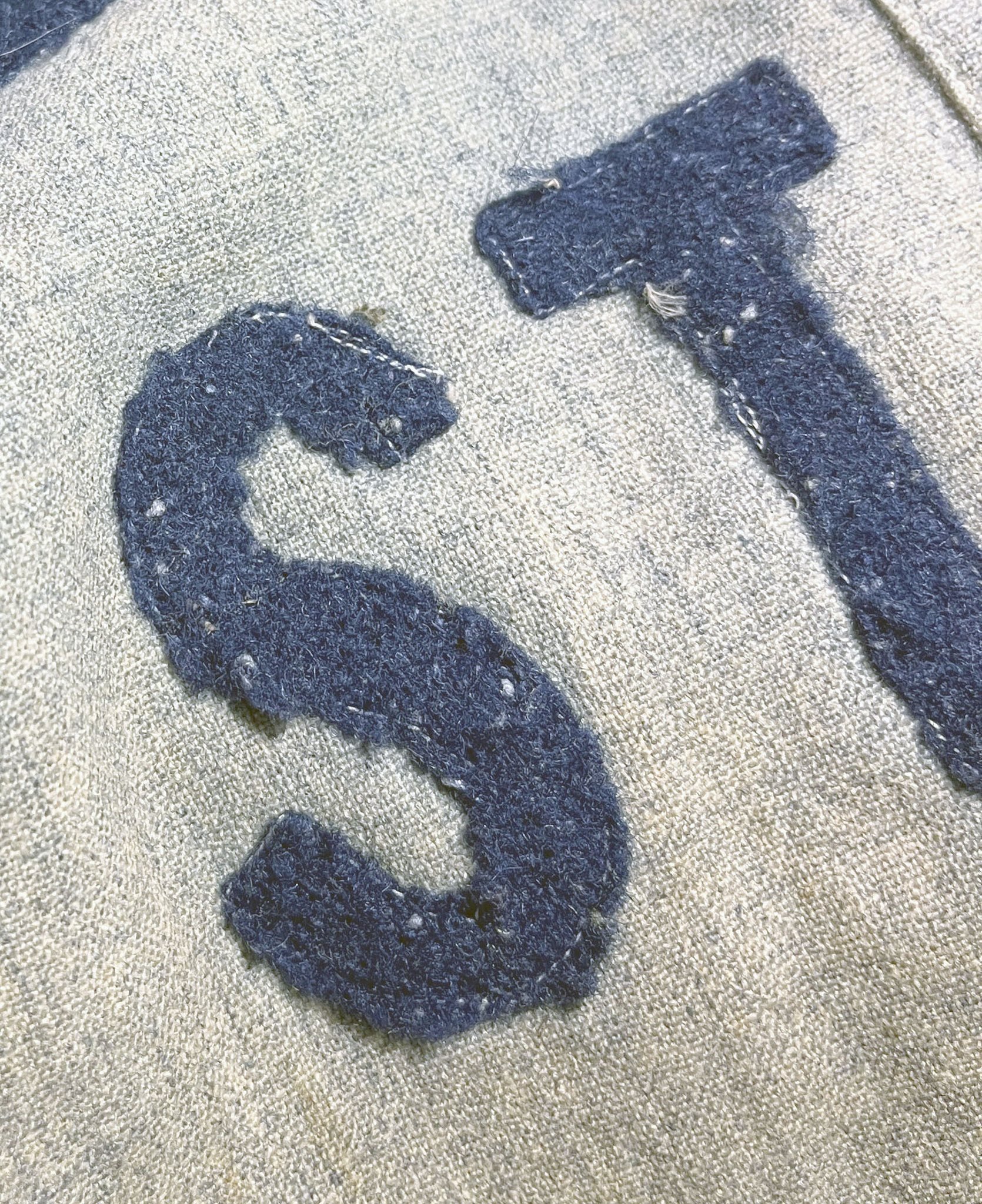
The front lettering here is chain stitched onto pieces of white linen, and then the linen was cut into the letters to spell the words, and they were straight stitched onto the jersey with white cotton thread. No player numbers were on the back; that was an innovation that would not take hold in the pros until the early 1930s, spearheaded by the 1929 Yankees (“Buy your scorecard here! You can’t tell the players without a scorecard, folks”)
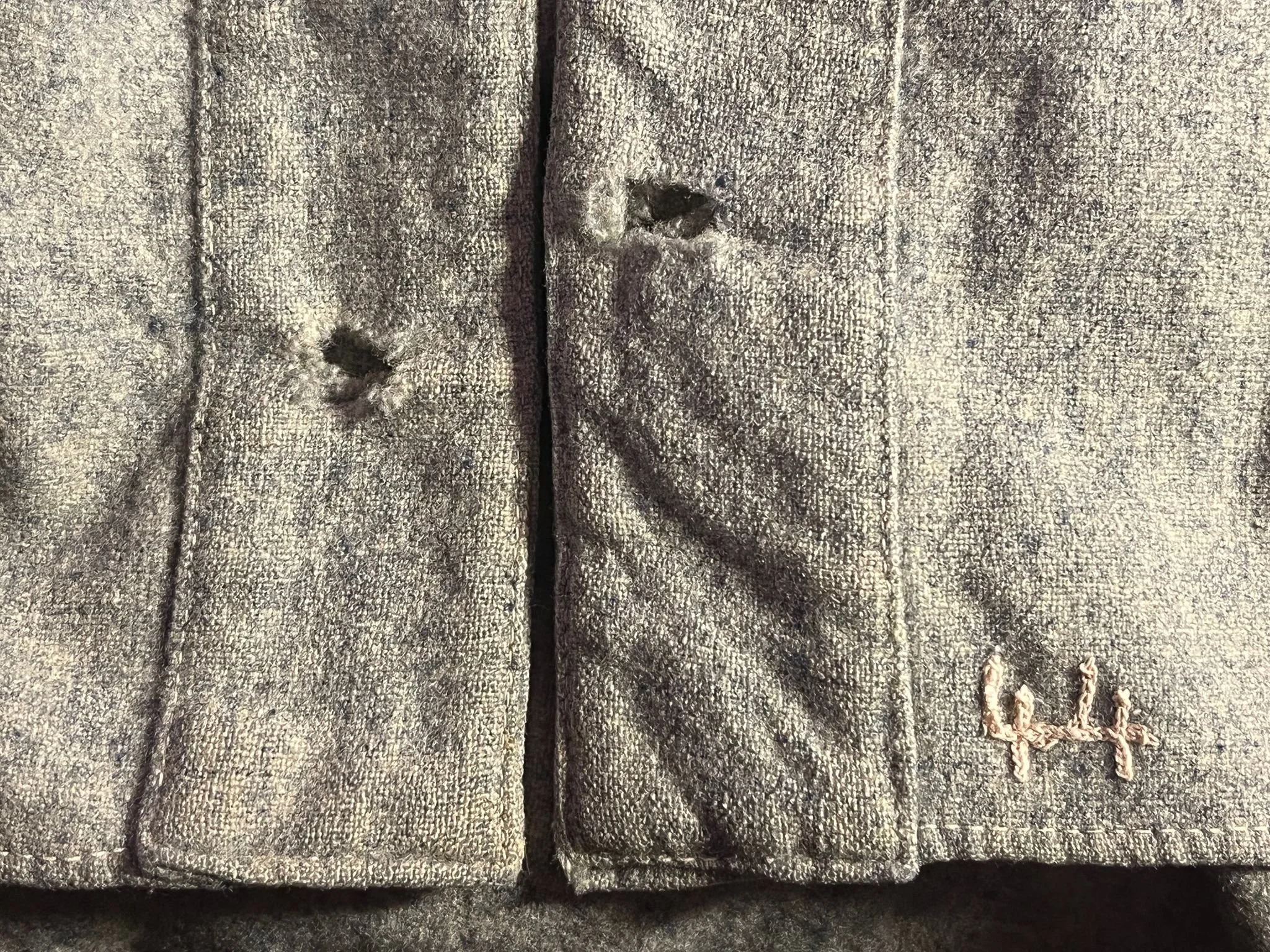
One has a small embroidery on the front tail that says 44. Not a year designation, No— this style of jersey was no longer used in 1944, these are far older. 44 must designate the size, measuring it confirms this idea as correct.
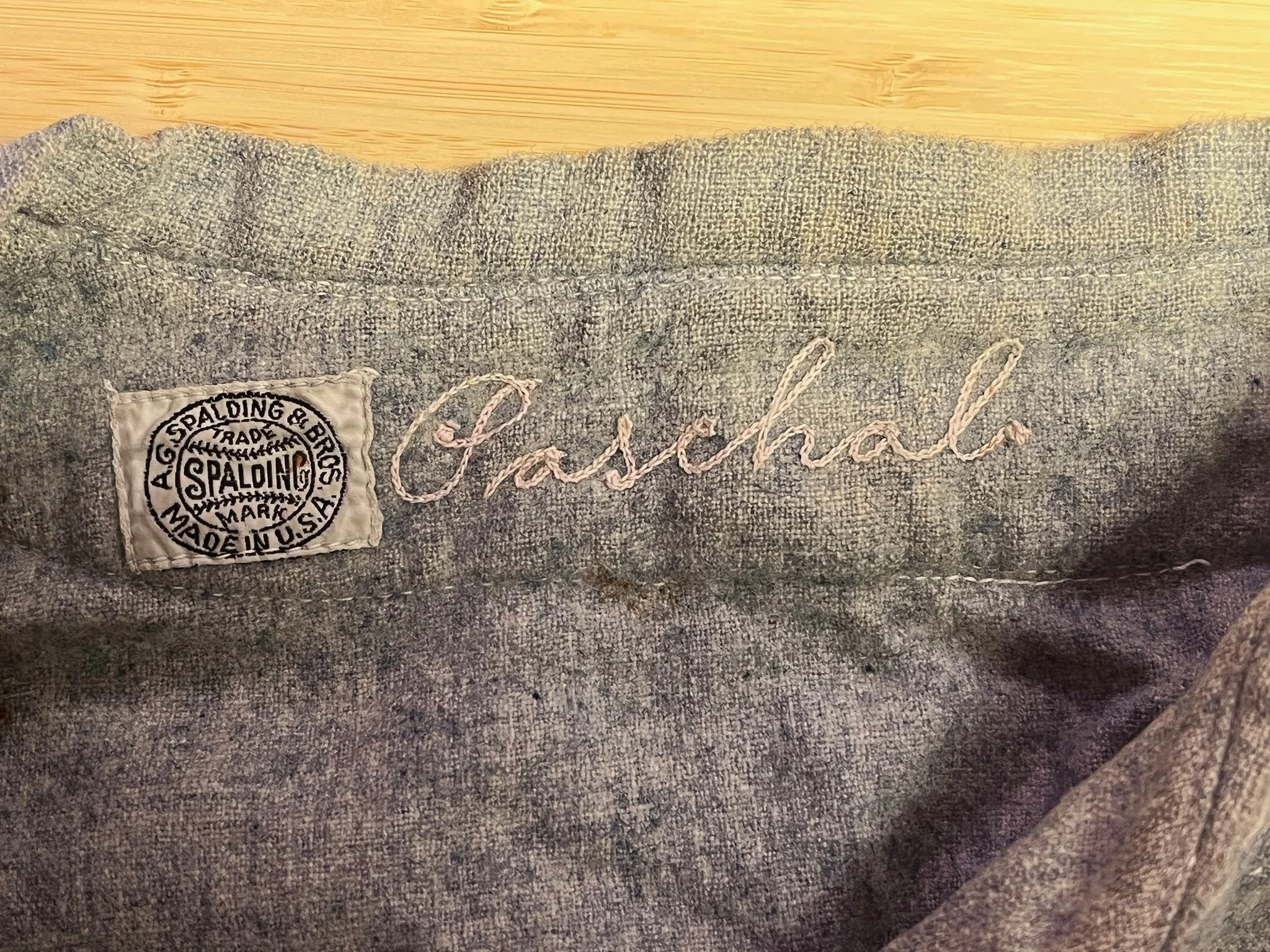
Spalding-made, It is clear that both of these jerseys had seen a lot of use, the material was worn thin in spots and several repairs were evident, as well as a few holes. But wait— there are names elegantly chain-stitched by hand in the collar: “Collins” and “Paschall”.
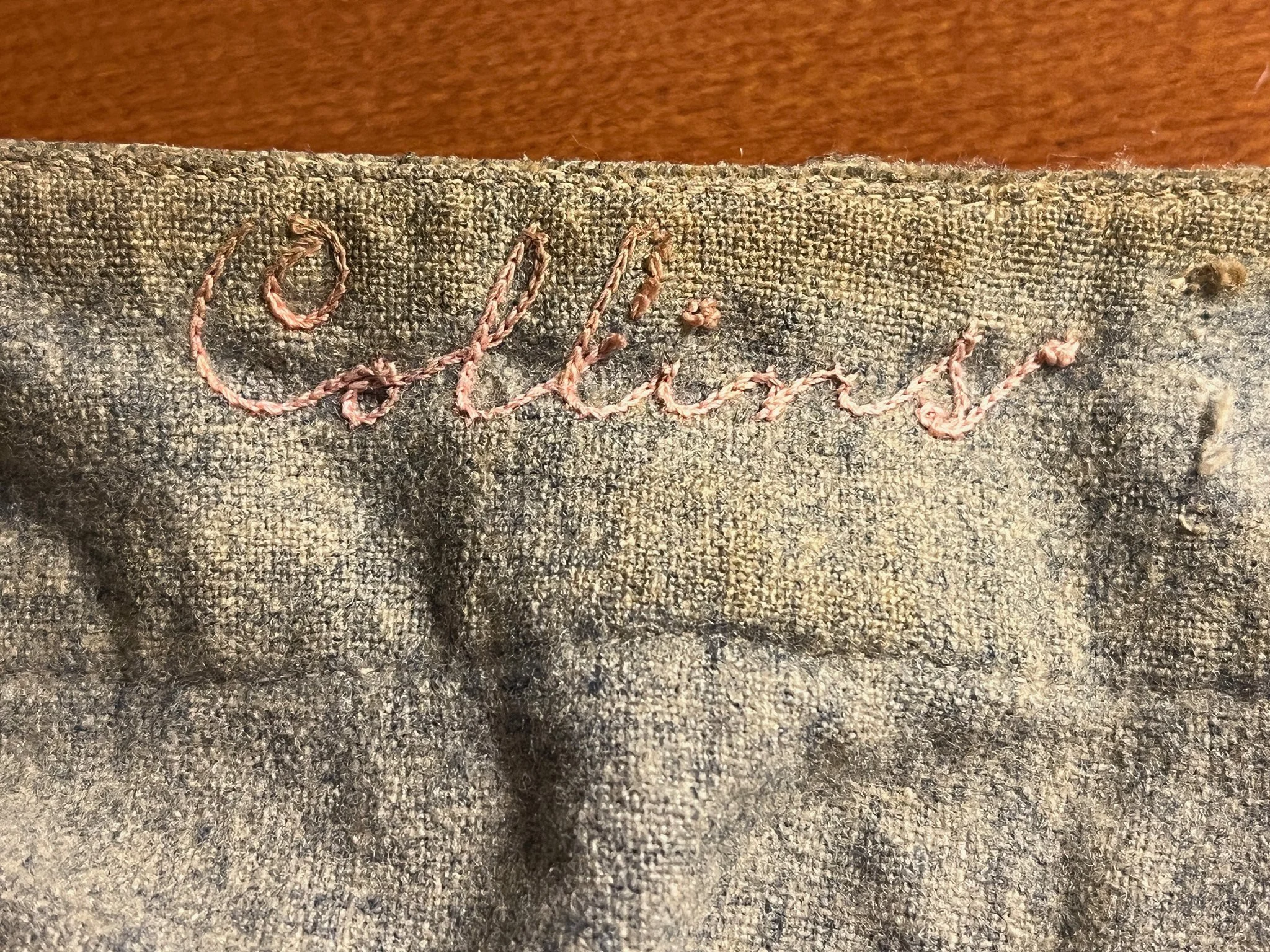
A search of MLB rosters pre 1930 finds that players with these last names were indeed part of the same team— the 1927-1928 New York Yankees! Pat Collins was a catcher and Ben Paschall was an outfielder !
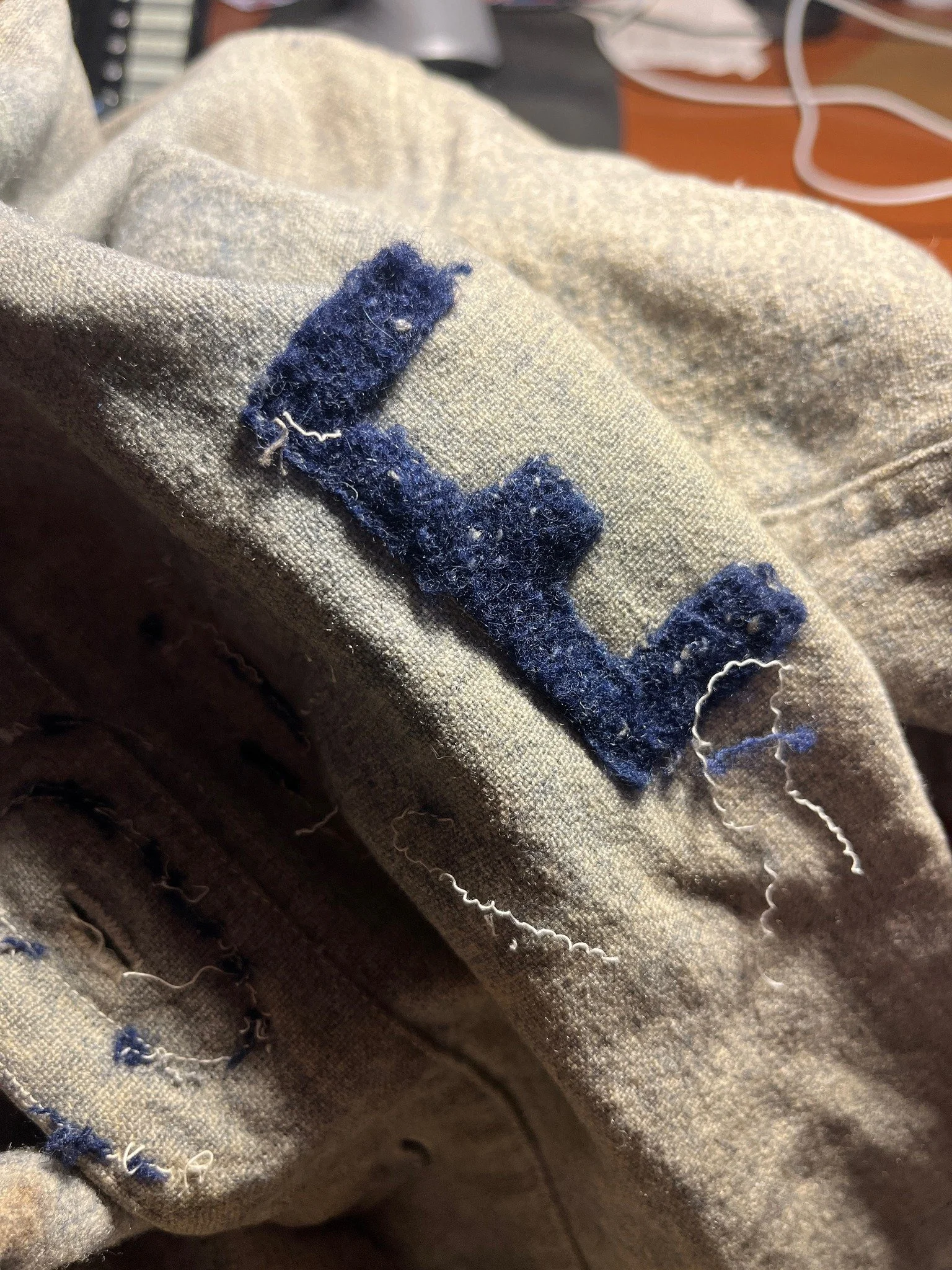
With the owner’s permission we carefully removed the front KEEFERS STORE lettering one tiny stitch at a time to lift it away from the jersey. And when we did, look what we found…
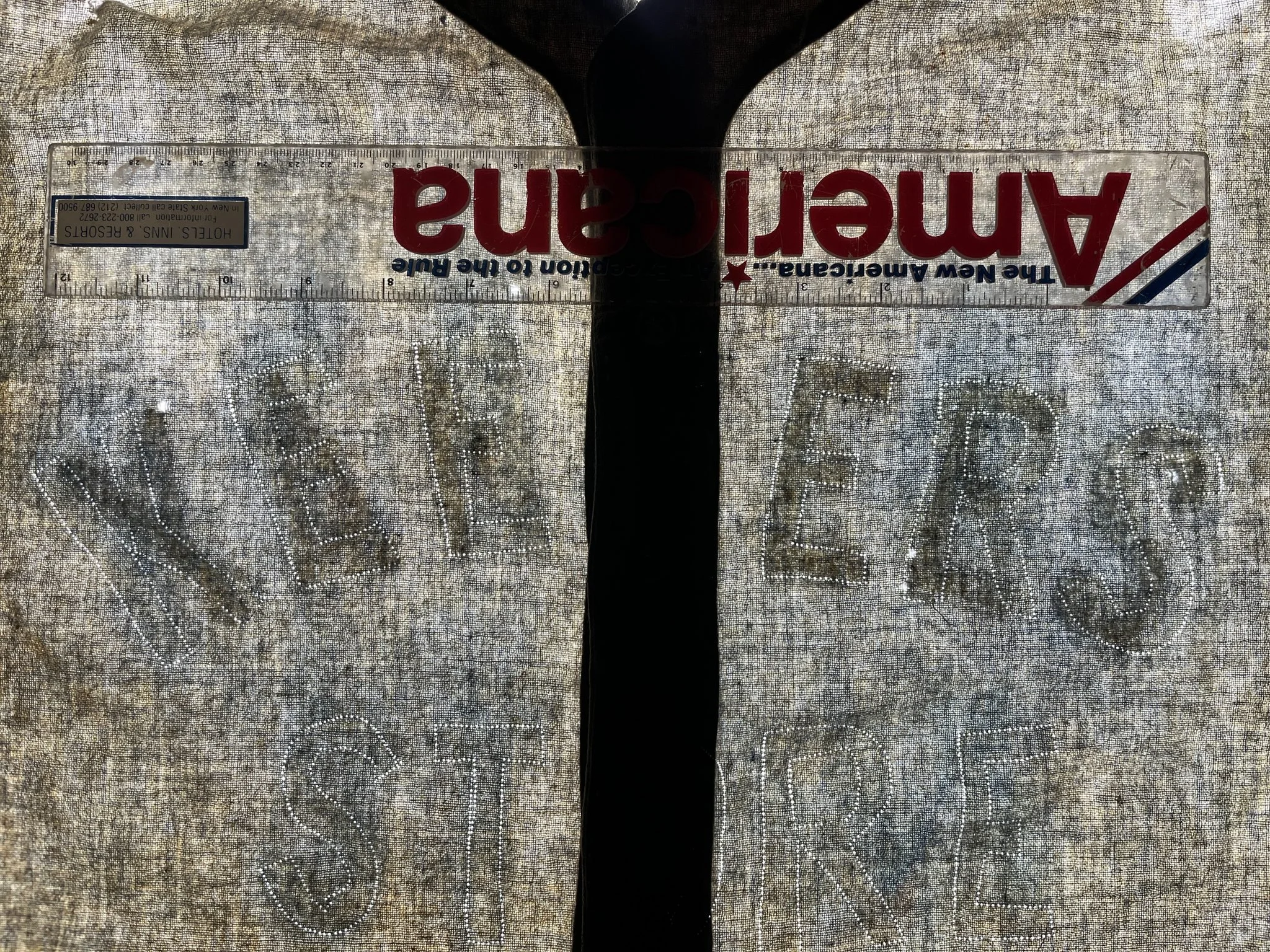
Invisible to the naked eye, but immediately apparent when laid on the light table was the arched word “YANKEES”, its individual letter ghosts had ben directly beneath KEEFERS which was the same number of letters. These ghosts are visible not, as you might think, because of fabric dye-staining, but because the wool jersey is marginally thicker in those spots…. Covered by the original lettering during dozens of washings, it was protected from scrubbing and agitation, and therefore remained ever-so-slightly thicker than the surrounding fabric. The thicker fabric, while not noticeable to the eye, shows up as darker spots on the light table because less light can pass through it.
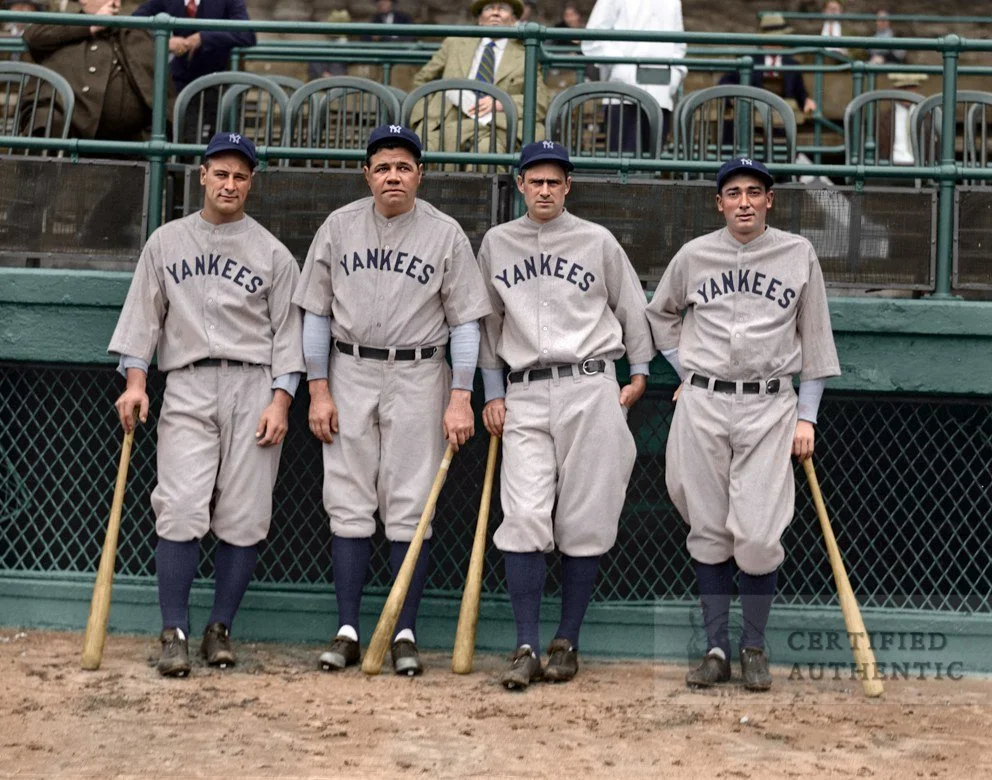
The 1927 Yankees are among the most famous and feared teams in the entire history of our sport… nicknamed the “Murderers Row”, it is widely considered to be the greatest baseball team in MLB history. They finished the season with a record of 110-44, and swept the Pittsburgh Pirates to win the World Series. Their winning percentage of .721 still stands as the highest ever. The roster included nine future Hall of Famers: Pitchers Herb Pennock and Waite Hoyt, Infielders Lou Gehrig and Tony Lazzeri, outfielders Babe Ruth and Earle Combs, Manager Miller Huggins, Team President Ed Barrow and Owner Colonel Jacob Ruppert. Let that soak in for a moment.
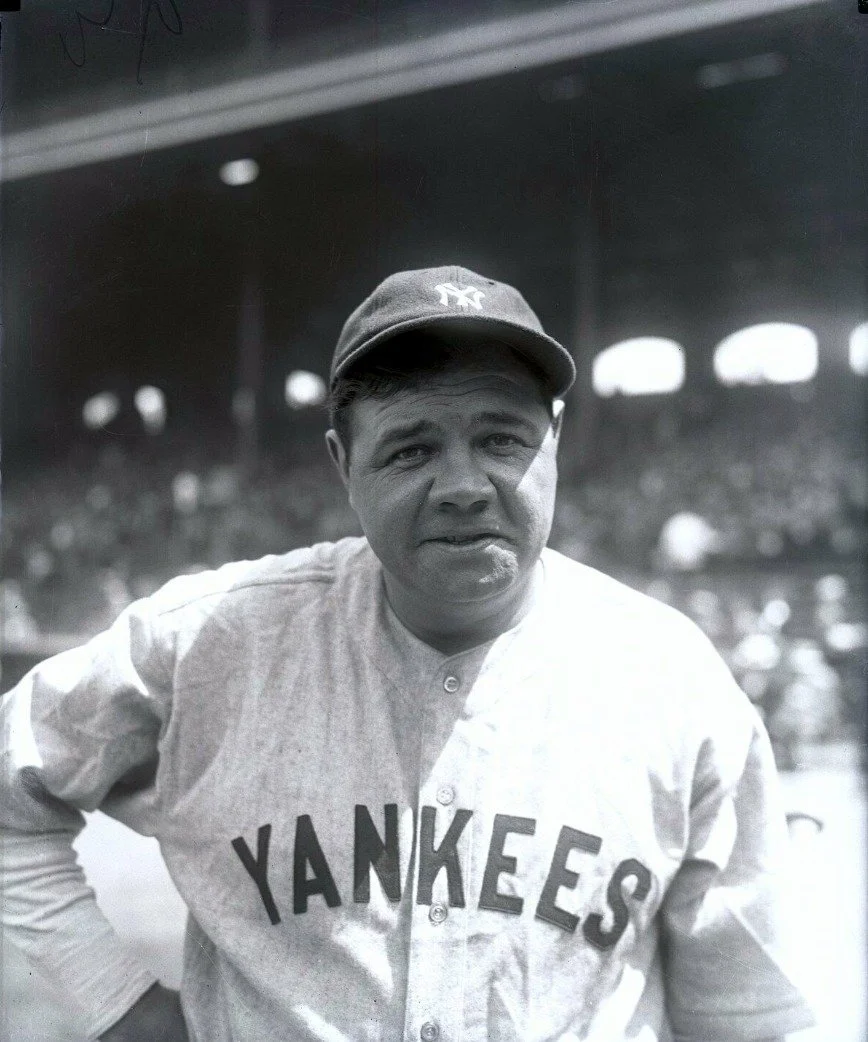
Because of their fame, their star players like Ruth and Gherig, and their home in a large city, there are a larger number of photos of this team than perhaps any other of that era. I was able to find a glass-negative photo of Babe Ruth from 1927 that was so clear I could almost see the stitching on his suit. That would come in handy restoring these. By the way, in their history, only in 1927-1930 did the team wear road jerseys with "Yankees" on front, and 1927-1928 were the final two years with no numbers used on back.
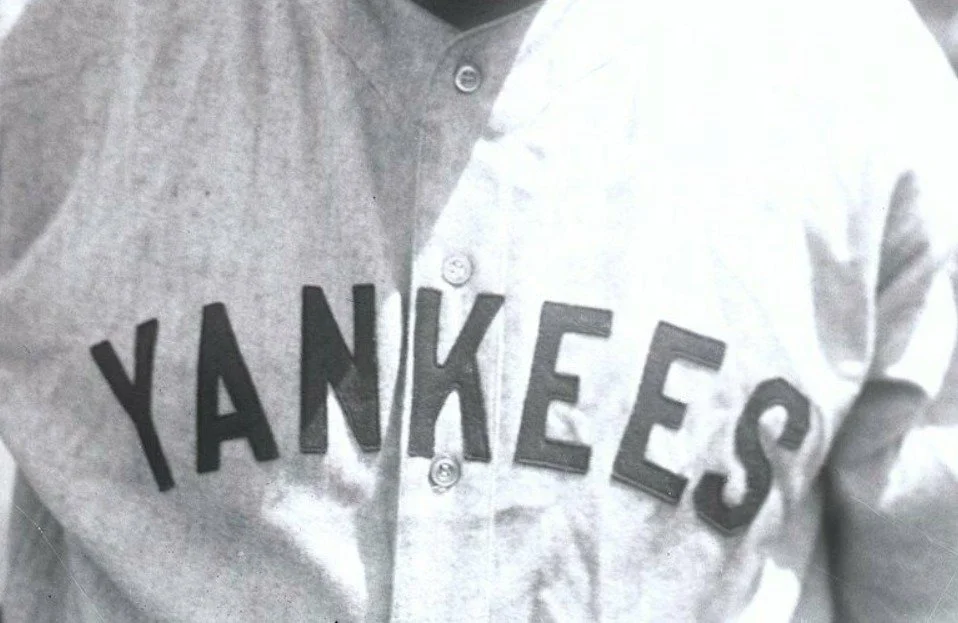
Today, lettering is cut with computer driven lasers. Then, it was cut with a pair of sharp scissors along dusted chalk lines. Our goal in reproduction is to copy the rustic originals in all their imperfection, stitching to cover the old ghosts exactly. We are going to focus on the restoration of one of these alone, to keep our story easier to follow, though the process was the same for both.
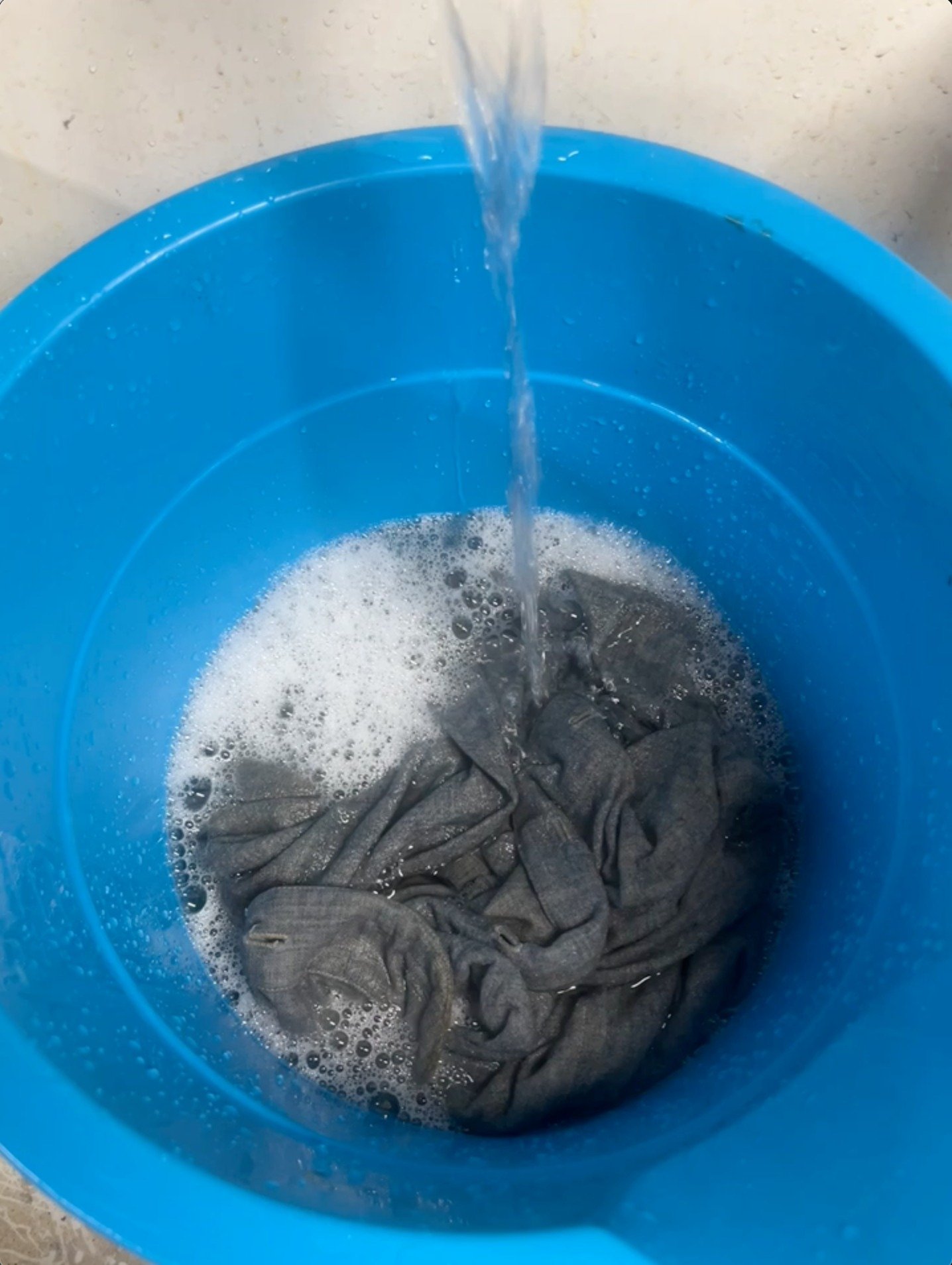
After the lettering was removed and the jerseys’ lineage determined, we had an important choice to make. They were very musty-smelling and dirty, dirty from being stored for many decades, but also dirty from being washed in shared water hundreds of times with other muddy uniforms. Unless it is “historic dirt” that came from a slide into home to win the World Series, dirt is not a friend to fabric. It contains mold and bacteria and acids that eat the fibers of the cloth, causing it to fail. And while the very thought of washing such a relic might take one’s breath away with disbelief, I do it all the time. So long as the fabric is stable and not falling apart from decay, hand washing in Woolite is the answer. Here, I gently agitate the jersey in a bucket of warm water with Woolite. No washing machine is used, and nothing rough. Just up and down and round and round…
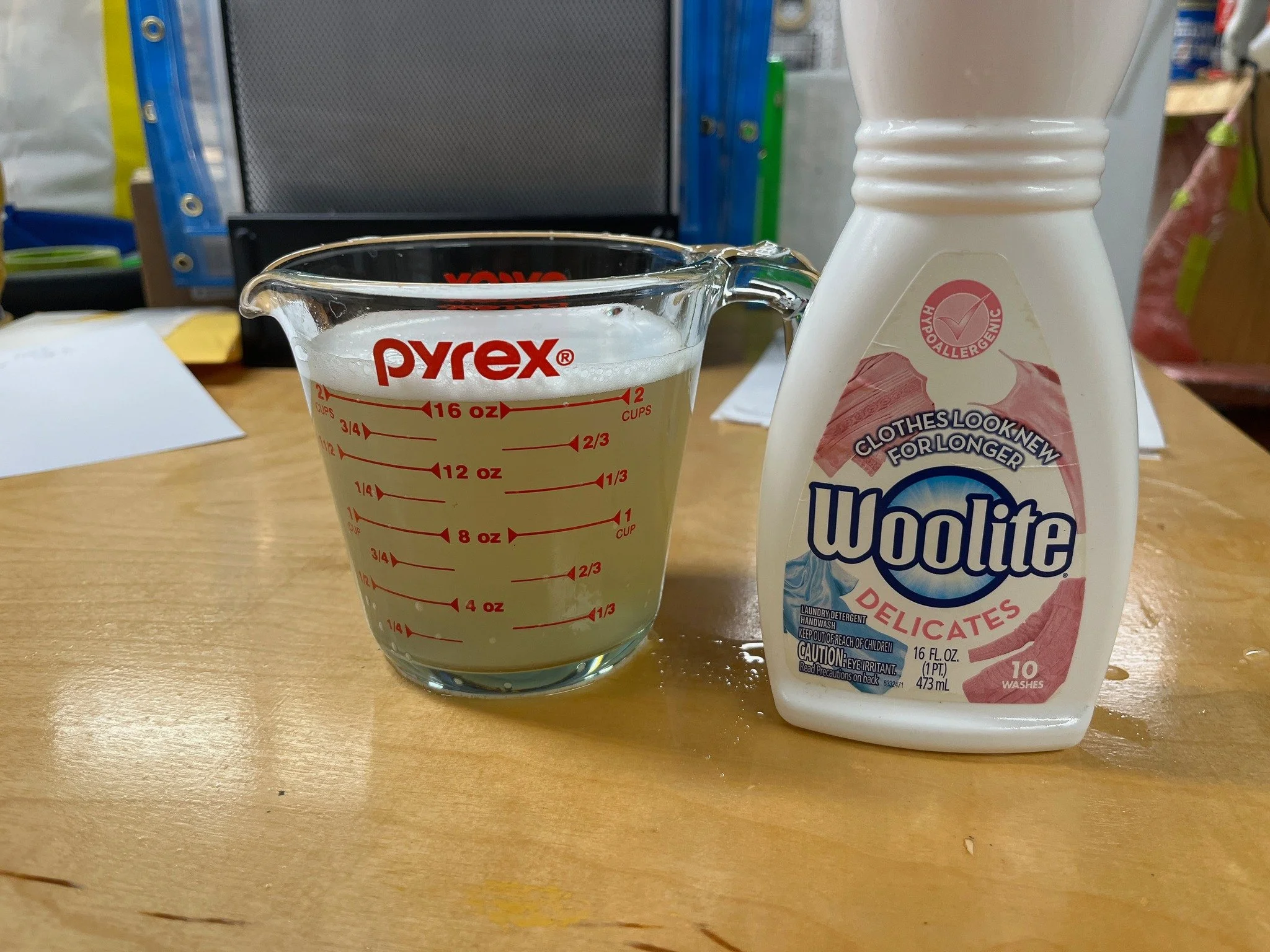
Here is a cupful of the dirty wash water. The water in the bucket was so brown that you could not see through it to the bottom. We must rinse it until the water runs clear, which sometimes takes five buckets of clean water. It’s obvious we made the right choice.
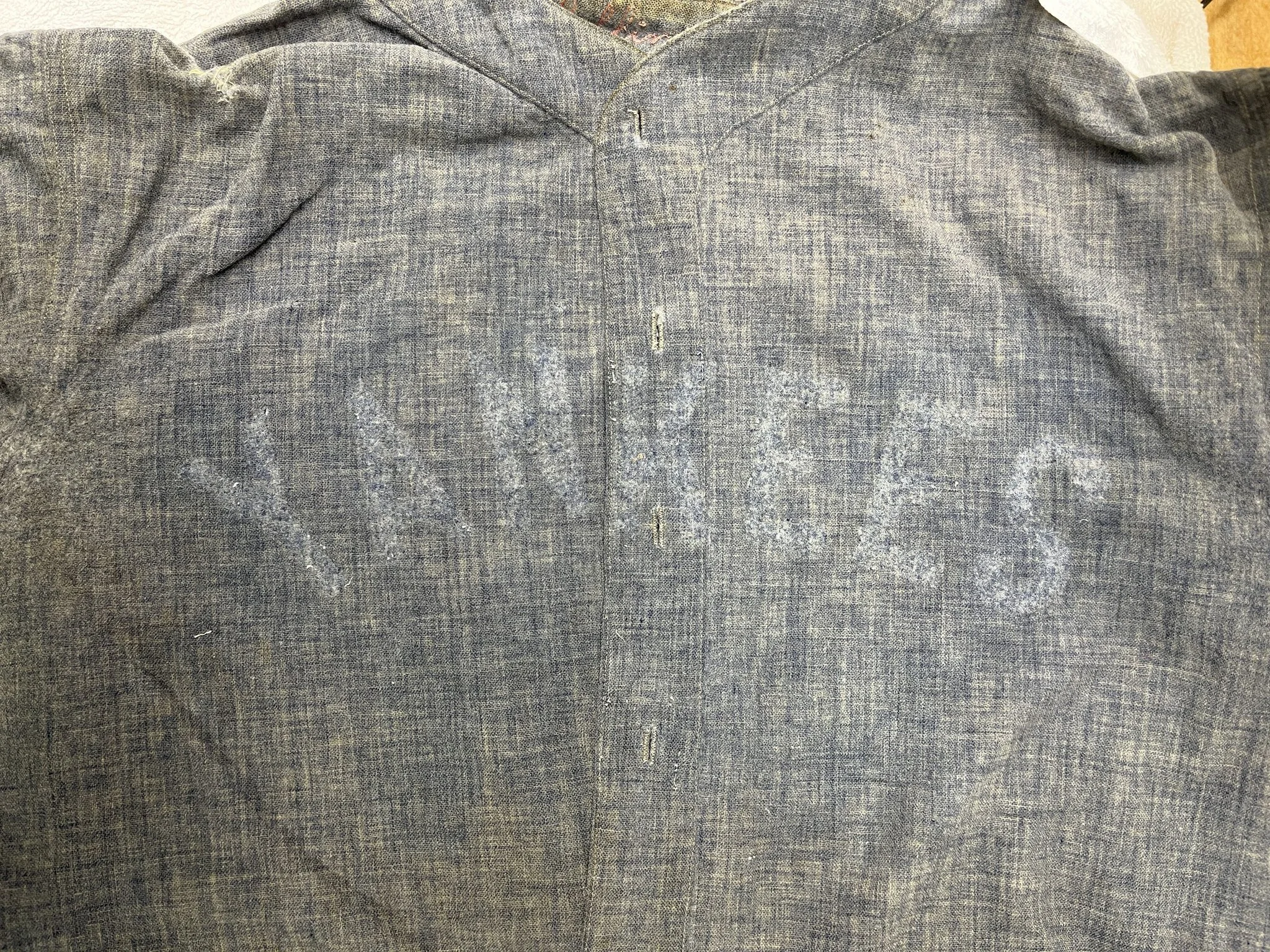
Do you believe in ghosts? Here is where it gets really creepy… when soaking wet, the ghostly image of the original front team crest from almost 100 years ago returns to view, appearing as glowing brighter than the surrounding fabric.
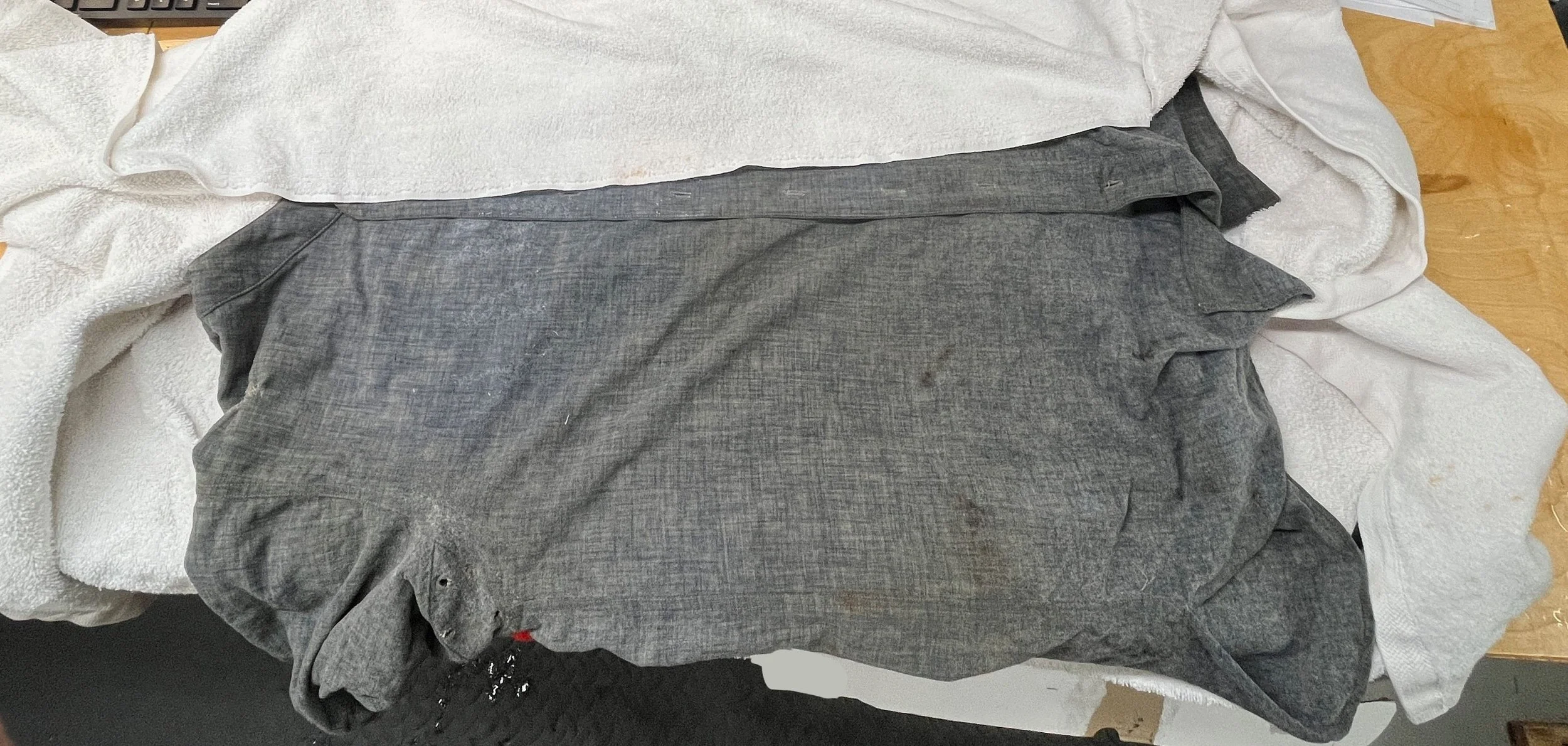
After blotting with towels and lying it flat to dry, the ghostly image fades again into silent invisibility.
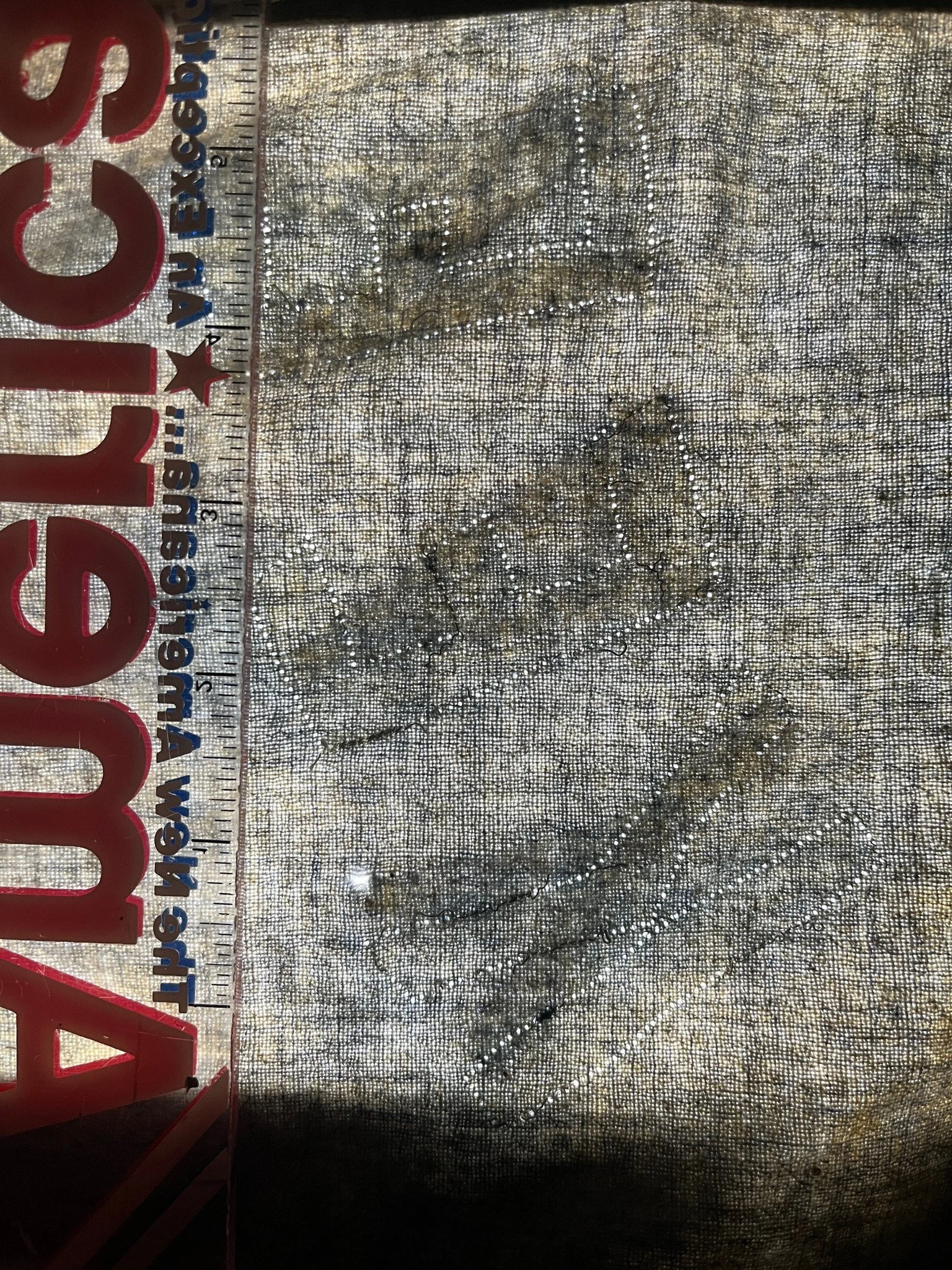
To make exact patterns of the original lettering, I have a specific process I follow. First I put the garment on the light table, and lay a translucent ruler on top of it. Then using my camera I photograph the area at different degrees of exposure, knowing one of them will show the ghosts the most clearly when enhanced in Photoshop. Next I lay the jersey on the flatbed scanner and scan an image at 100%. The scanned image does not show the ghost lettering; it can’t be seen without light behind it, but it does give me an exact 100% reference image of the fabric. Next, in Adobe Illustrator (a vector graphics program) I re-size the light table camera shot to exactly 100% or original (that’s why photographing the image with a ruler in the photo is necessary!
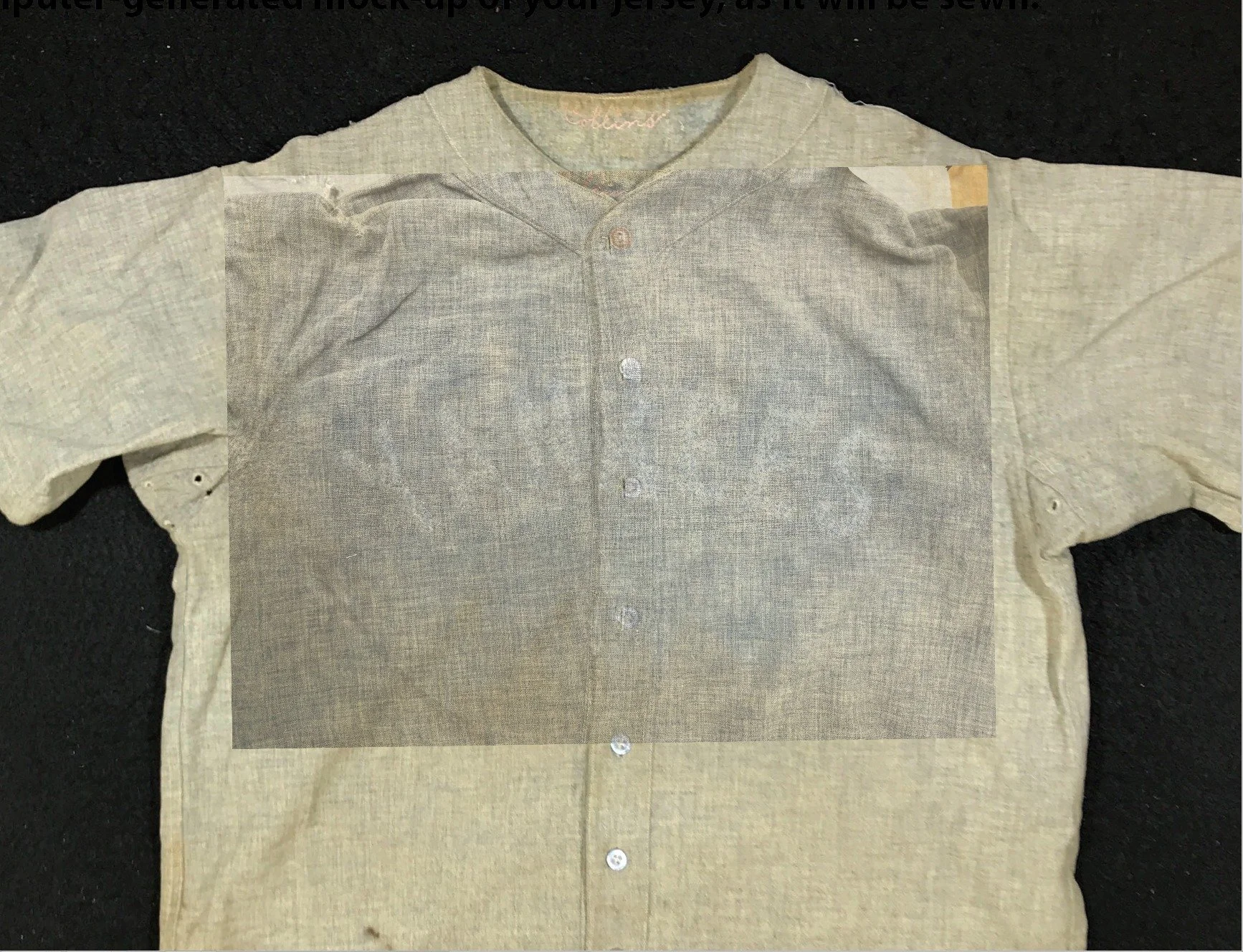
Next I precisely overlay the two images, making the top one semi-transparent The result is a perfect, 100% of original size image of the lettering ghosts. But we are not done yet. Finally, I overlay the auction photo of Babe Ruth’s jersey, also blown up to be sized to 100% of original. The result is a perfect set of stencils to re-create the original 1927 word mark.
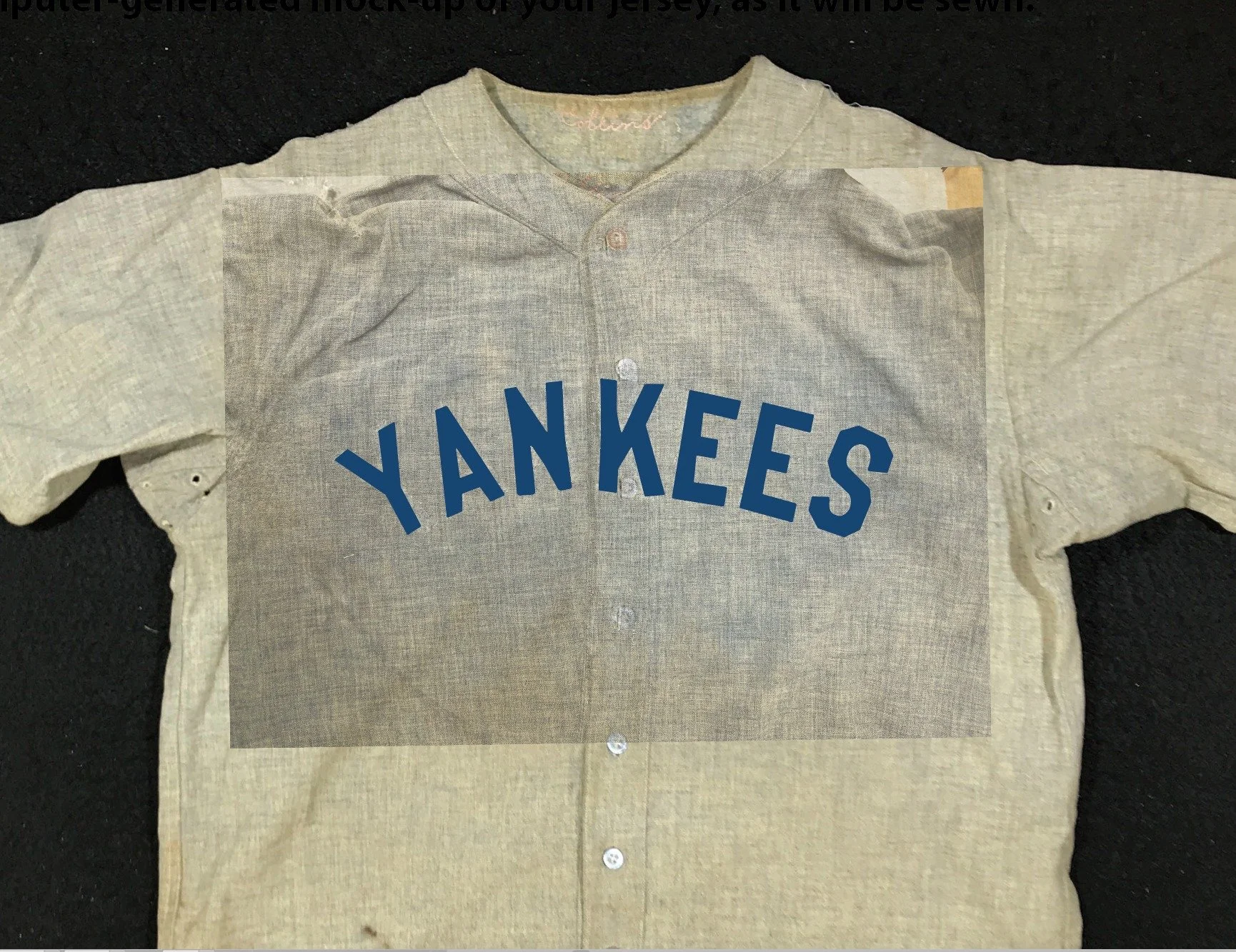
I draw each letter in Adobe Illustrator. The result is a set of vector patterns that I can send to the laser cutter. But first we have to prepare the felt lettering fabric.
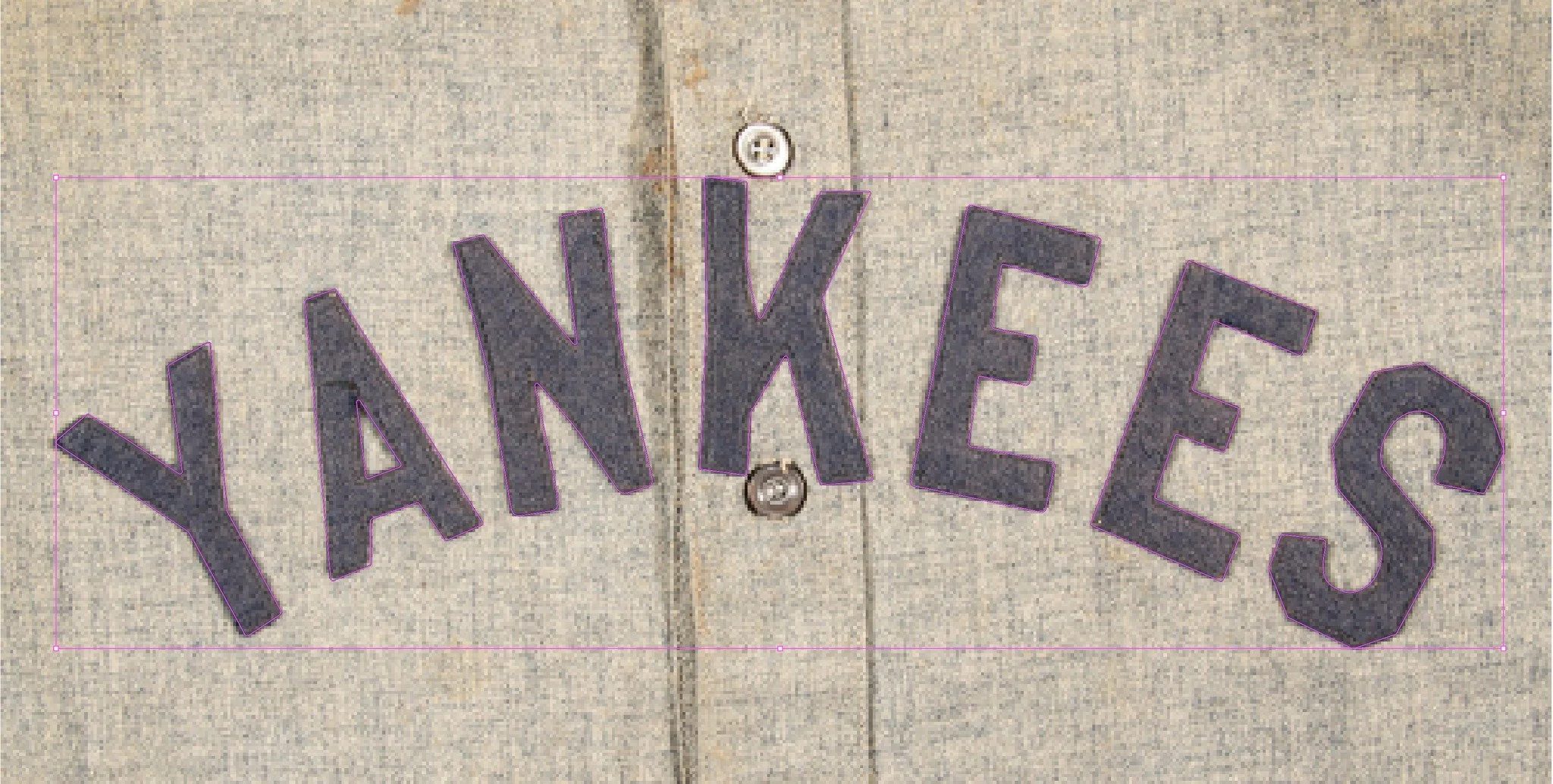
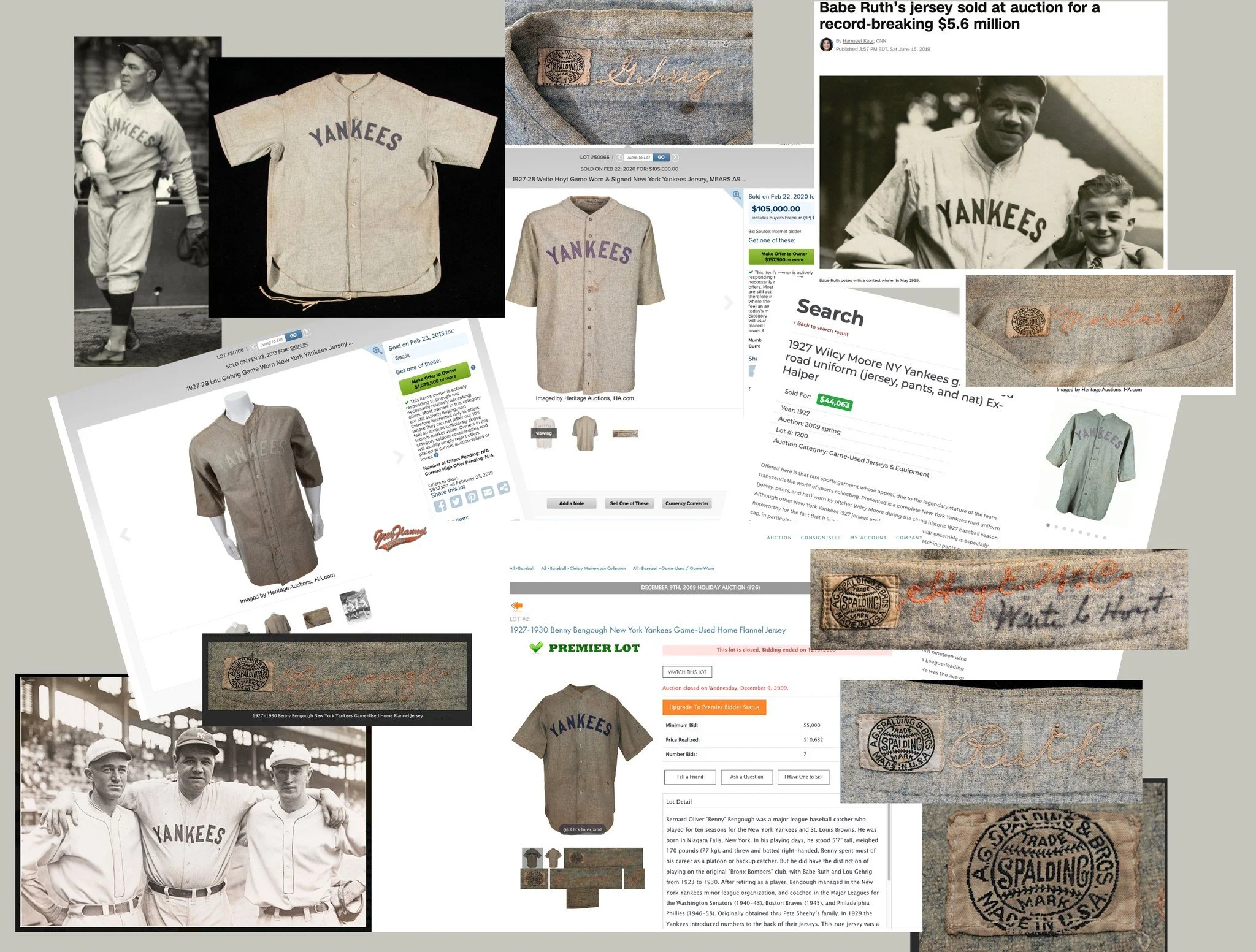
There is ample auction history for the sale of multiple 1927-28 Yankees jerseys. Documented is the story that collector Barry Halper purchased a trunkful of these uniforms from the Yankees equipment manager. The Ruth and Gehrig examples set new auction records every time they are resold, for millions of dollars each. Assumedly unrestored, these examples show felt lettering that started off as Navy Blue, now bleached to a bluish-purple by detergents, age and the sun. So, while I could just cut new Navy Blue felt lettering, that would look as silly as putting a shiny new fender on a car with dulled 90 year old paint… it would just look wrong. So the felt fabric needs to be aged to make it match the jersey it will be sewn on.
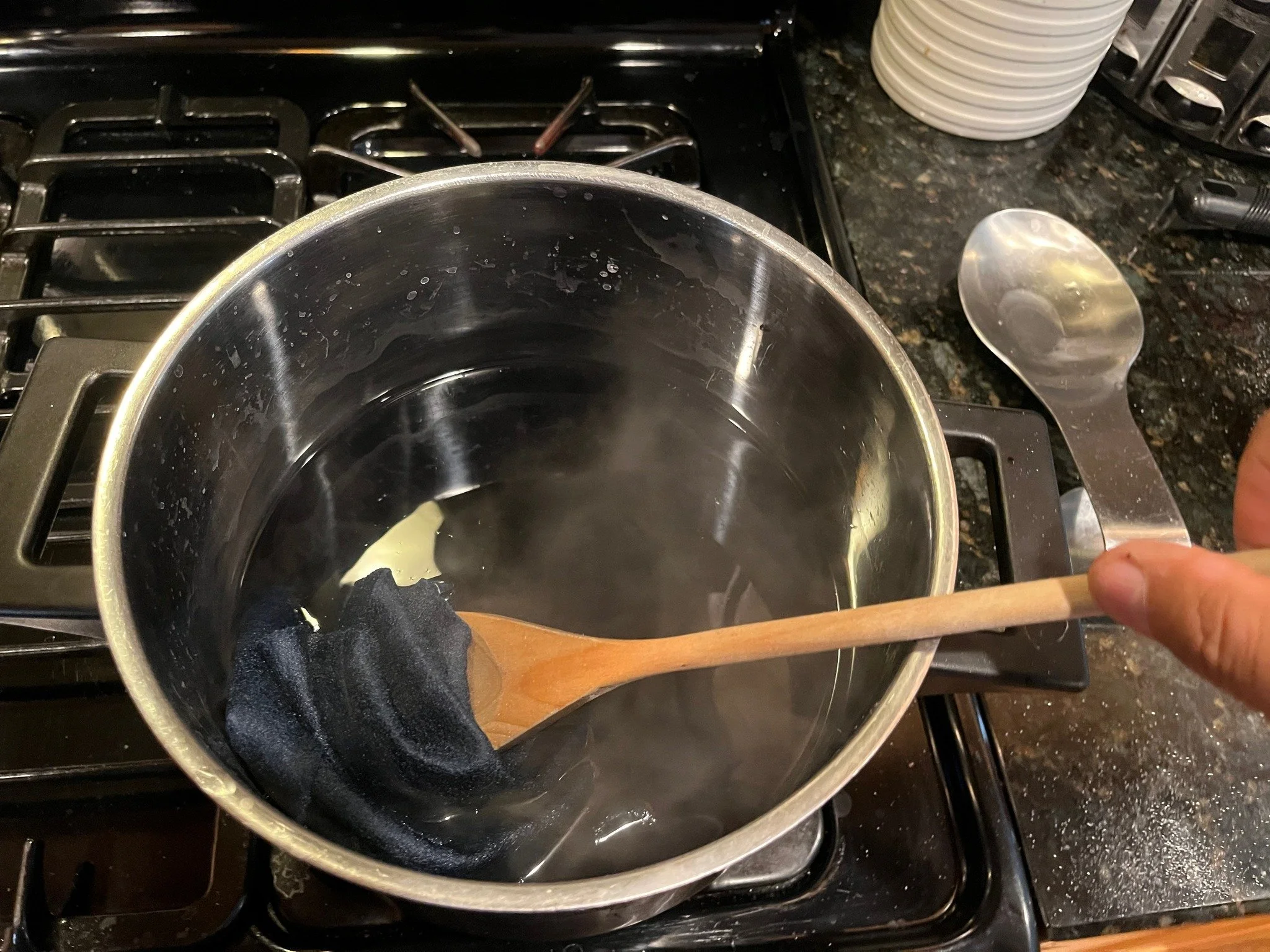
The felt fabric needs to be aged to make it match the jersey it will be sewn on. Bleach is too strong; using it makes felt fall apart! The answer is a strong solution of Carbonna, an old time washday product from the 1930s used to remove stains from womens' nylon dresses, it is still available on Amazon today. (one of my secrets). A packet of the crystals and almost-boiling water took just enough of the dye out of the felt to make it look suitably old without destroying the structural integrity of the fabric. The wash water looked as dark as grape juice. Pressed flat to dry, the felt had shrunk a lot, but that’s OK, because now that it has shrunk we are going to cut it.
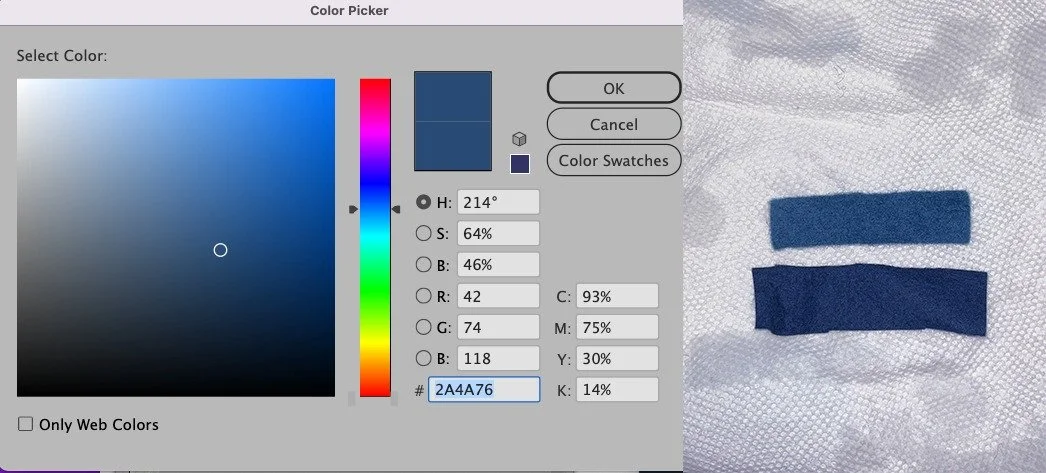
Here is how the felt came out (right , top) . The computer allows me to scan the color and compare it to period examples, and we are close without making it totally bleached out like some of the aged examples. It satisfies its owner. Before cutting the letters, I fuse a heat-applied micro-thin layer of plastic film to the back of the fabric… thinner than Saran Wrap, it holds things nicely together in cutting and stitching, while remaining completely invisible on the finished product.
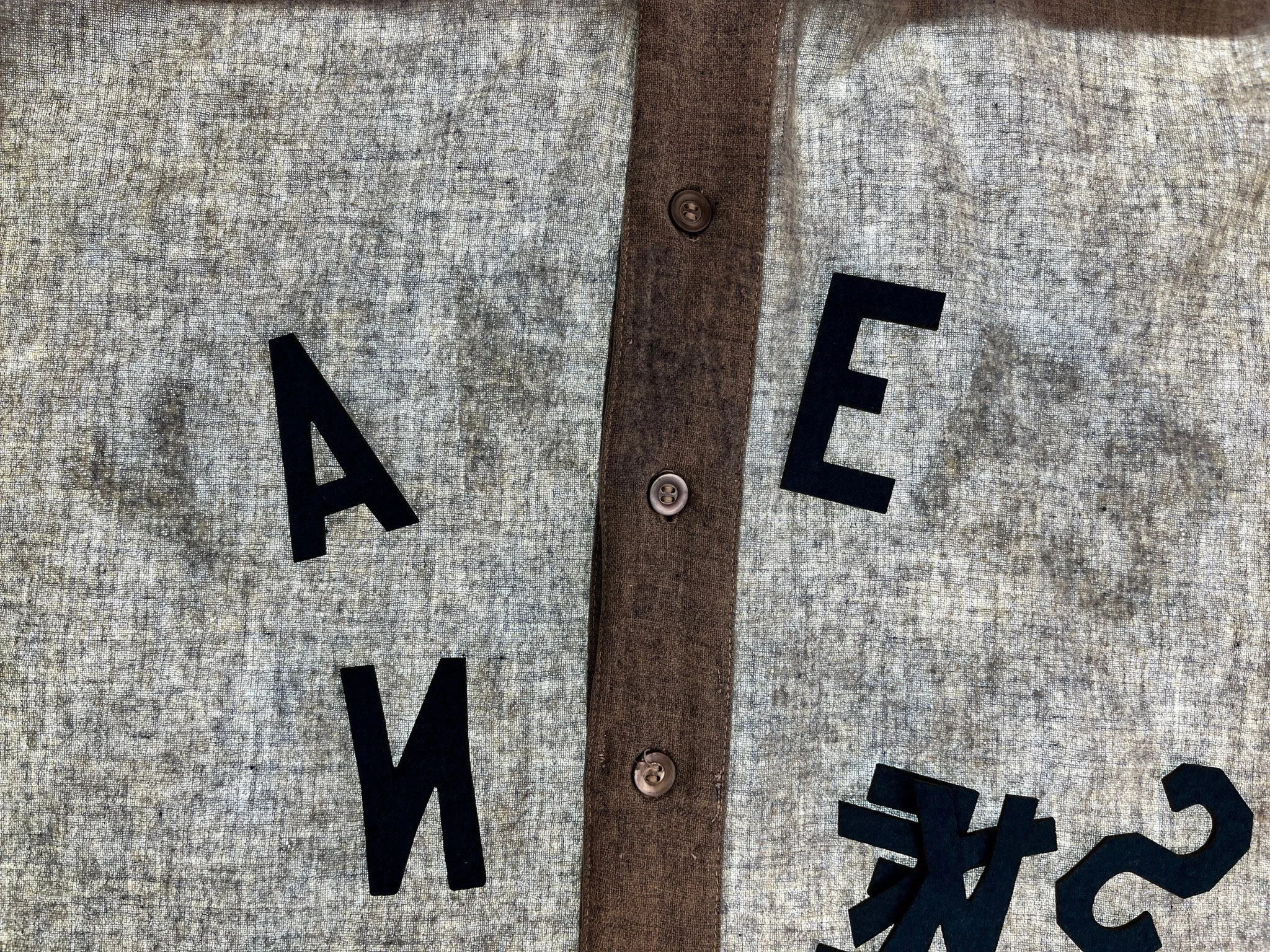
The laser cutter makes quick work of the felt, precisely cutting the vector-images into perfect matching lettering, though it smells like burning hair— because that’s precisely what wool felt is (sheep hair!)
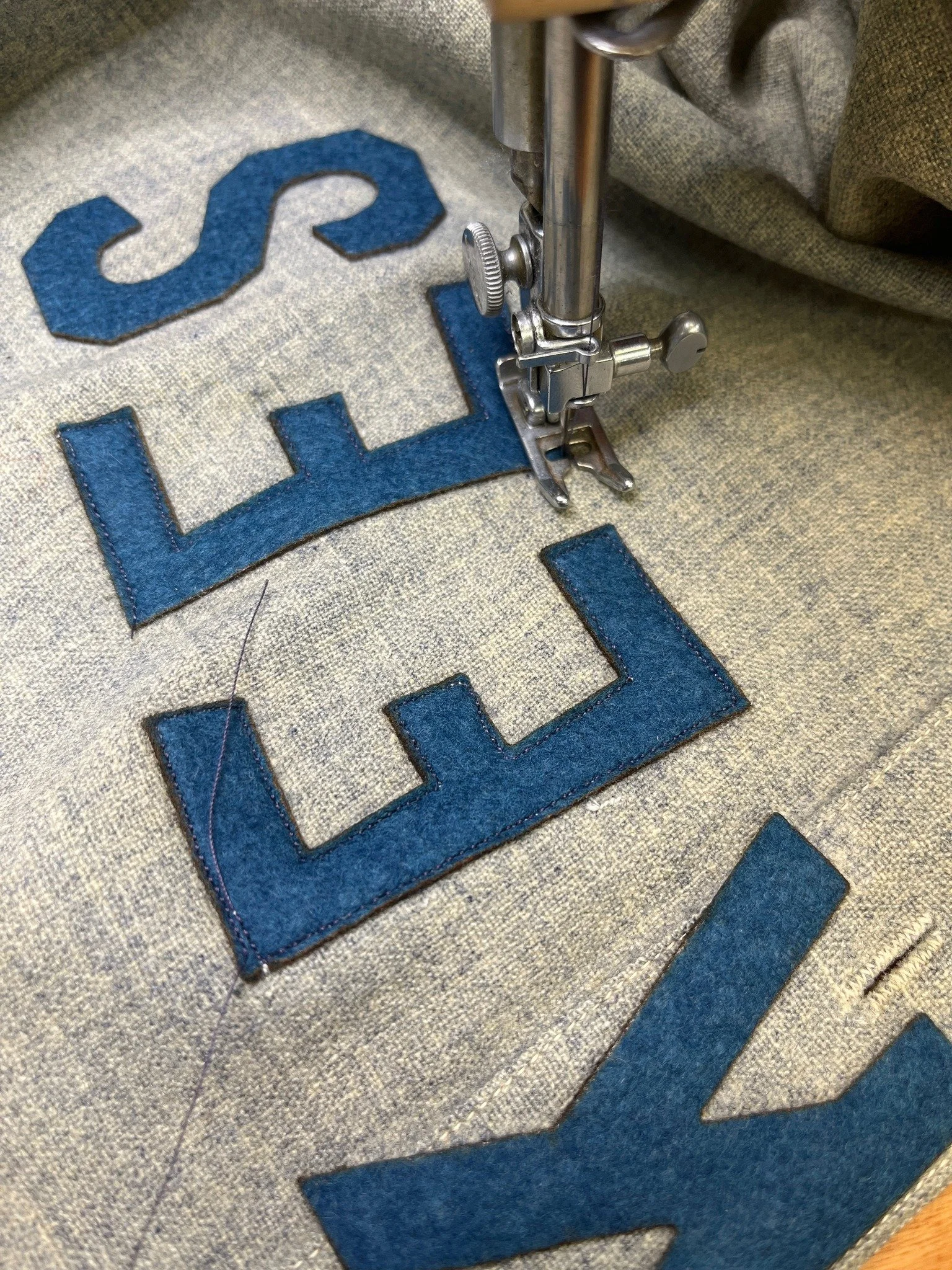
Now, with the jersey back on the light table, I position the letters precisely over the ghosts of a century ago, and tack them down with a light adhesive. Using a straight stitch and period-cotton thread bleached purple (the thread color is called “eggplant”) the letters are edge sewed to the jersey.
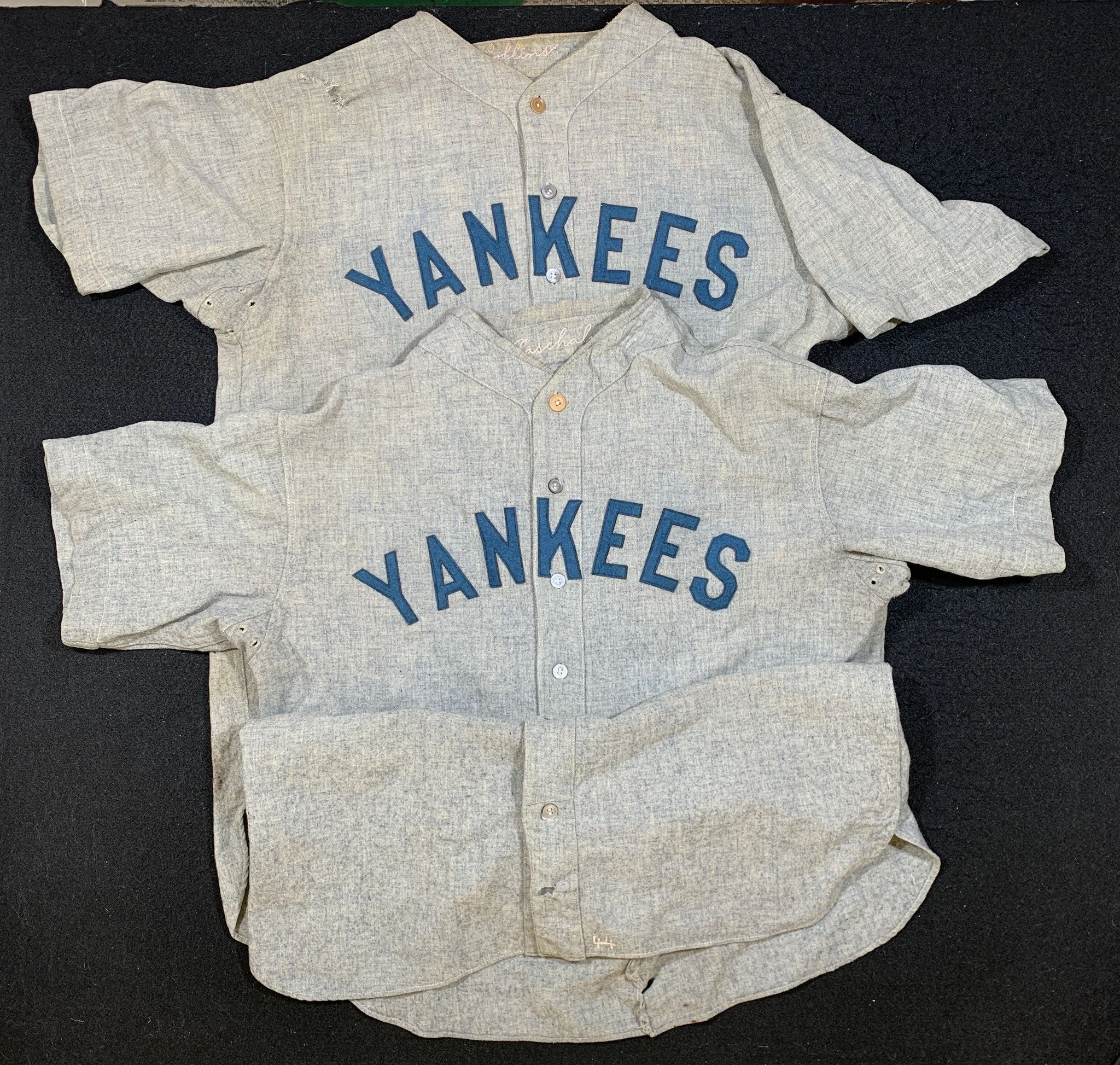
Here is the final result; both jerseys restored. I am pleased with the results, and so is the owner.