
Authentication / Restoration
1942 Stan Musial Rookie Jersey
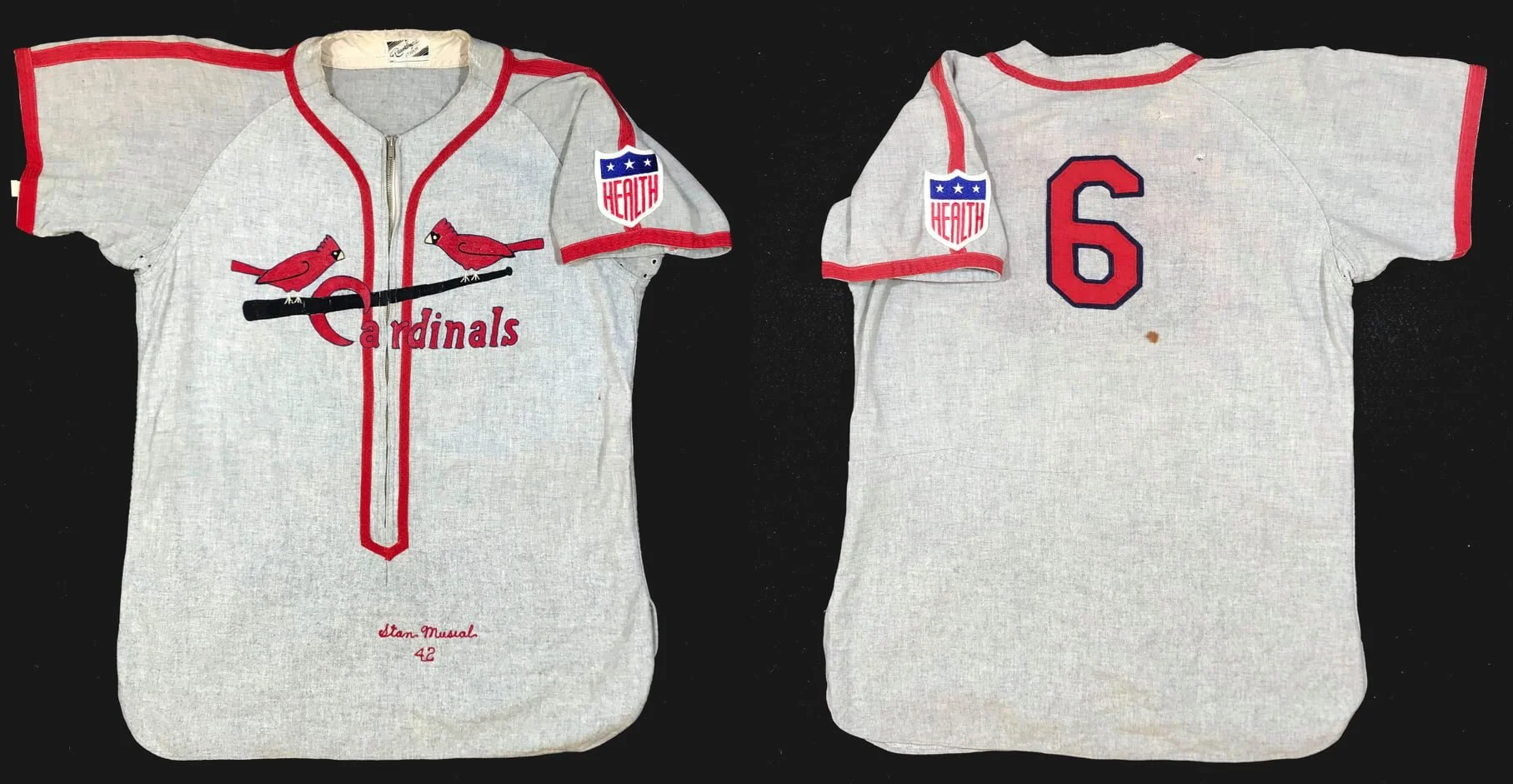
The finished product. Let's see how we got here!
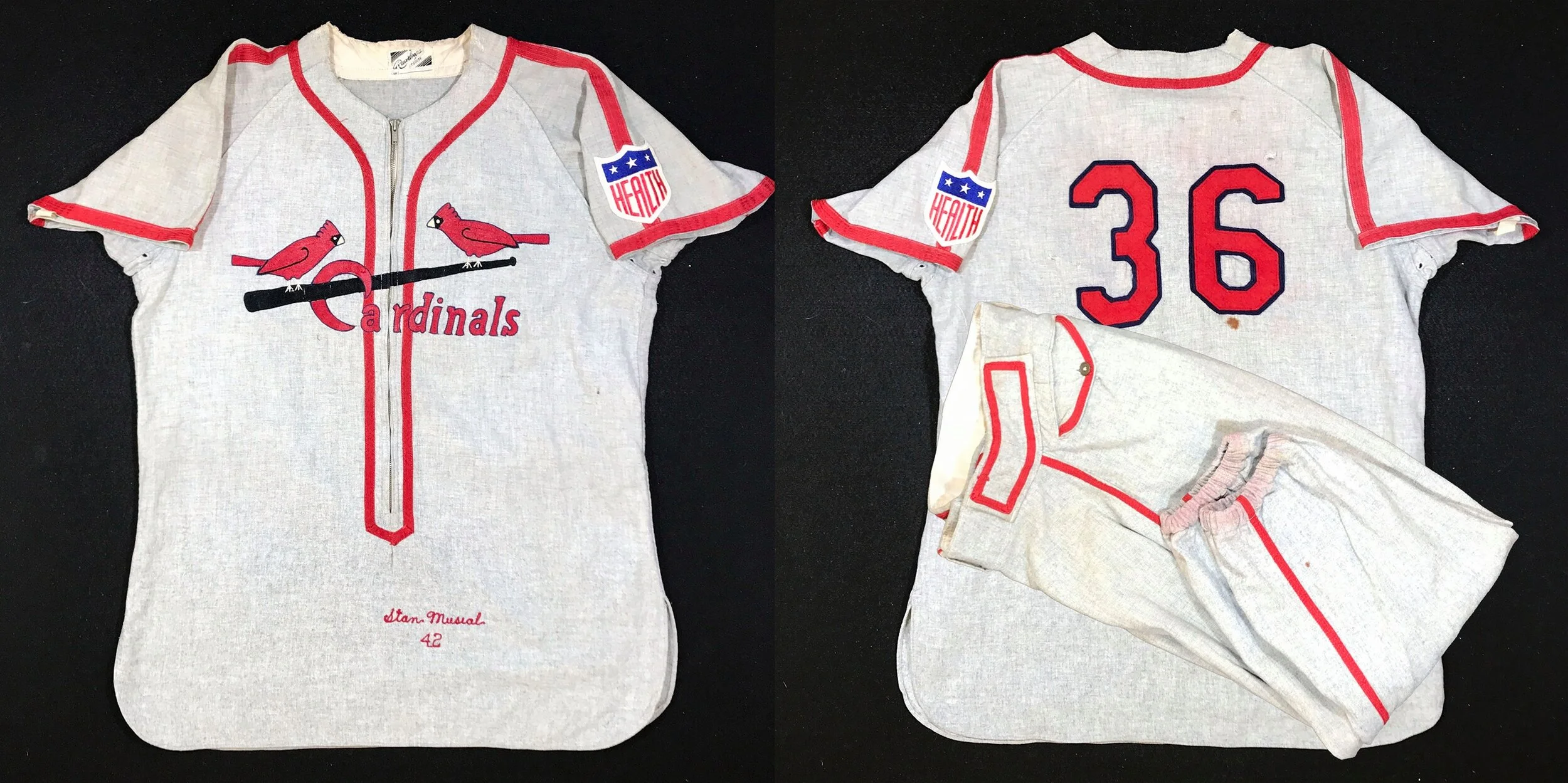
“I have a Stan Musial Cardinals uniform here for you to look at," said the voice at the other end of the phone.
The voice belonged to Dr. Wolff Kirsch, a 90-year old noted neurosurgeon and well-published medical researcher. “My family was given this uniform by a colleague who had had it in their family for years. It had been a gift to his father from a minor league player who once wore it during his career in the Cardinals system.”
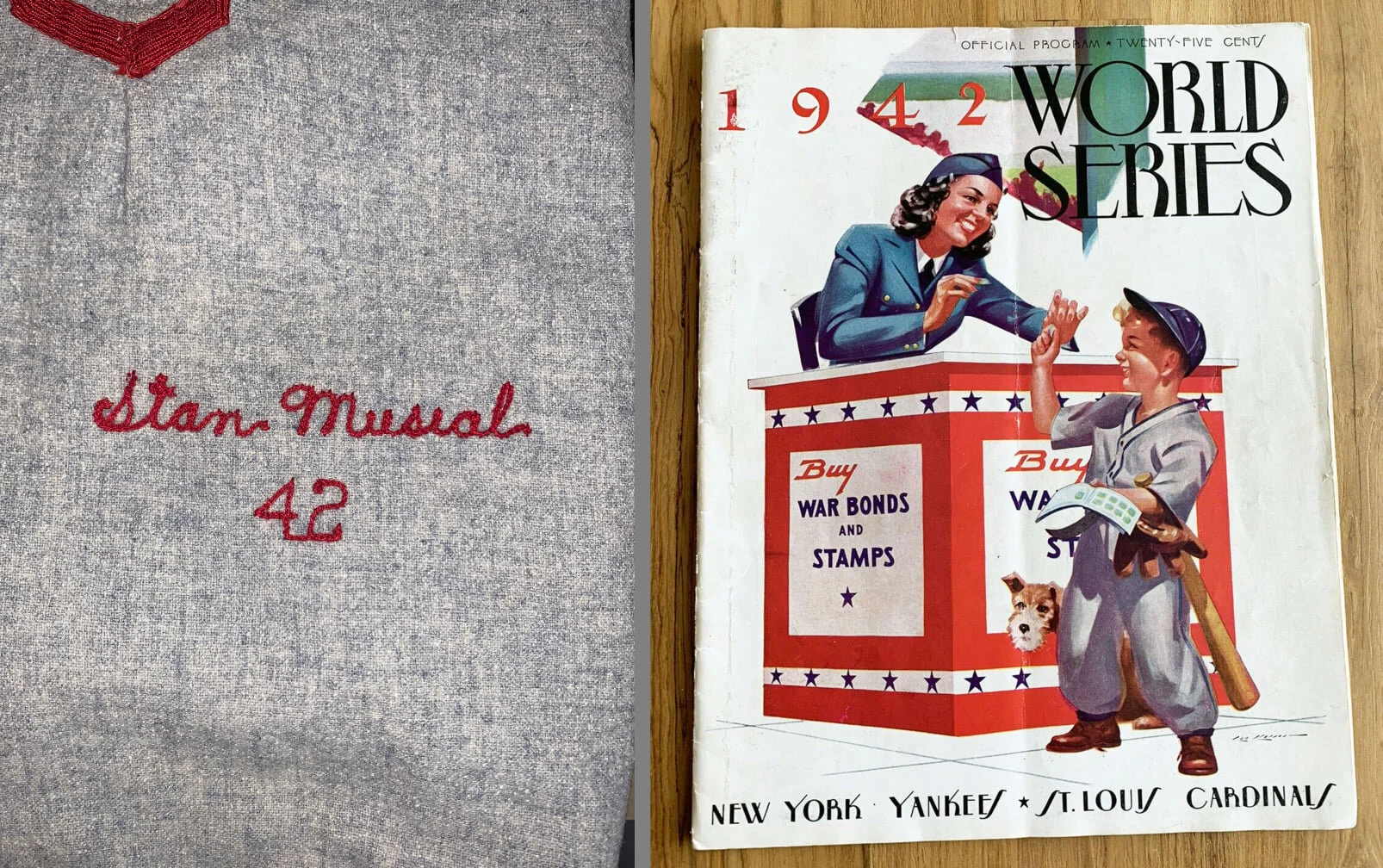
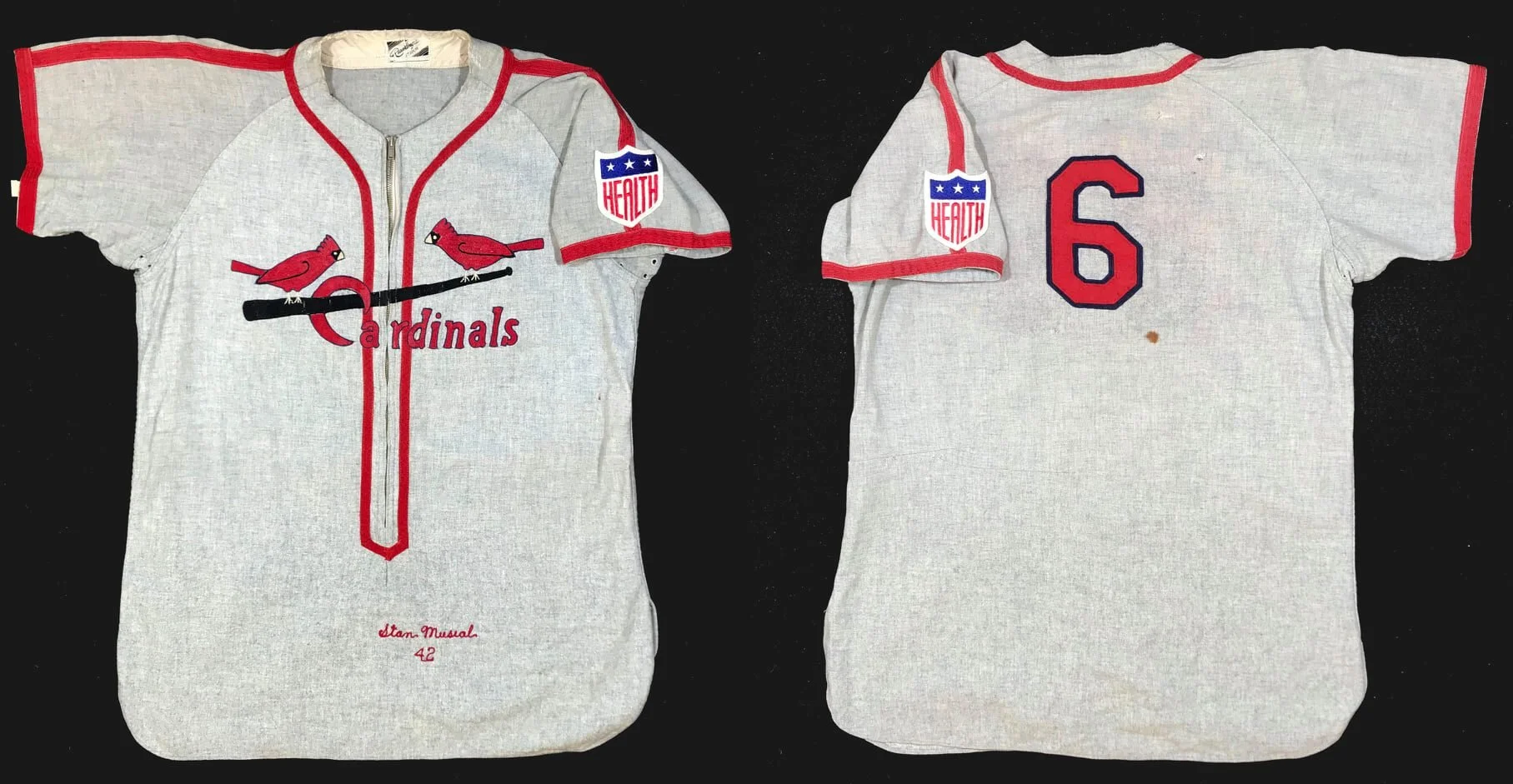
When I took the jersey out of its bag, I was immediately hopeful. The heavy wool gray-flannel uniform was in near-pristine condition, with Musial’s name chain stitched into its tail and the year 1942.
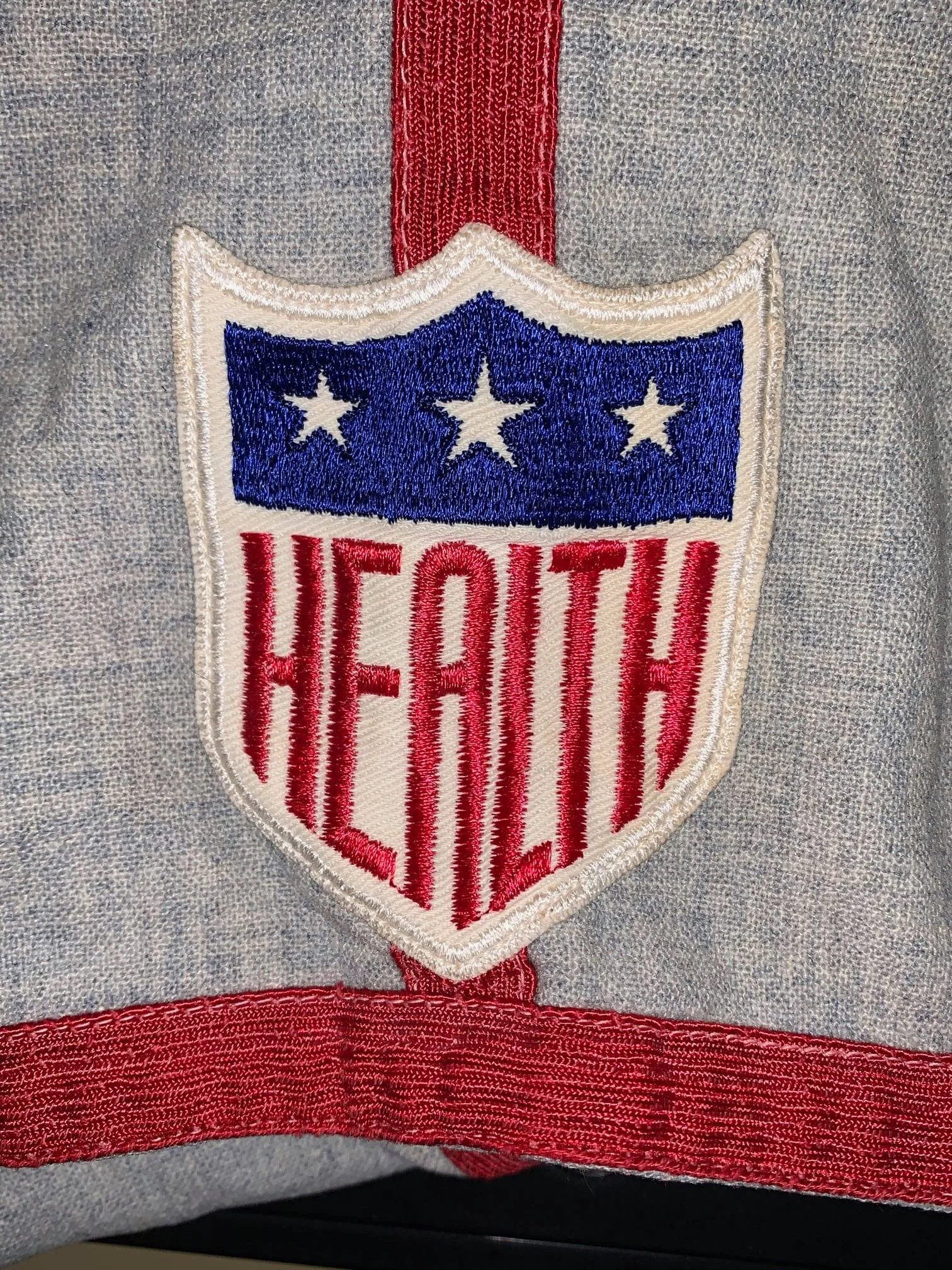
Oddly this jersey still wore the 1942-only “HEALTH” patch on its sleeve, a patch worn the first season after the start of the war by most MLB teams designed to remind Americans to do their best to be healthy as their part in supporting the war effort.
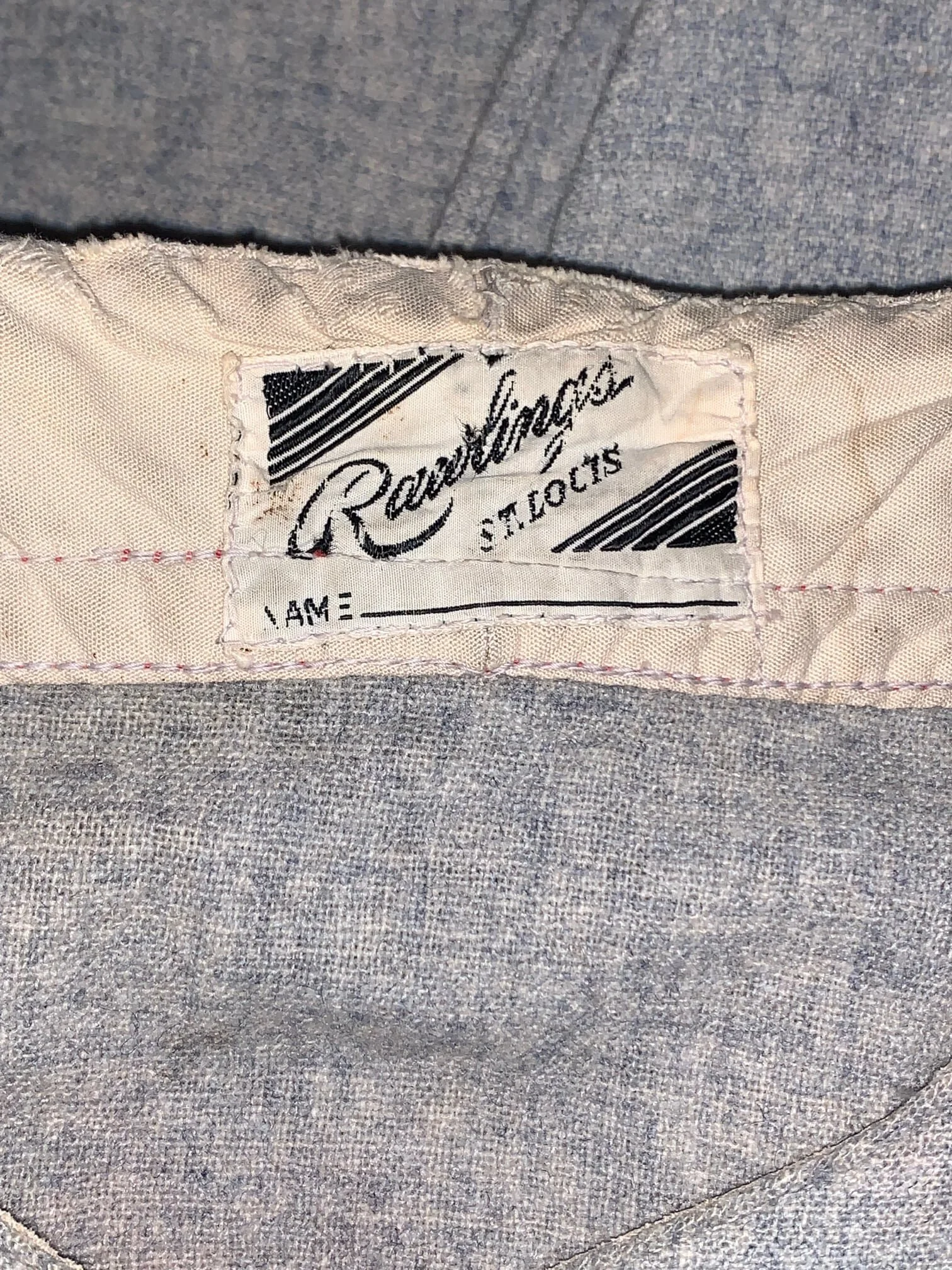
Back in 1942, game worn jerseys were simply not collectable like they are today. While sample jerseys were occasionally made to demonstrate a maker’s abilities to potential clients, it would have been highly unlikely that Rawlings would have made a “sample” Musial jersey. No -- this was the real deal.
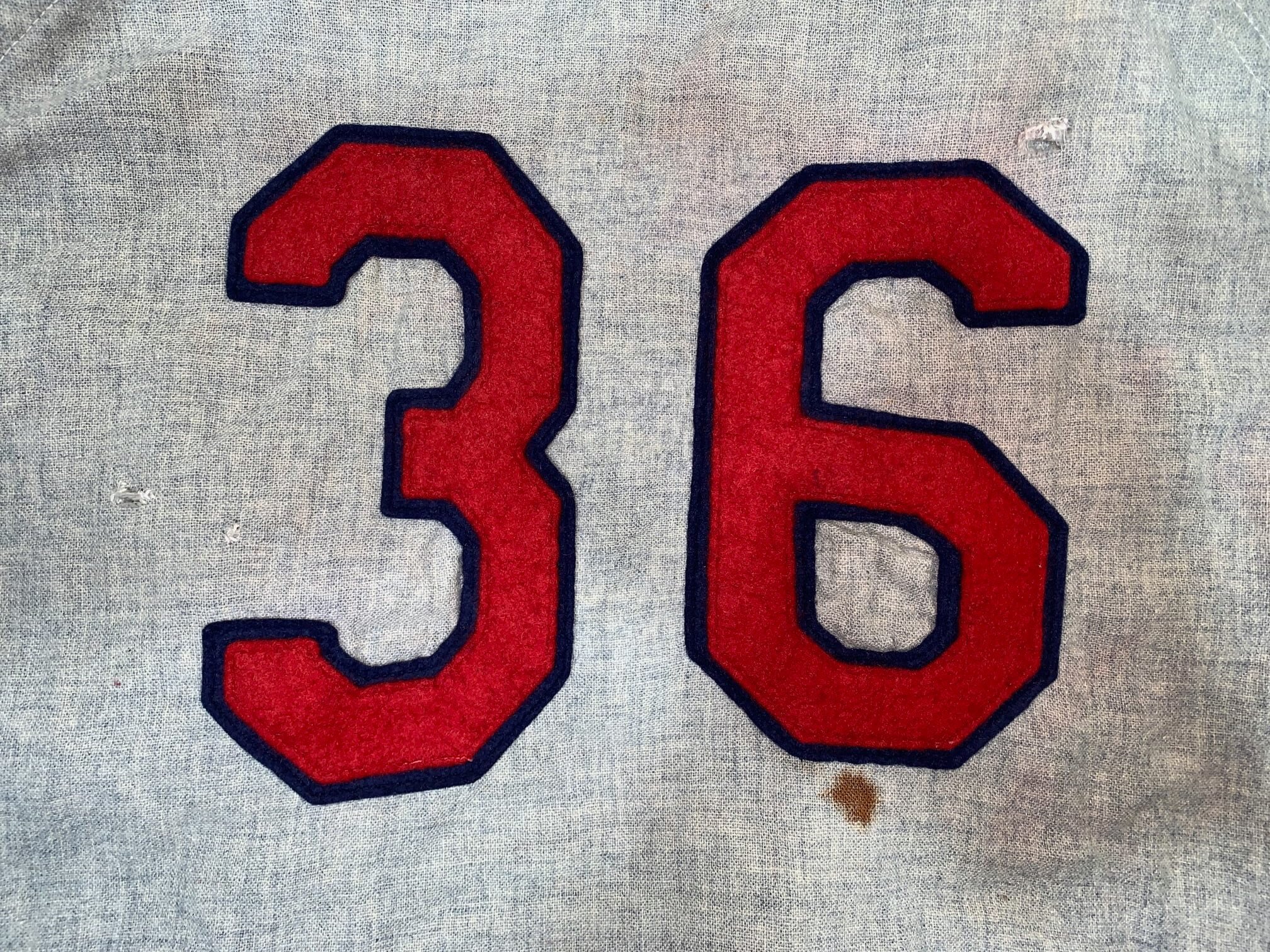
Closely examining the back of the jersey, I noted a couple of things: the mismatched #36 on the back was a signature minor-league modification, and the two back numerals were of different sizes. I put the jersey on the light table, and it could see a hint that a single number had perhaps once been centered on the back.
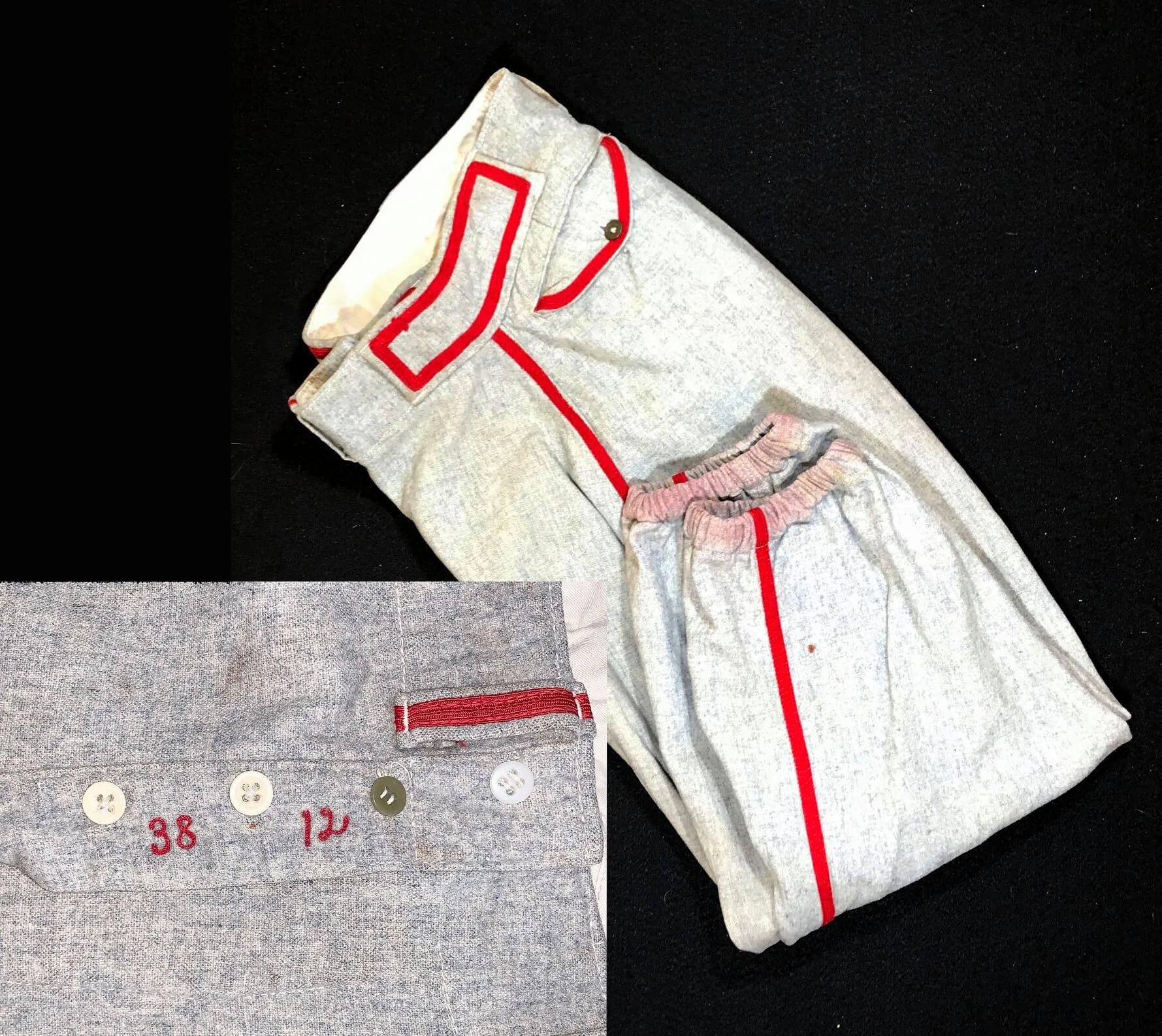
The pants were included too, and while they were the same style, their 38-inch waist told us that they would not have been Musial’s pants.
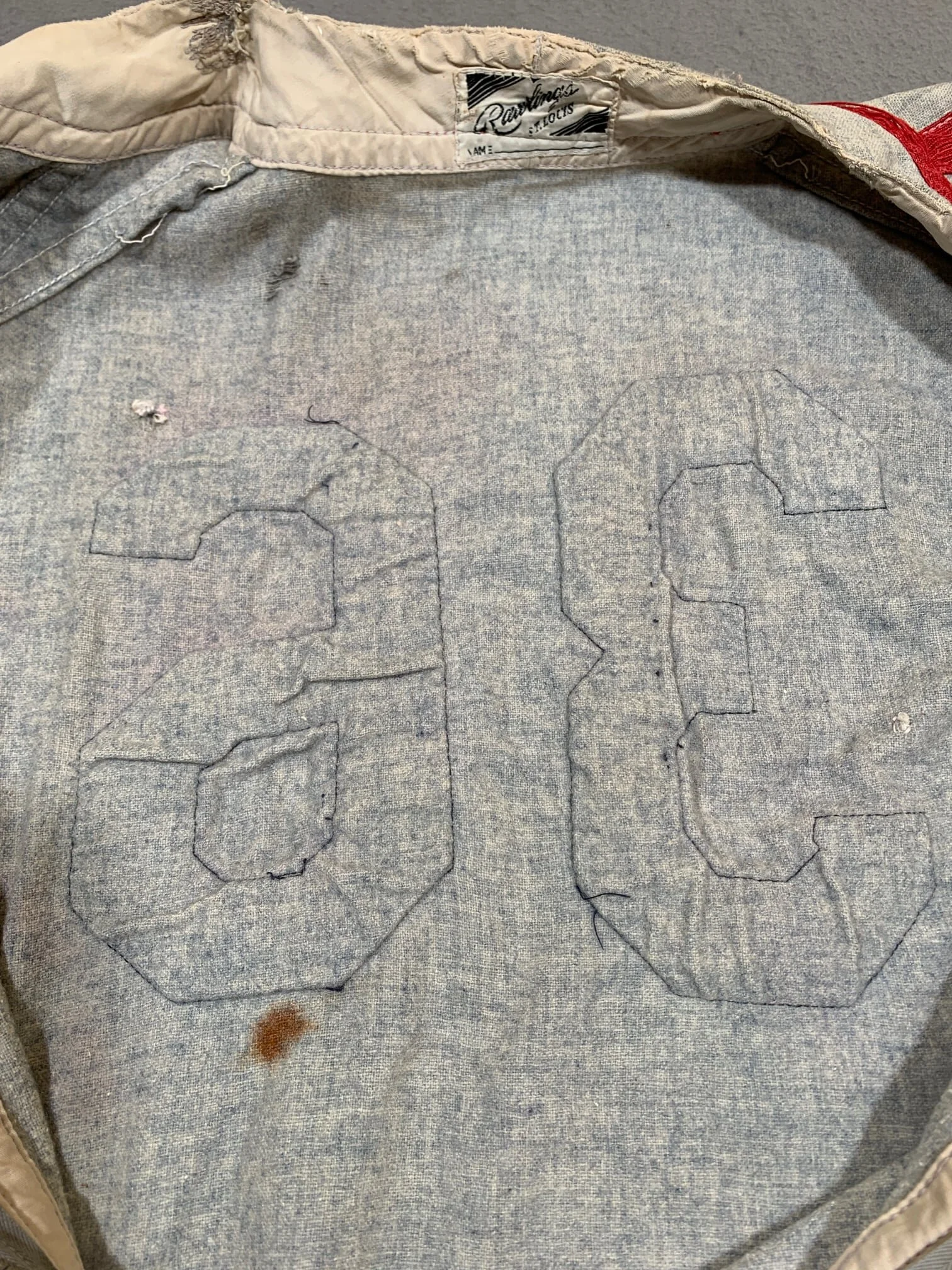
From the back side, notice the puckering of the flannel fabric under the felt numbers. This shows that the numbers and the jersey fabric had shrunk at different rates after many hot water washings.
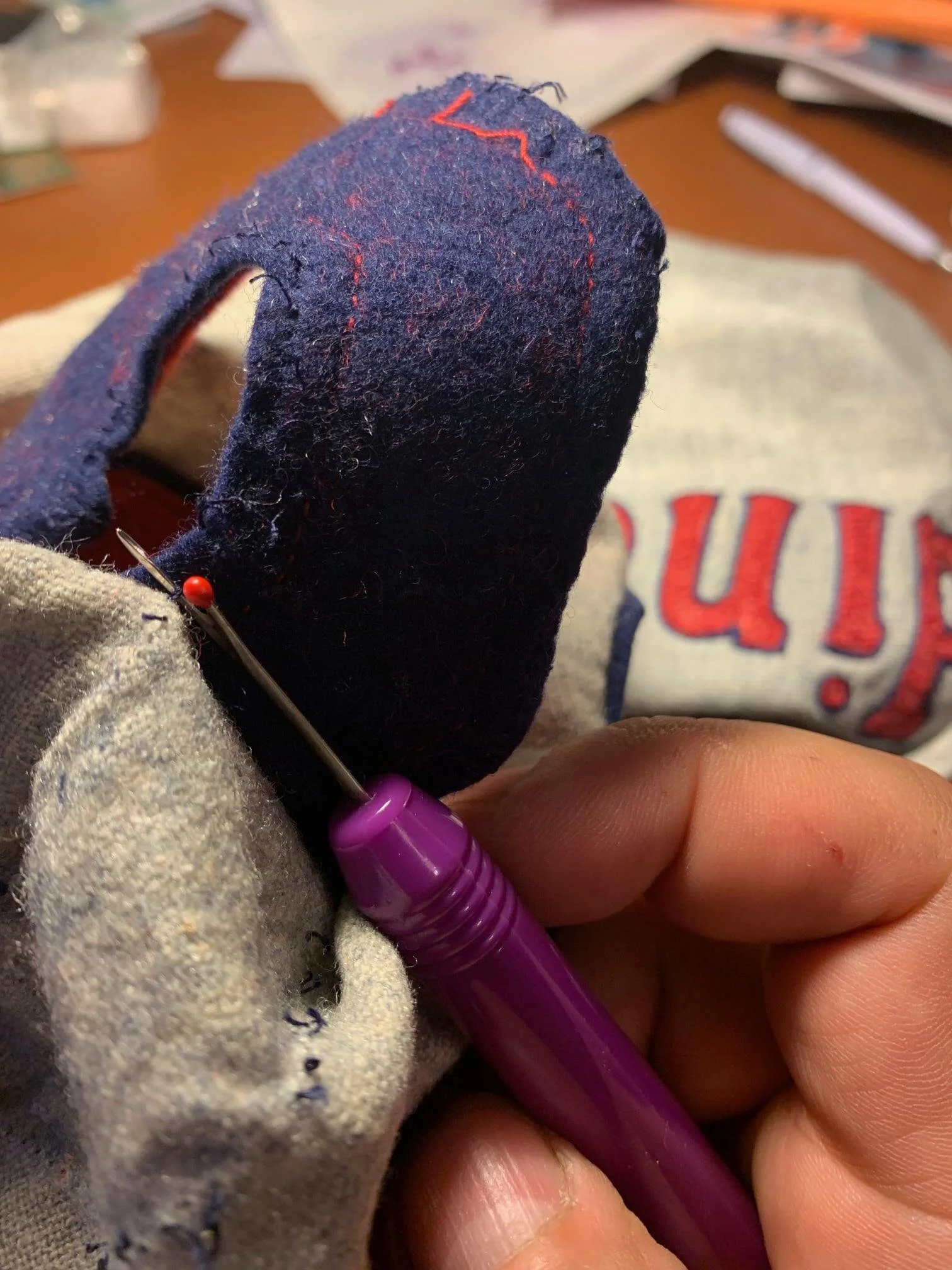
I received Dr. Kirsch’s permission to remove the back numbers so I could examine it more thoroughly. I did so, one careful stitch at a time.
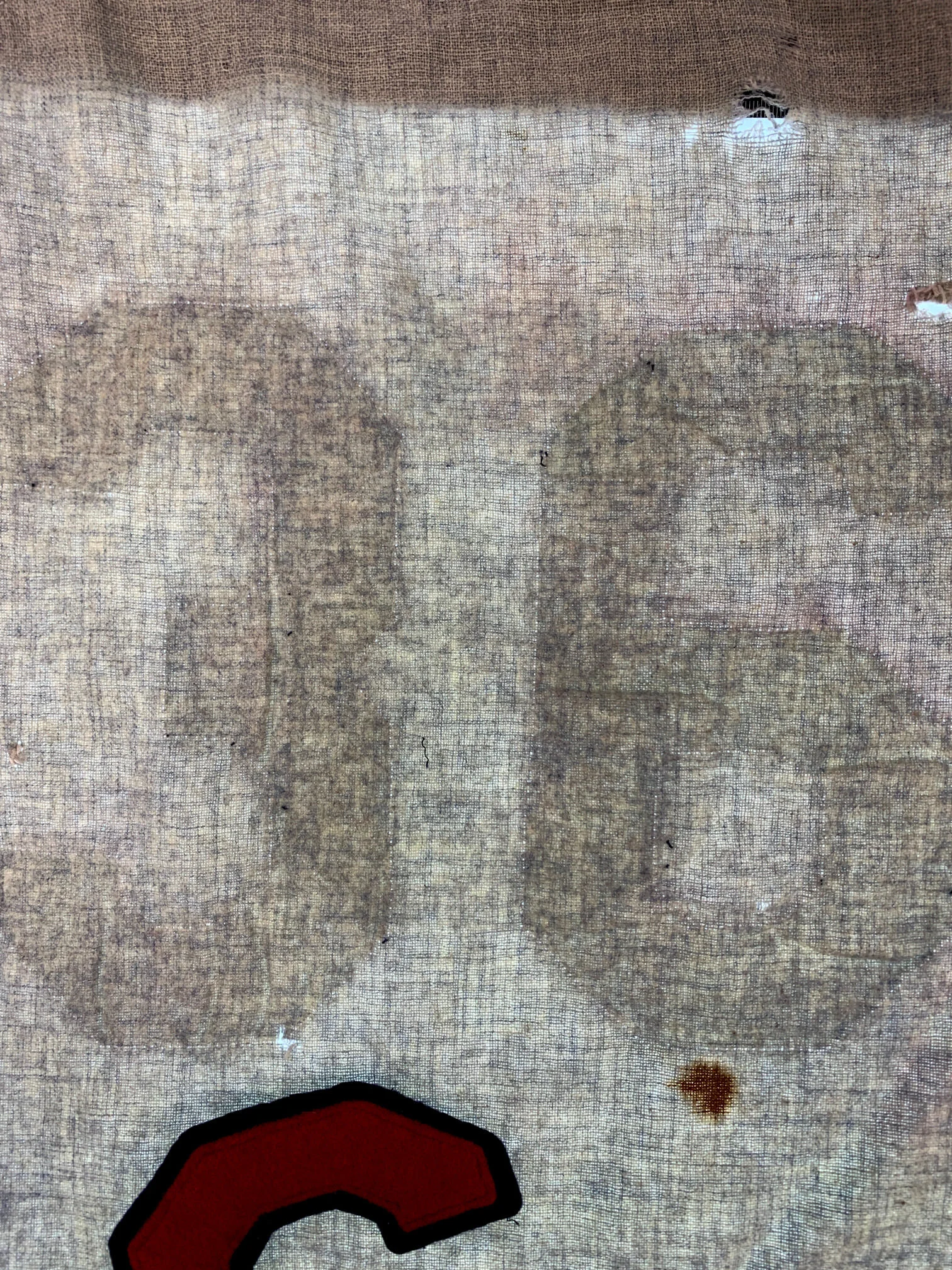
Invisible to the naked eye, I used the light table to coax out evidence of a slightly darkened area in the center of the back. It was indeed a 6! But as I compared the fuzzy size and shape, as well as the placement of the darker area, I saw that it did not match the shape of the “6” that had just been on the jersey now.
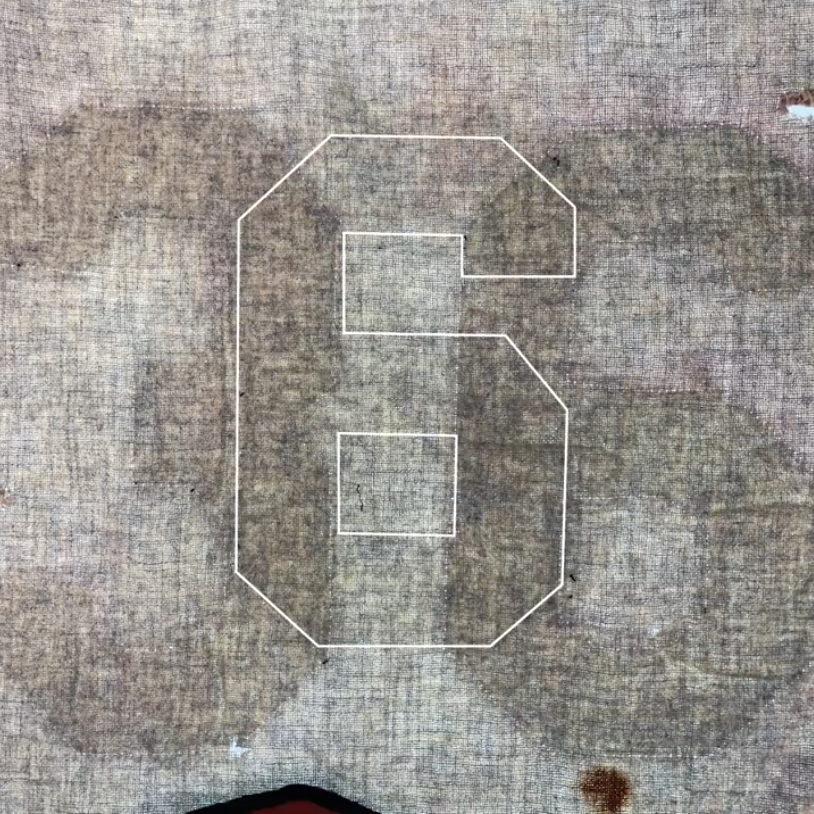
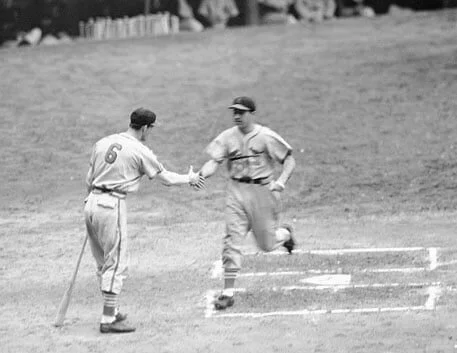
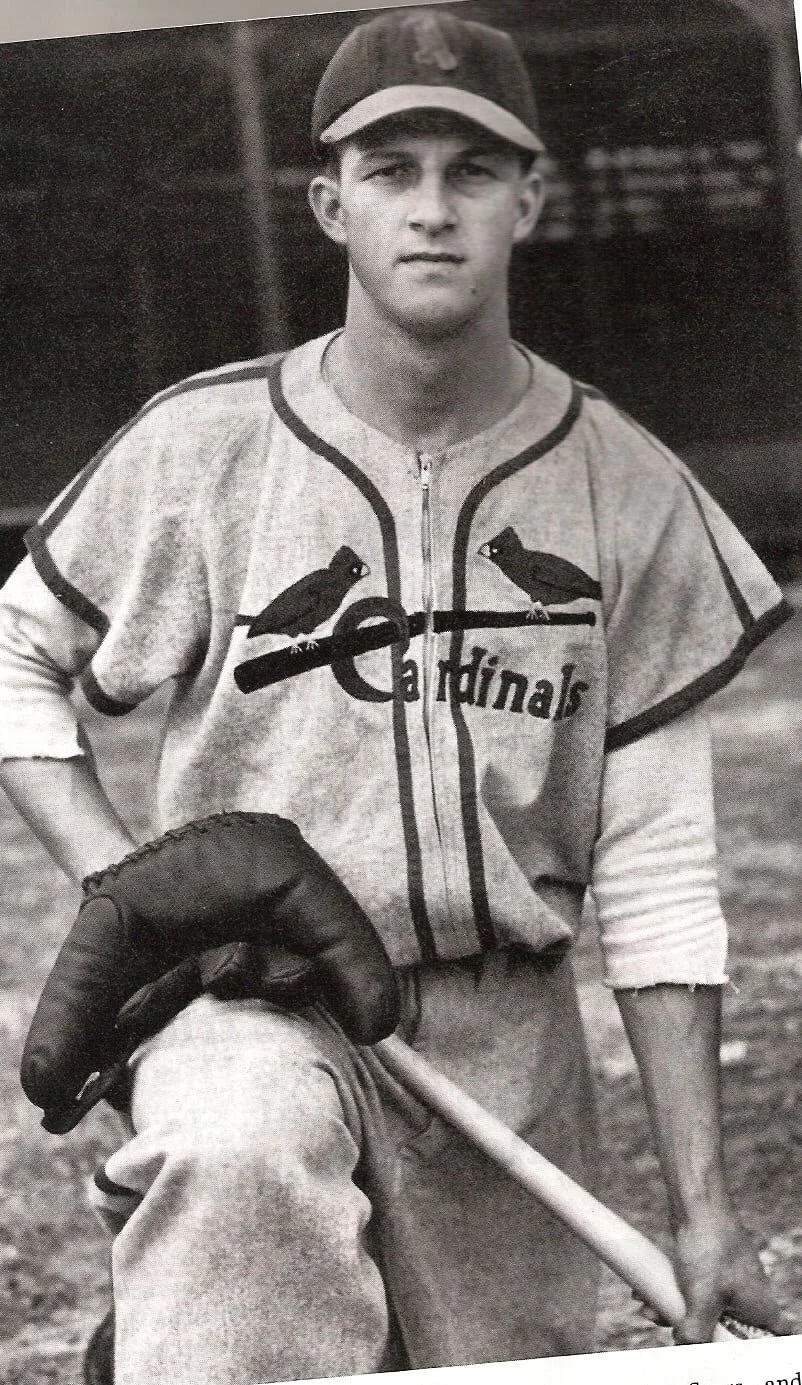
I turned to Getty Images and found this photo of Musial himself. I could see that the details of the number he wore matched the details of the shadow, but NOT of the replacement “6” that was in the minor league number! Confirming the pattern for the Rawlings 1942 number set, I found see that we had a match, that the proper 6 had been sewn on the center of this jersey’s back. It's possible that I had this very jersey.
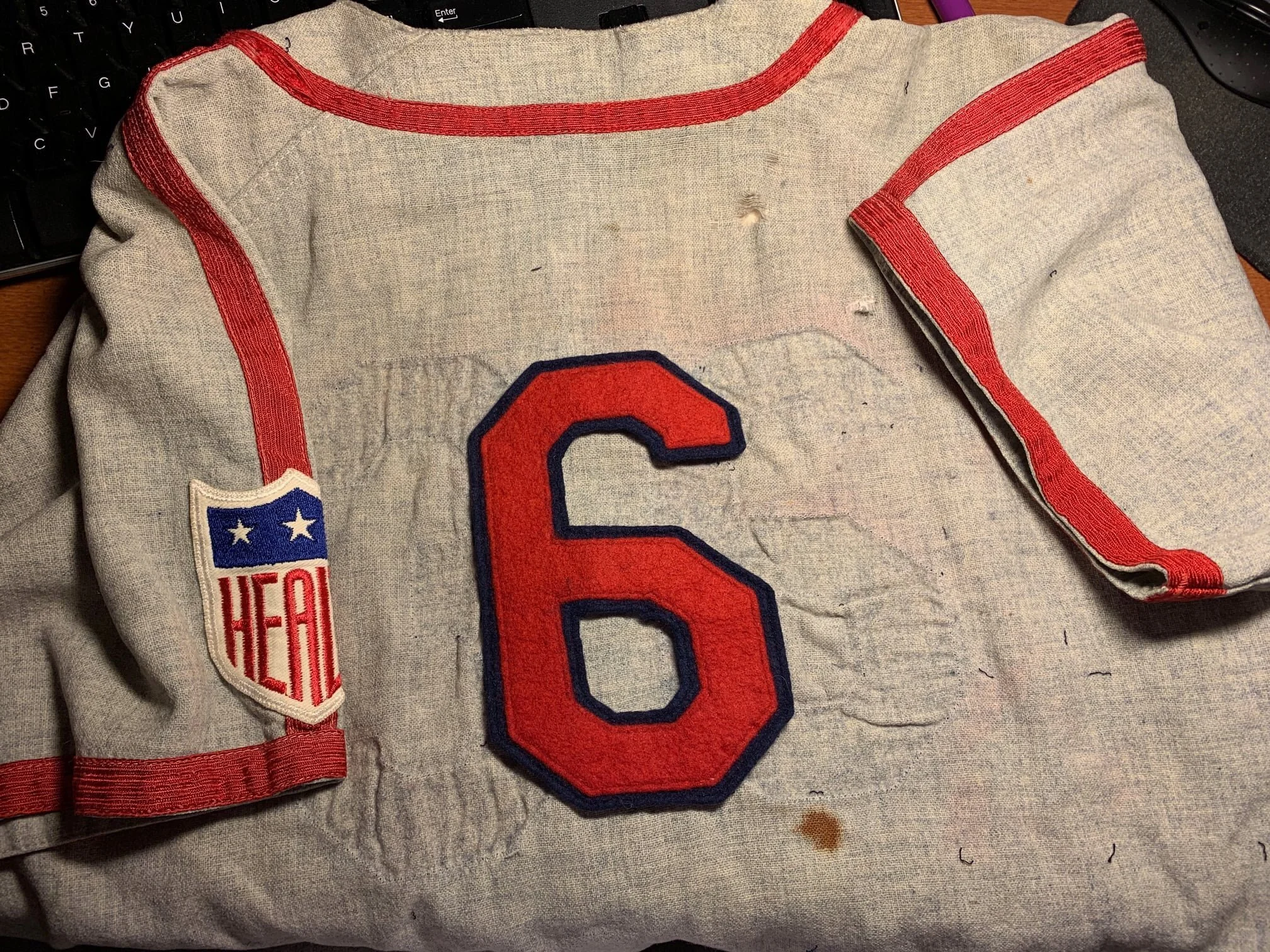
Dr. Kirsch was delighted with this news, and asked me if I would restore the number to the back. Even though the “6” we took off the shirt was not a perfect match to the MLB Cardinals’ 1942 font, it was antique and original to the Cards’ organization. I suggested using the existing “6” in lieu of making a new one, and he agreed.
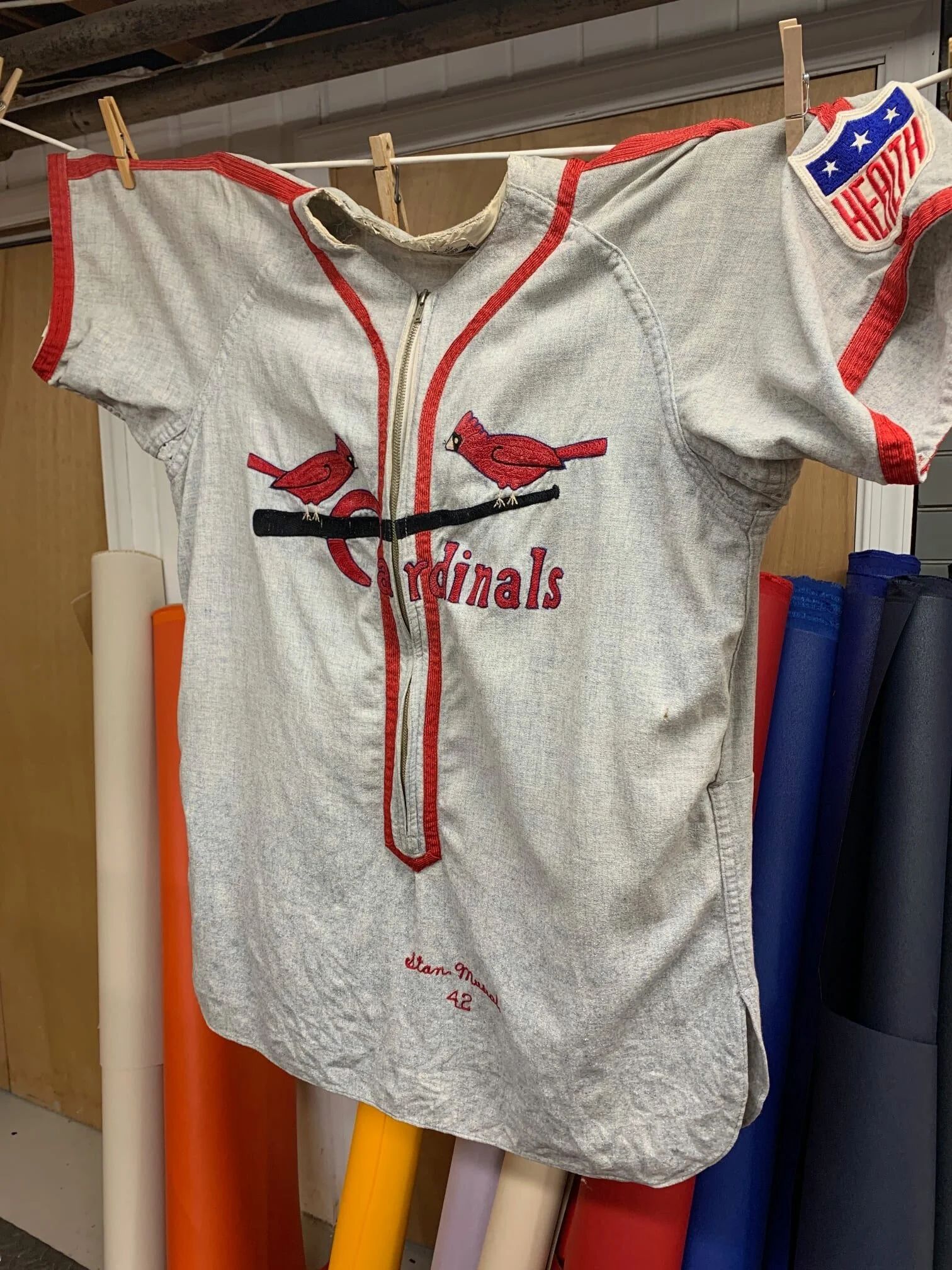
I have learned that many of these antique jerseys are terrifically dirty. I suggested hand-washing the jersey to even the tone and brighten it. When it had dried, it was much brighter all over!
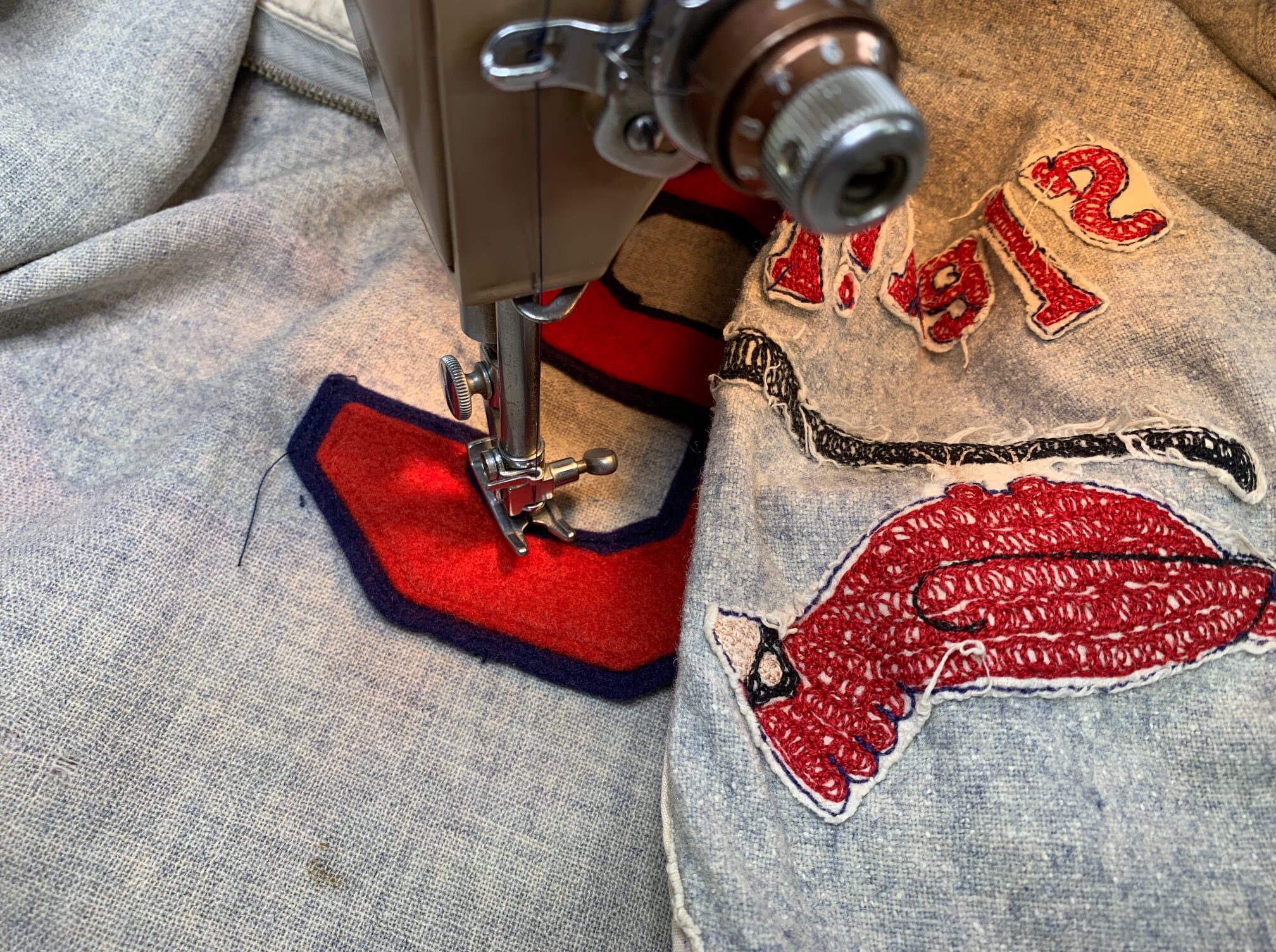
All that remained was to stitch the number in its proper place. We employed a straight stitch, as that was how felt numbers were once sewn. The zig-zag sewing machine wasn’t even invented at the time that this garment was made!
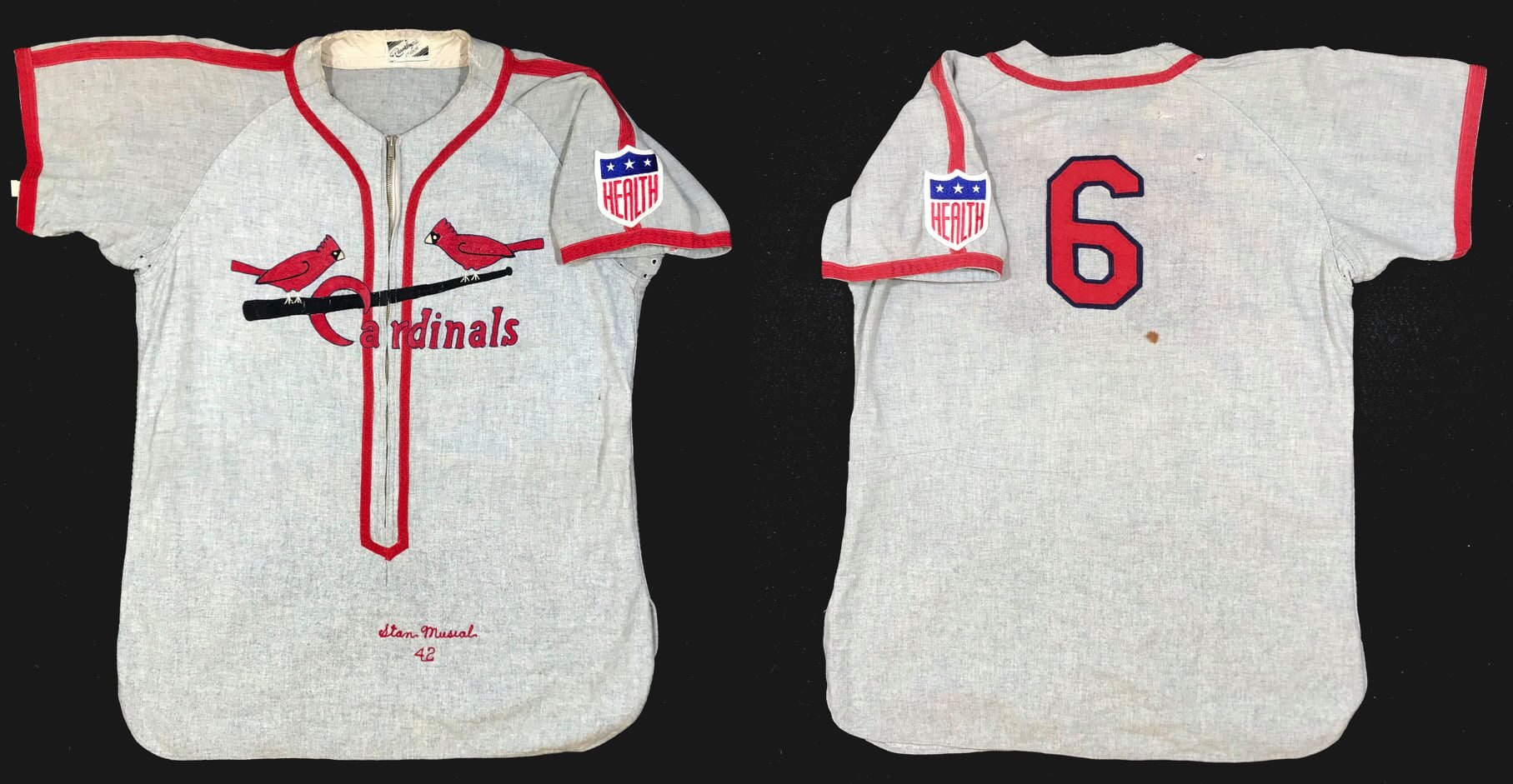
Completed, this uniform went back to its owner, destined for display in a museum.
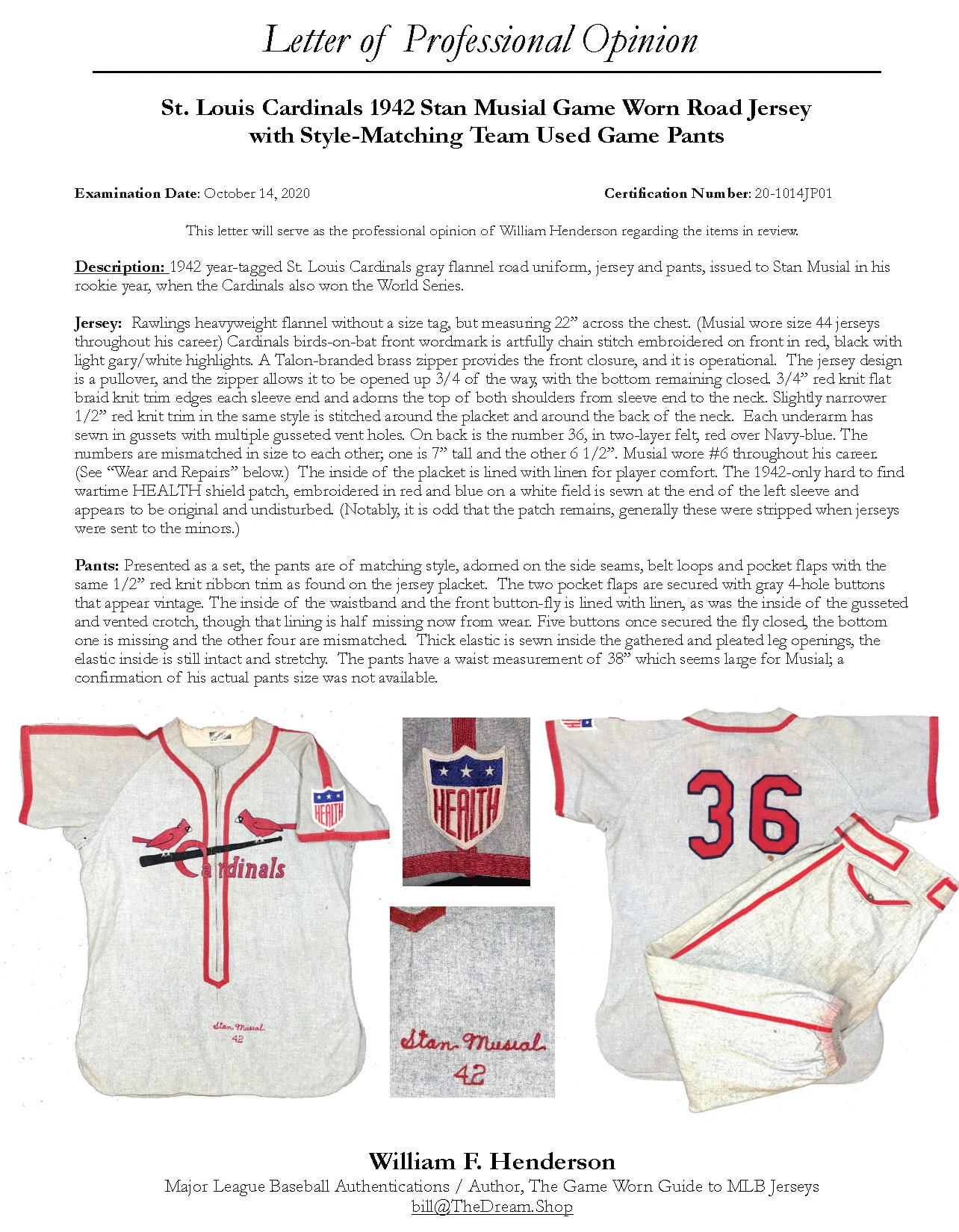
(LINK) Documenting the restoration and writing a complete letter or authenticity for this treasure was both a requirement and an honor for me. I am honored to be trusted by collectors to do this type of work. Click on the image above to read the entire letter.