
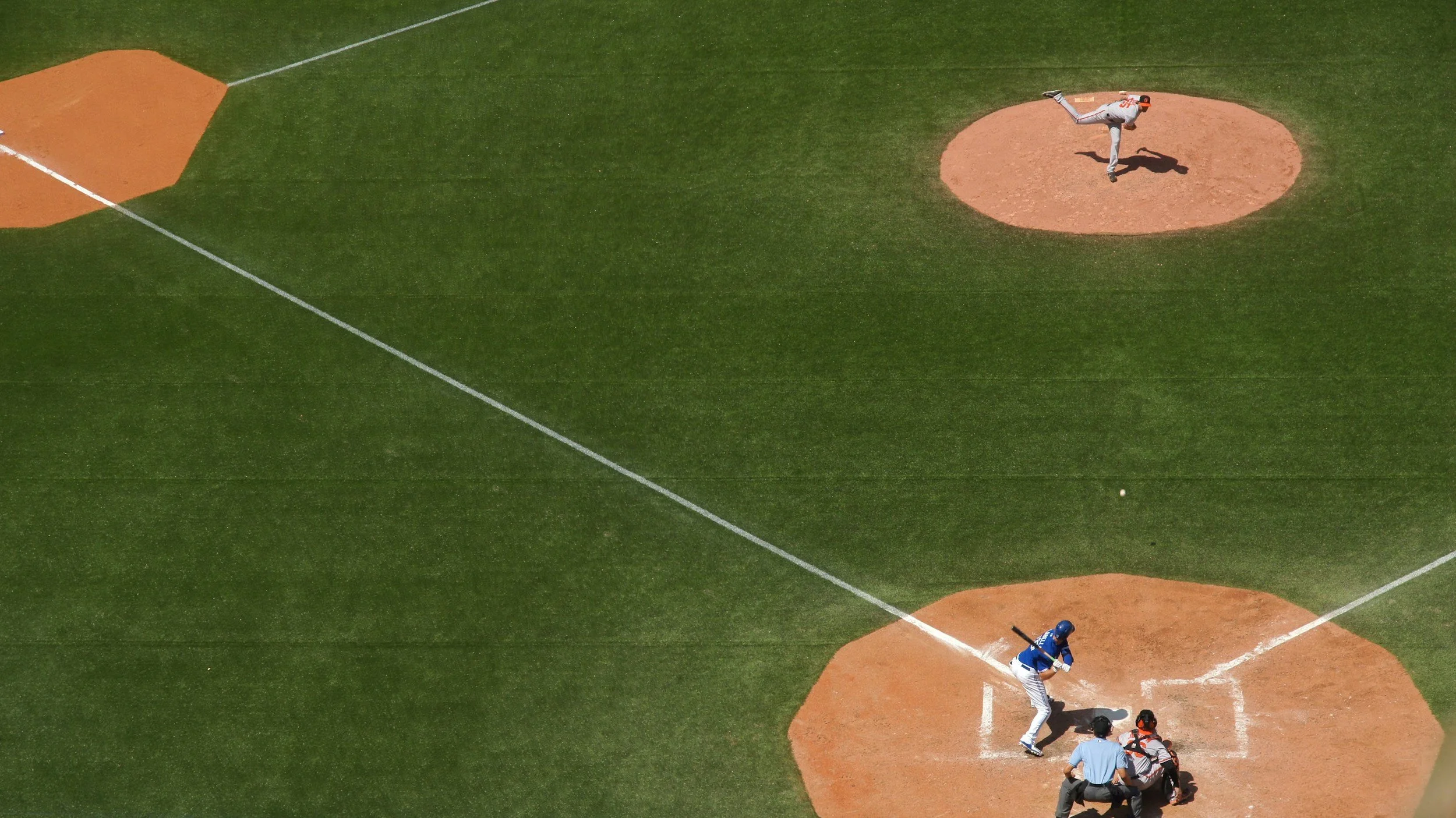
Autograph Removal
Removing an autograph from a knit jersey: When the autograph is on a white knit jersey chances are pretty good that it will come out. Colored jerseys are harder, flannel jerseys are unlikely. I thought you’d like to see one done from A to Z.
Steaming Jerseys
Quick Take: I am often asked about what effect "steaming" a jersey during restoration has. It's one of the techniques I use regularly. You can see the before and after in the photos below.
Steaming is done on a plate-heat press with precise timing and heat control (I use 340 degrees F). The clean garment is placed on a Teflon pillow, sprayed liberally and evenly with distilled water (never steam a dirty garment or use tap water- it stains!) and pressed for a short amount of time, several times over., re-spraying as necessary.
You can see the dramatic effects. Proper steaming drastically closes up the stitching holes, and conforms the puckered wrinkles that had been under old lettering. You can still slightly see the ghosts of the old lettering because the fabric underneath it is slightly darker than the surrounding area, due to less exposure to the sun and detergents. But when covered with new lettering, it is generally not very noticeable.
Even when steamed, scant evidence of old stitching remains visible on the light table for future authenticators to see.
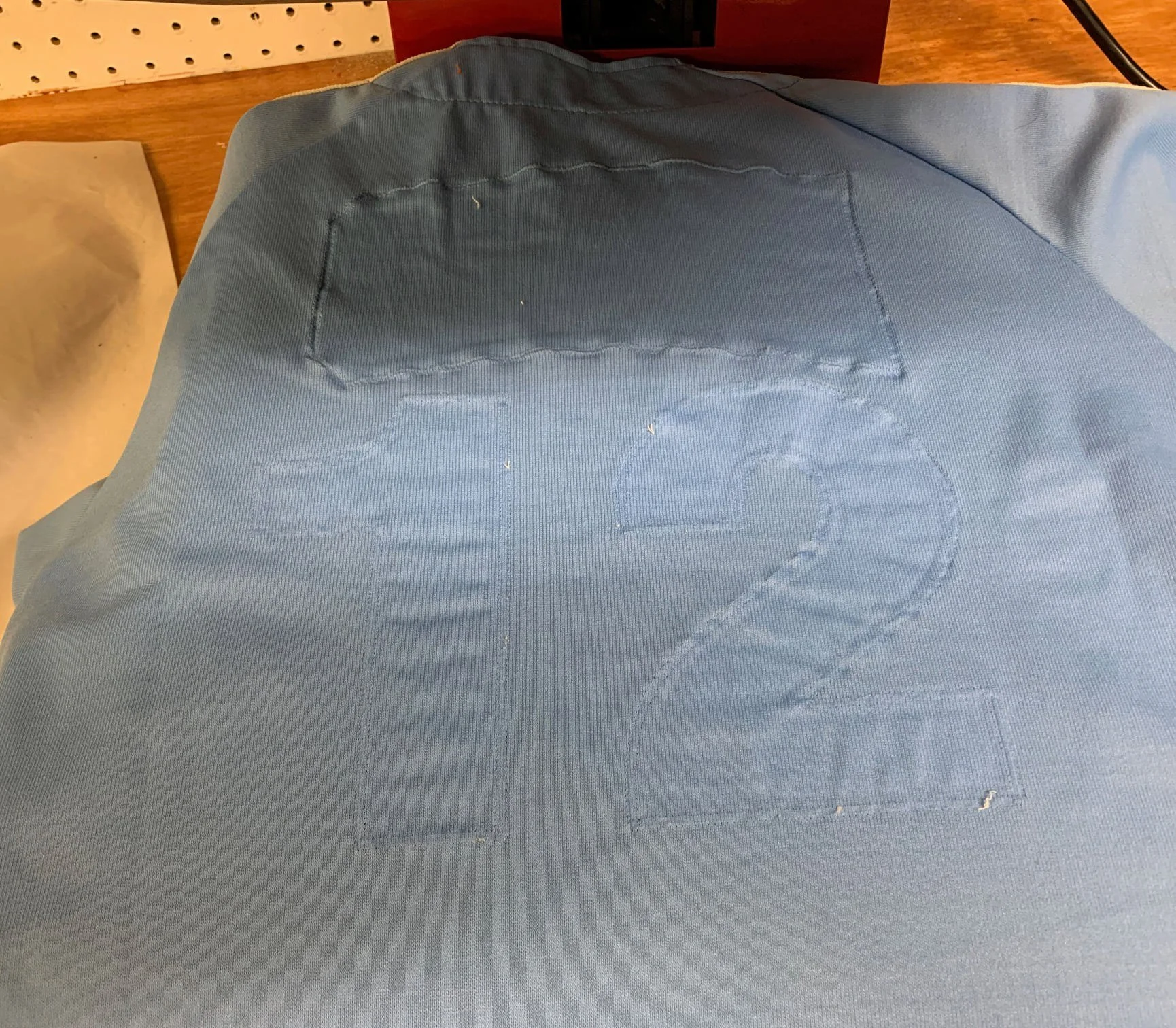
BEFORE- this jersey is clean. Never steam a dirty garment. The puckering beneath the old lettering is caused by the two types of fabric shrinking at different rates after dozens (hundreds?) of washes.
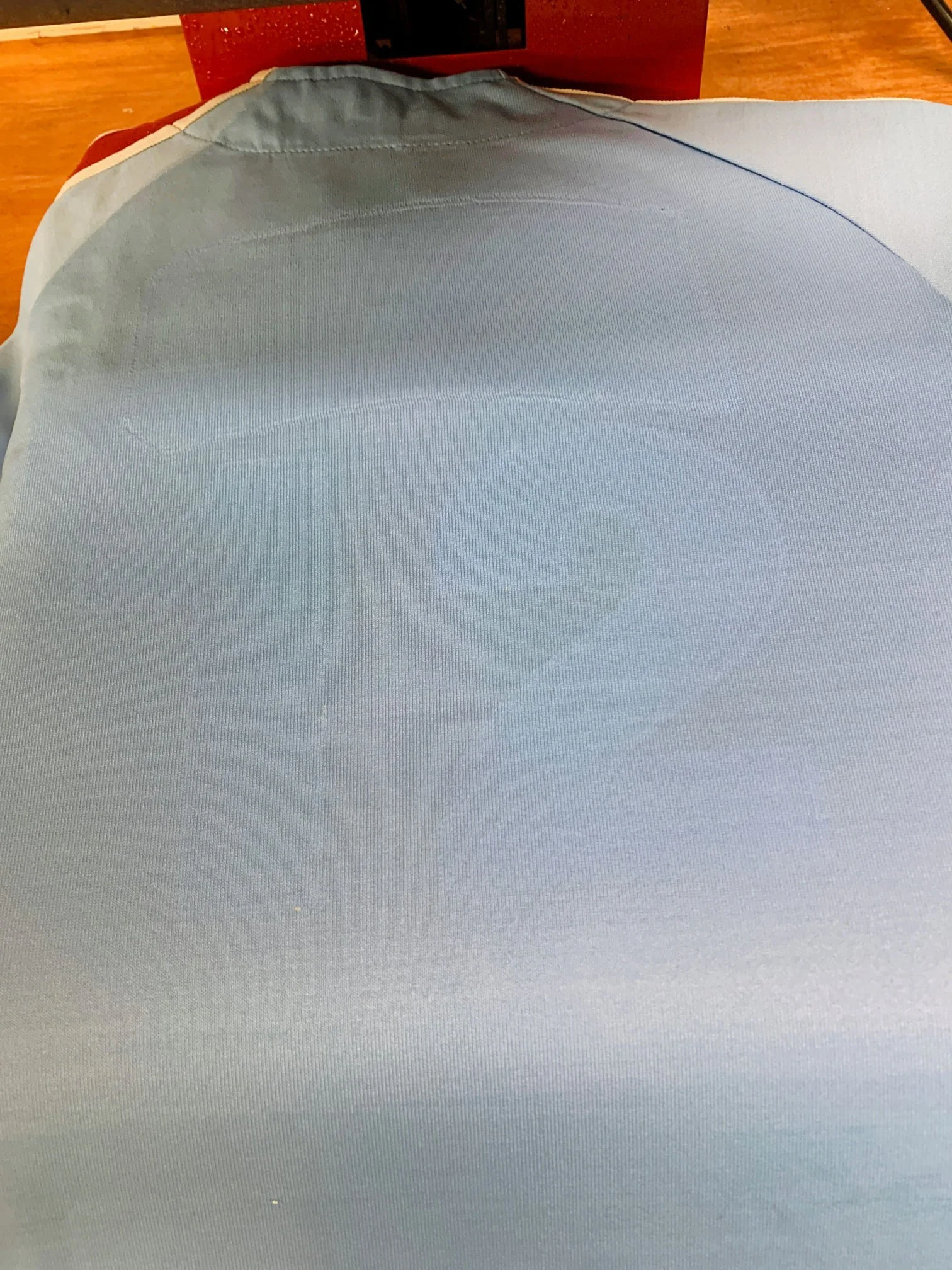
AFTER: Ready to be relettered.
Blacklight
Here is one of the magic tricks I use in authentication and restoration— the powers of a high intensity black light and the color spectrometer.
A blacklight, also called a UV-A light, Wood's lamp, or ultraviolet light, is a lamp that emits long-wave (UV-A) ultraviolet light and very little visible light. Ultraviolet radiation is invisible to the human eye, but illuminating certain materials with UV radiation causes the emission of visible light, causing these substances to glow with various colors.
This light in high intensity can be dangerous— even though you can’t see it, it can harm your eyes or skin. The lights I use come with warning labels all over the box, and are not the same kind you get at Spencer Gifts for your 1960s groovy poster party. When turned on, the “light” is practically invisible to one’s eye, unless it hits something that makes it fluoresce or glow.
Using the black light is one of my standard steps in authentication or restoration as it can reveal invisible secrets in a jersey. I am not a scientist, and I can’t explain why some things glow and others don’t, because often times the black light reveals nothing at all when I use. But other times— well, let’s talk about some of these!
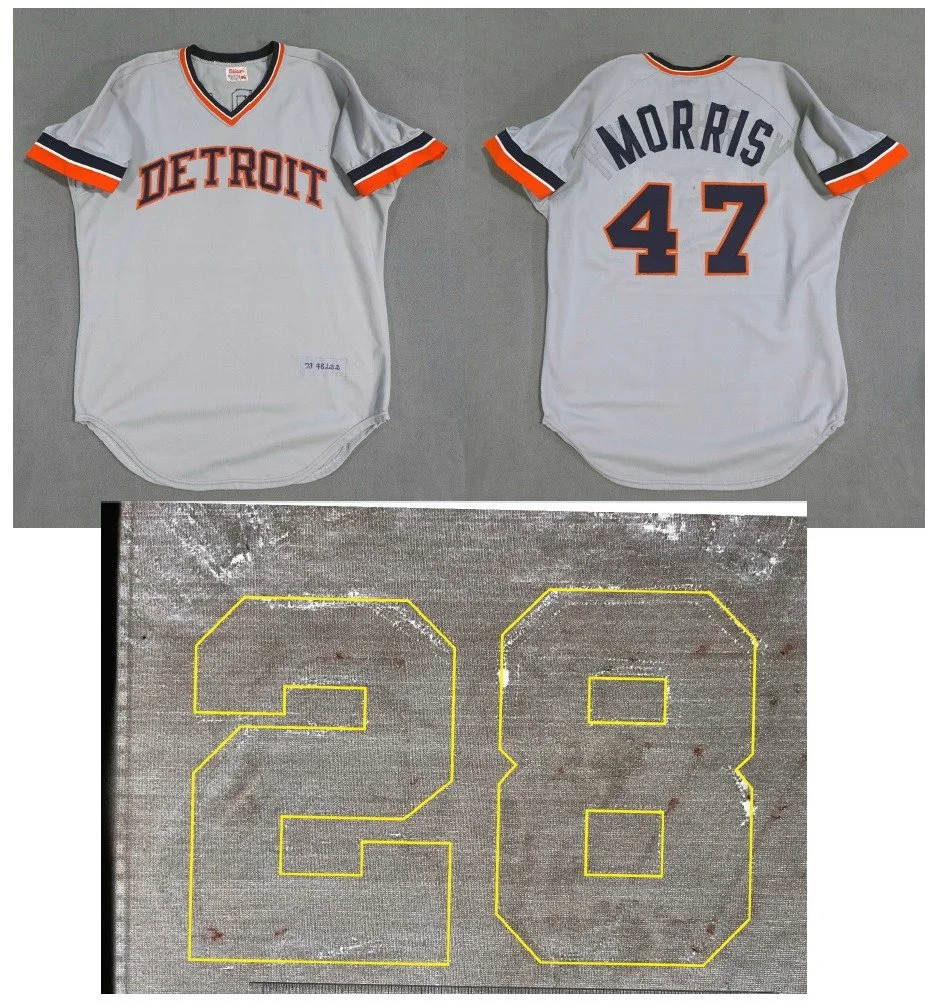
The Mystery of the well-worn Tigers jersey: there are a few teams that were as frugal as the 1970s Detroit Tigers. They issued and re-issued their jerseys so many times that some may have had evidence of three or more names and numbers having been on the back. Origin is often impossible to decipher on the regular light table. A collector sent me this team tagged 1973 jersey which when I received- it wore the name and number of Jack Morris, a player who was on the Tigers several years after this jersey had been used. It was very clear that the name on back was not original, and I suspect that because the number was "right" for that player, somebody put his name on the back and enjoyed wearing it. The collector wanted me to determine what this jersey originally was so we could potentially restore it. The light table showed that the original number was #28, which was pitcher Ed Farmer in 1973.
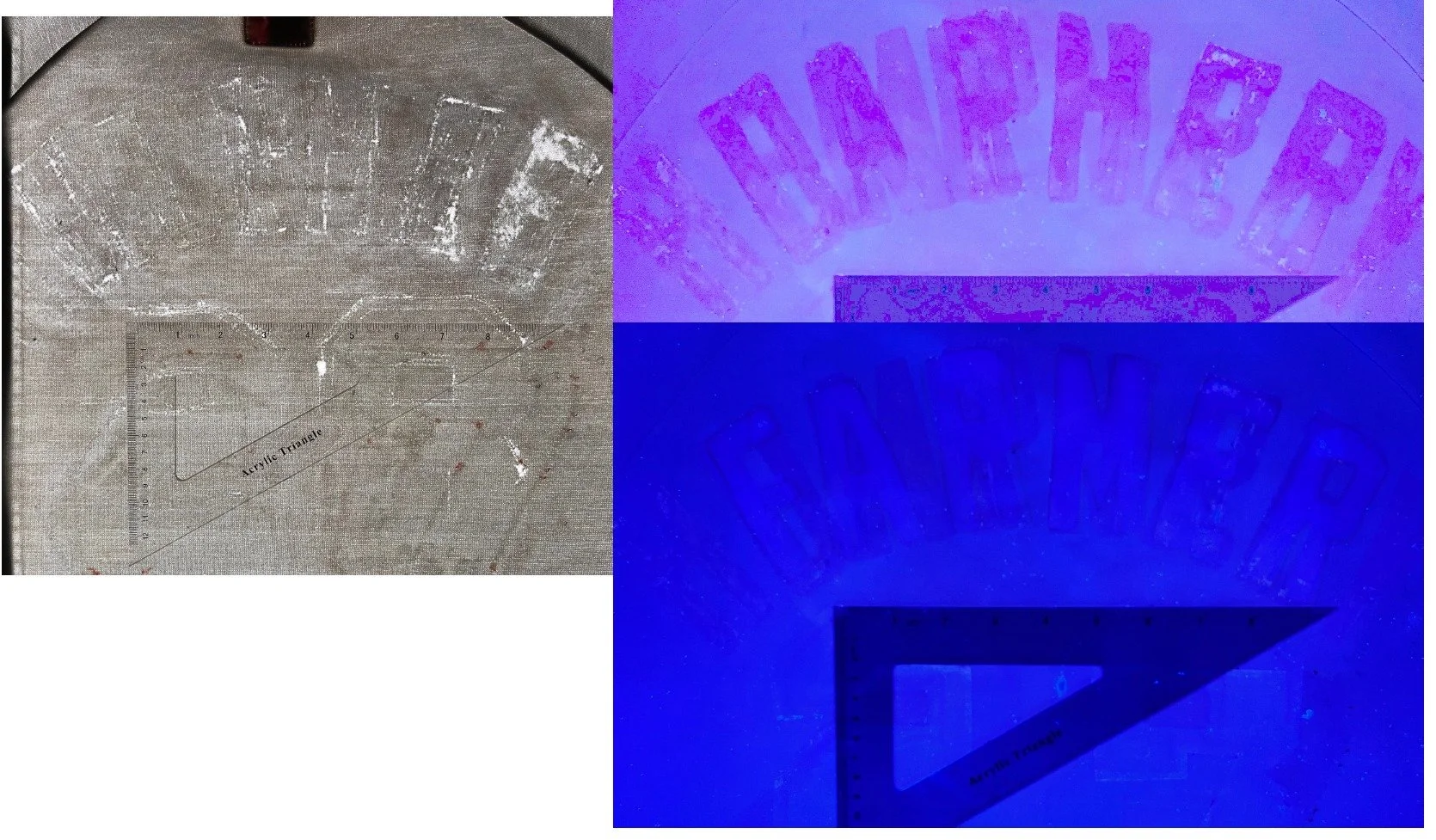
The Mystery of the well-worn Tigers jersey: there are a few teams that were as frugal as the 1970s Detroit Tigers. They issued and re-issued their jerseys so many times that some may have had evidence of three or more names and numbers having been on the back. Origin is often impossible to decipher on the regular light table. A collector sent me this team tagged 1973 jersey which when I received- it wore the name and number of Jack Morris, a player who was on the Tigers several years after this jersey had been used. It was very clear that the name on back was not original, and I suspect that because the number was "right" for that player, somebody put his name on the back and enjoyed wearing it. The collector wanted me to determine what this jersey originally was so we could potentially restore it. The light table showed that the original number was #28, which was pitcher Ed Farmer in 1973.
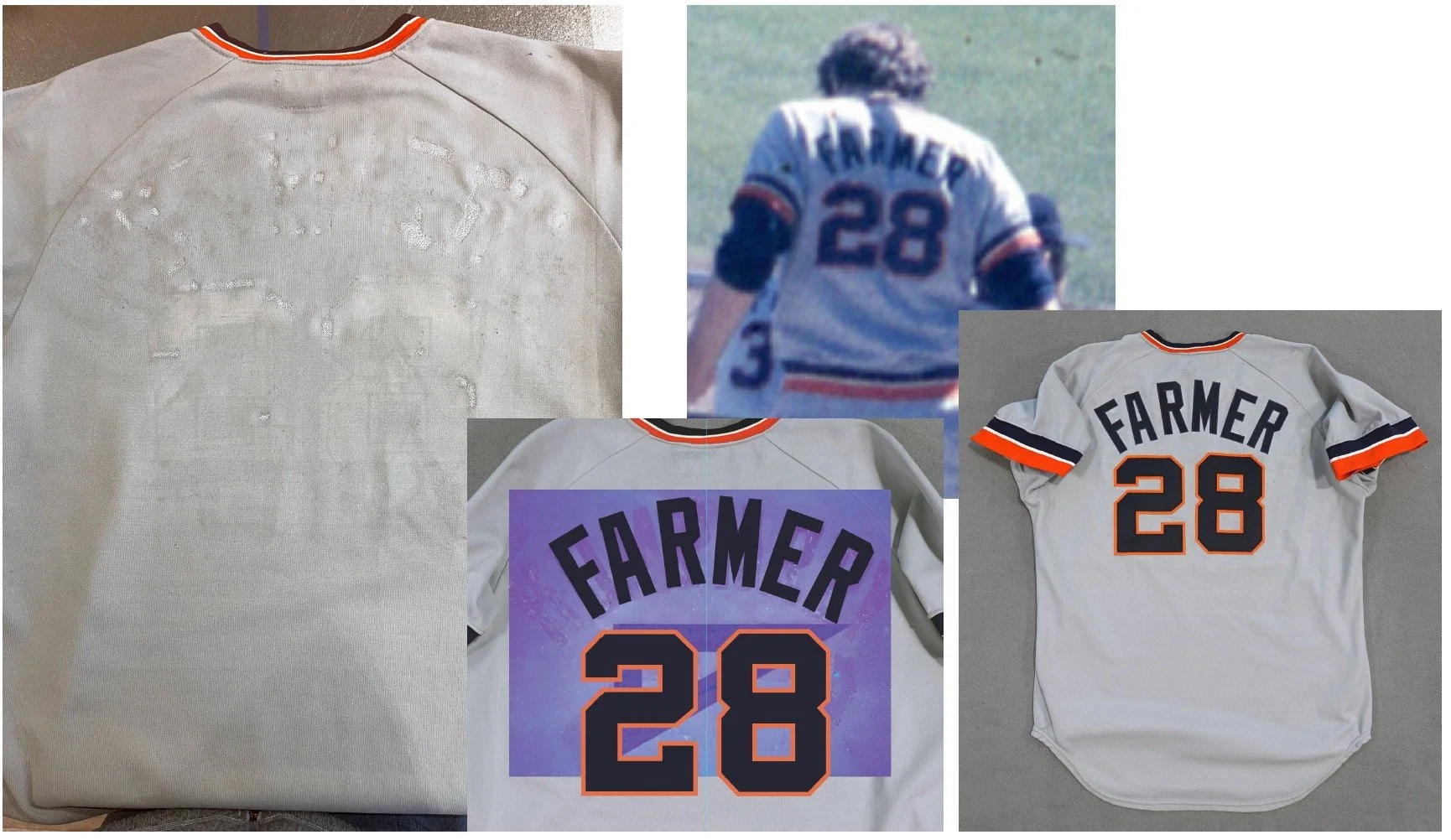
Here, you can see the mastery of seamstress Emily as she used her darning machine to close up all of the holes on the back. We were then able to place the lettering in the official Tigers font has used that year and stitch it in place. We found a photo of Ed Farmer in the bullpen at the last game at Yankee Stadium before it was closed for renovation in 1973. That's him from the photo in the top center. I'll bet it's the same shirt.
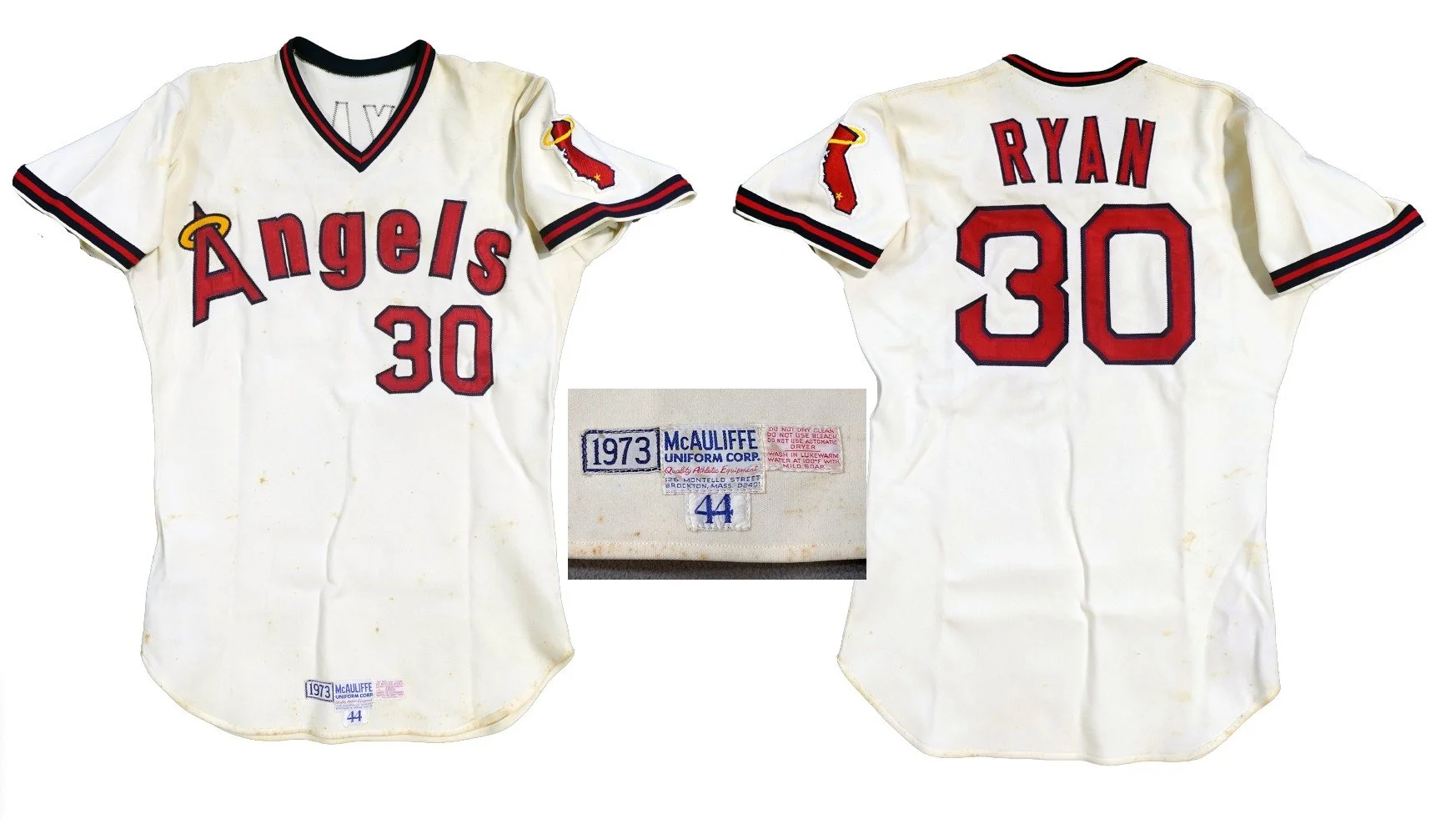
The fascinating mystery of the 1973 Angels jersey: I see a lot of Nolan Ryan jerseys here. Everybody hopes they have an original, but unfortunately Nolan Ryan probably didn't wear 15 jerseys in his 1973 record setting season. Jersey manufacturer McAuliffe was only too happy to make an authentic Nolan Ryan jersey for anybody who had $30 to spend, including adding team tagging to the jersey without a second thought. After all back then, this stuff just wasn't collectible. It was an oddity for people who wanted to have something special, and the number of those people was very small indeed. This Nolan Ryan jersey was sent to me and it certainly looked legitimate, but I simply couldn't be sure, and as an authenticator, you don't want to simply declare something as a relic of history when it might have been simply worn to the church barbecue by its owner. The black light discovered something very significant on this jersey.
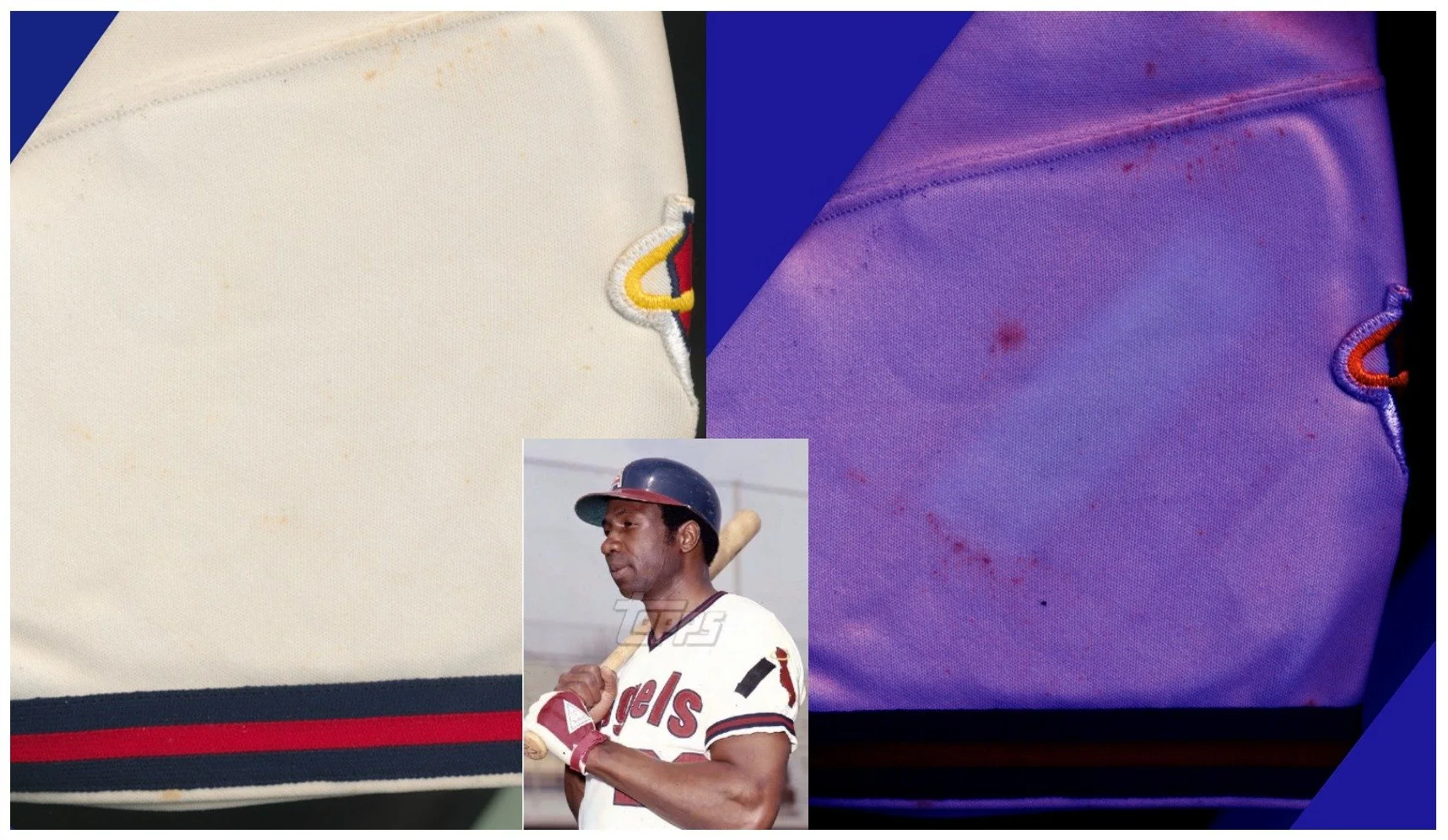
In spring training of 1974, minor league Bruce Heinbechner died in a car accident, and as a result for about two weeks period prior to the start of the 1974 season, Angels players wore a unique memorial on the sleeve, a diagonal black stripe next to the state of California patch on the sleeve. Because this appeared there for only a couple of weeks the only place it was ever seen was in baseball cards from 1974, and in a very few press photos. It took me several years to even find out what this stripe was for, as documentation of the event from fifty years ago was elusive. With the sleeve of this Nolan Ryan jersey was slid under the black light, magically, the image of the removed black stripe on the sleeve appeared, glowing eerily. I can't explain why it is visible— the stripe was probably only there for about 20 days at most, decades ago, and after it was removed there was scant evidence of any stitching that would have held it in place. Yet the glowing mark stayed behind. This allowed me to determine that among all of the others, this Nolan Ryan jersey was the real thing.
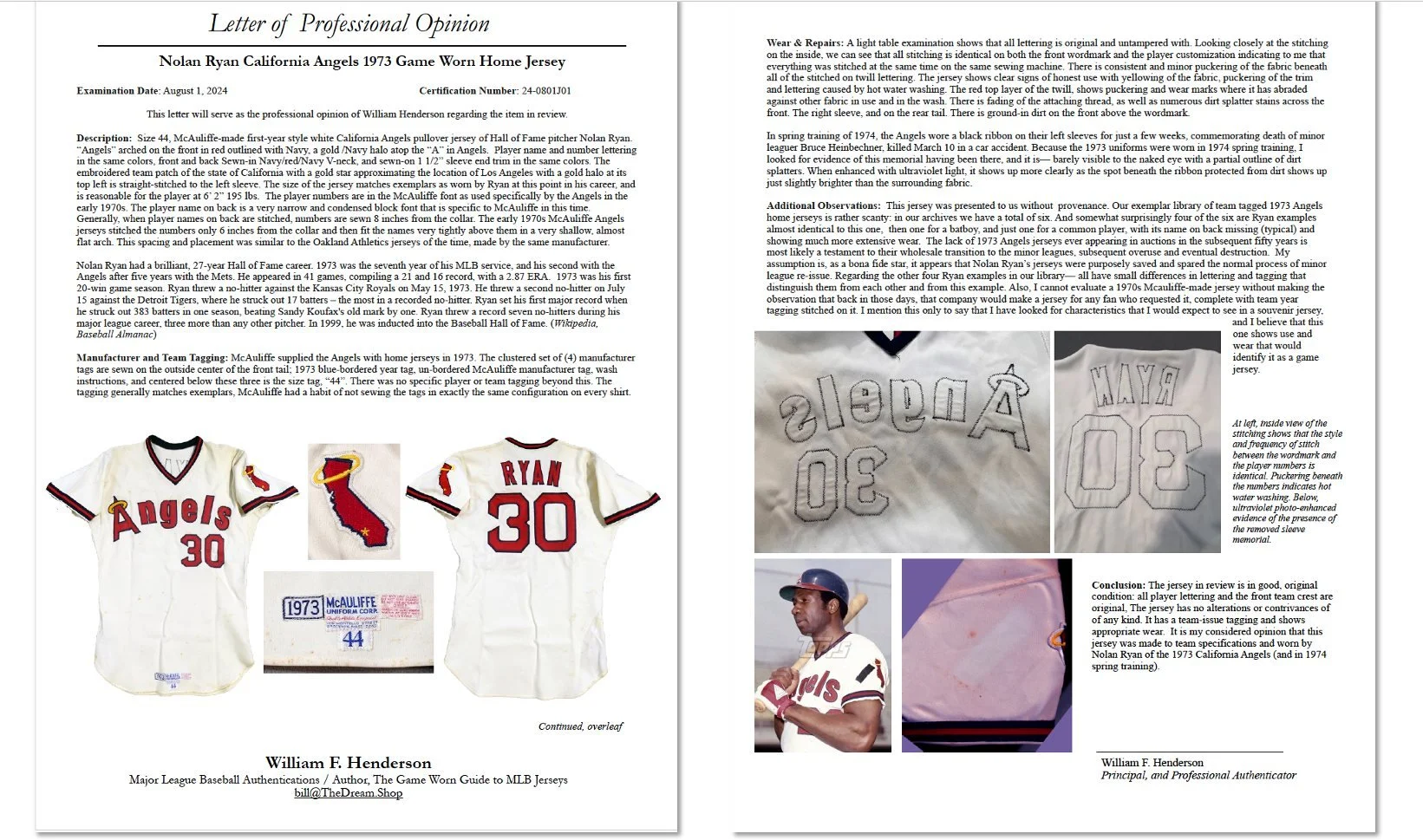
Here is the full LOA if you would like to read it.
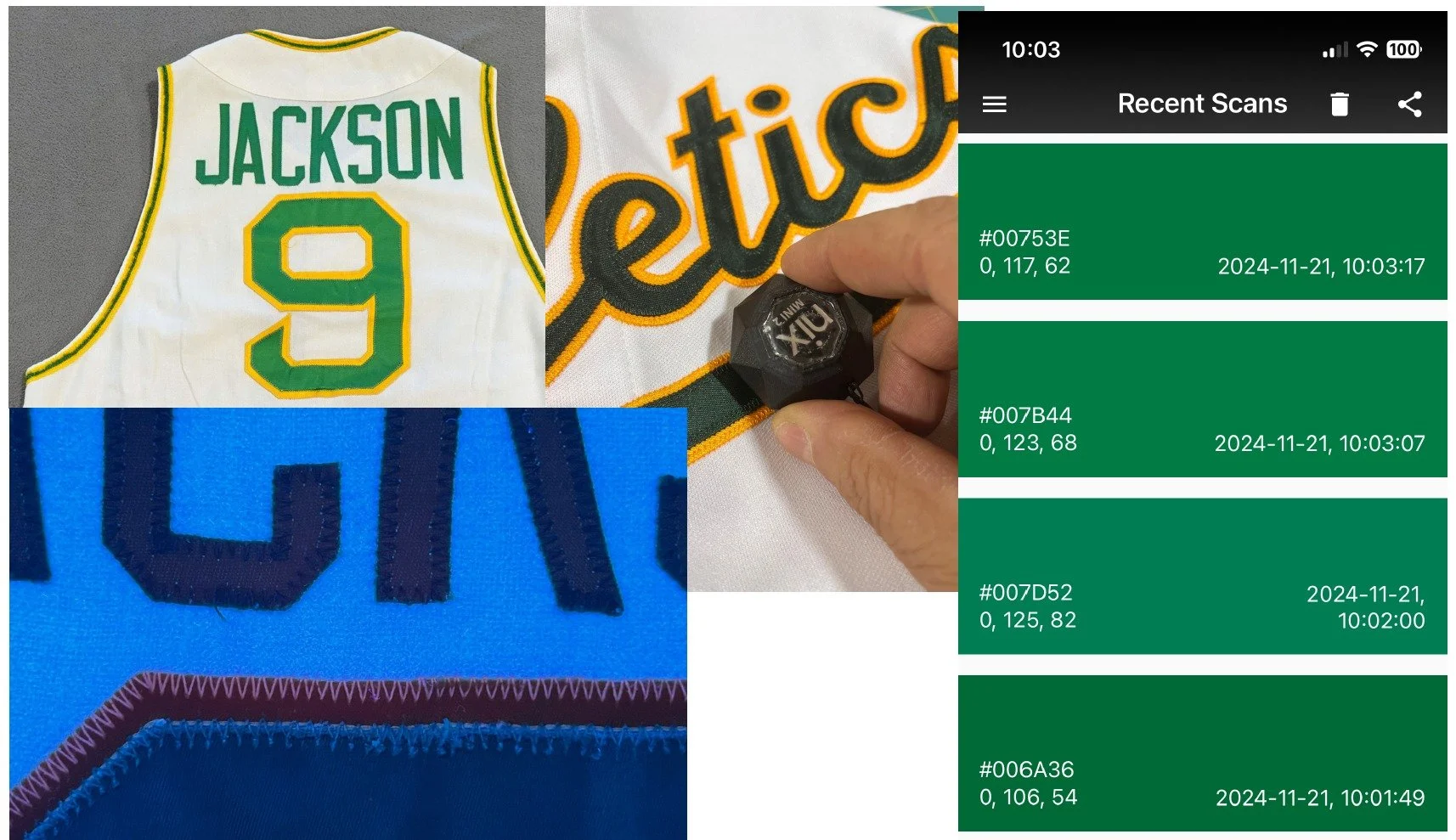
The mystery of the restored Reggie Jackson jersey: another devoted collector sent me this jersey to evaluate. It had already been photomatched, so he wanted to know if I could tell him if the number or the name on back had been restored. Examining it in hand, I can tell you that if it had been restored it was expertly done. The fabrics all matched, the stitching looked great, and there was no signs of uncovered ghosts or lines where items had been stitched imperfectly back over old marks. I used two tools in this case. The first was the black light, turning the jersey inside out I was able to see that the stitching from the Name on back did not glow the same way as the stitching that held on the back numbers which were original. The second tool I use is a digital spectrometer which analyzes colors and allows me to numerically define the colors of fabrics. I often use it when I am matching fabrics when making a repair to a historic piece. In this case, the spectrograph showed me that the green fabric that was used for the name on back was a slightly different color than the green fabric used on the player numbers. It is difficult for the eye to see, but the scientific instrument does not lie. The color swatches at the right show four scans-- the top three are at different places on the back numbers, and the fourth is from the name on back. The difference in the color is enough to make it outside the realm of reasonable error. From this I was able to determine that the name on back had been replaced, while the numbers were certainly original. This is not uncommon at all as the Athletics re-issued everything in those days regardless of whether the player was a star or not. Also look at the stitching in the black light image at the bottom left. Notice how what likely the "original 1970" thread glows under the light, but the stitching holding on the name on back does not glow. It is different thread. This restoration is top-quality, it could not have been better done by whomever did it. But using some science we can uncover secrets that otherwise would remain hidden. ******* I hope you enjoy these little tidbits of my world that I'm able to share with you during the year. I don't share as often as I would like to, because I just don't have the time. But I enjoy all of your questions, and I hope you will keep them coming
Aging
Here is one of the magic tricks I use in authentication and restoration— the powers of a high intensity black light and the color spectrometer.
A blacklight, also called a UV-A light, Wood's lamp, or ultraviolet light, is a lamp that emits long-wave (UV-A) ultraviolet light and very little visible light. Ultraviolet radiation is invisible to the human eye, but illuminating certain materials with UV radiation causes the emission of visible light, causing these substances to glow with various colors.
This light in high intensity can be dangerous— even though you can’t see it, it can harm your eyes or skin. The lights I use come with warning labels all over the box, and are not the same kind you get at Spencer Gifts for your 1960s groovy poster party. When turned on, the “light” is practically invisible to one’s eye, unless it hits something that makes it fluoresce or glow.
Using the black light is one of my standard steps in authentication or restoration as it can reveal invisible secrets in a jersey. I am not a scientist, and I can’t explain why some things glow and others don’t, because often times the black light reveals nothing at all when I use. But other times— well, let’s talk about some of these!
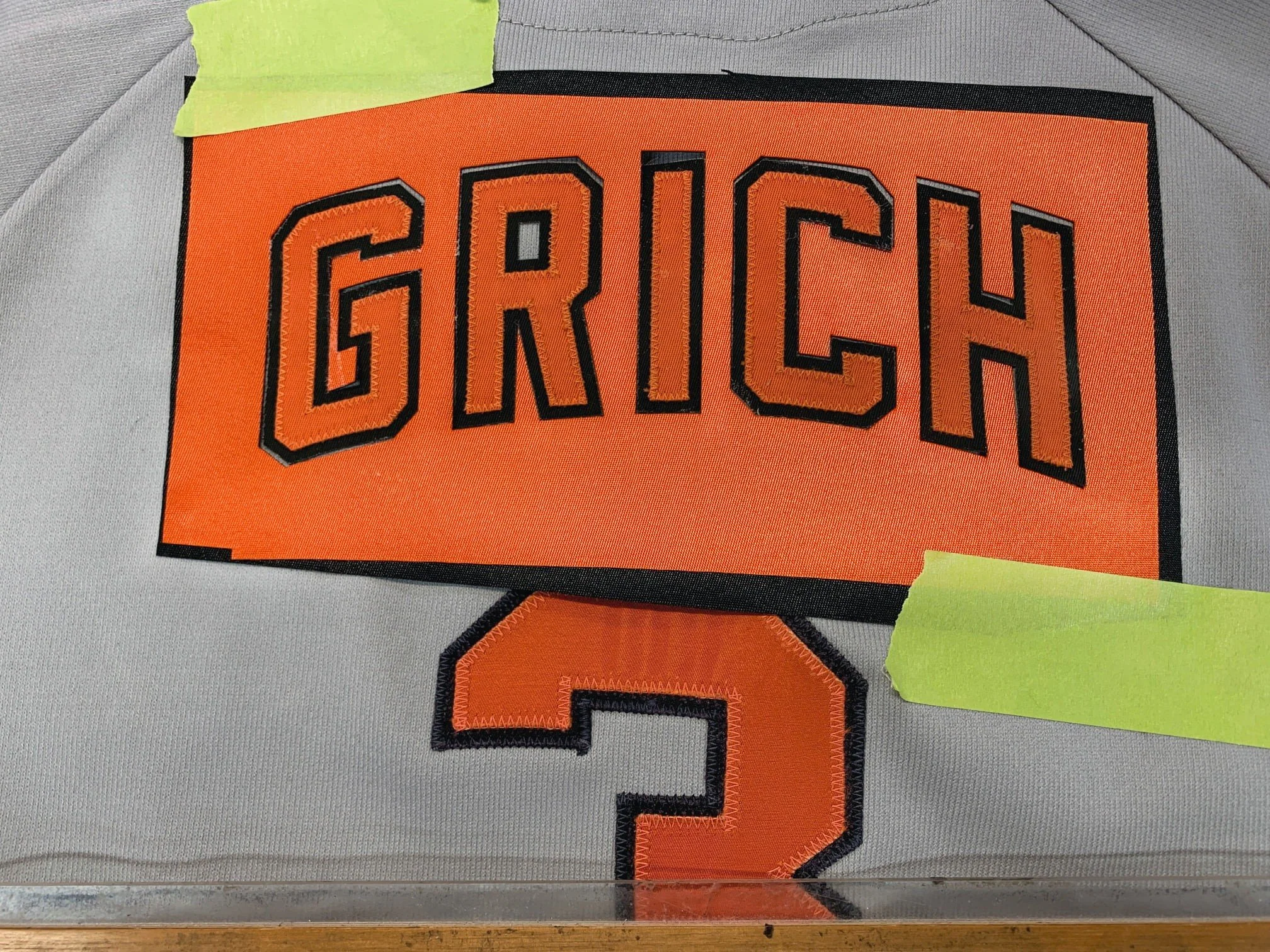
I lay out all lettering prior to cutting it. That way it is always applied perfectly arched and spaced. Notice the reflectiveness of the surrounding material... because it is less reflective, it appears lighter than the number below it, or the name lettering that has been aged through my process. Note also that the Orioles name on back is the proper font, vertical arch and spacing for this early 1980s Wilson Orioles road jersey. Every manufacturer had their own fonts back then, and I have documented them all. The right font, outlines and degree of arch is here. The orange thread used to stitch the layers of the name together is slightly lighter than the twill, to match the characteristics of the forty-year-old original number below. And it is stitched to the jersey with dark charcoal thread to simulate dozens of washes in strong detergent... even though in reality the replacement name on back is brand new.
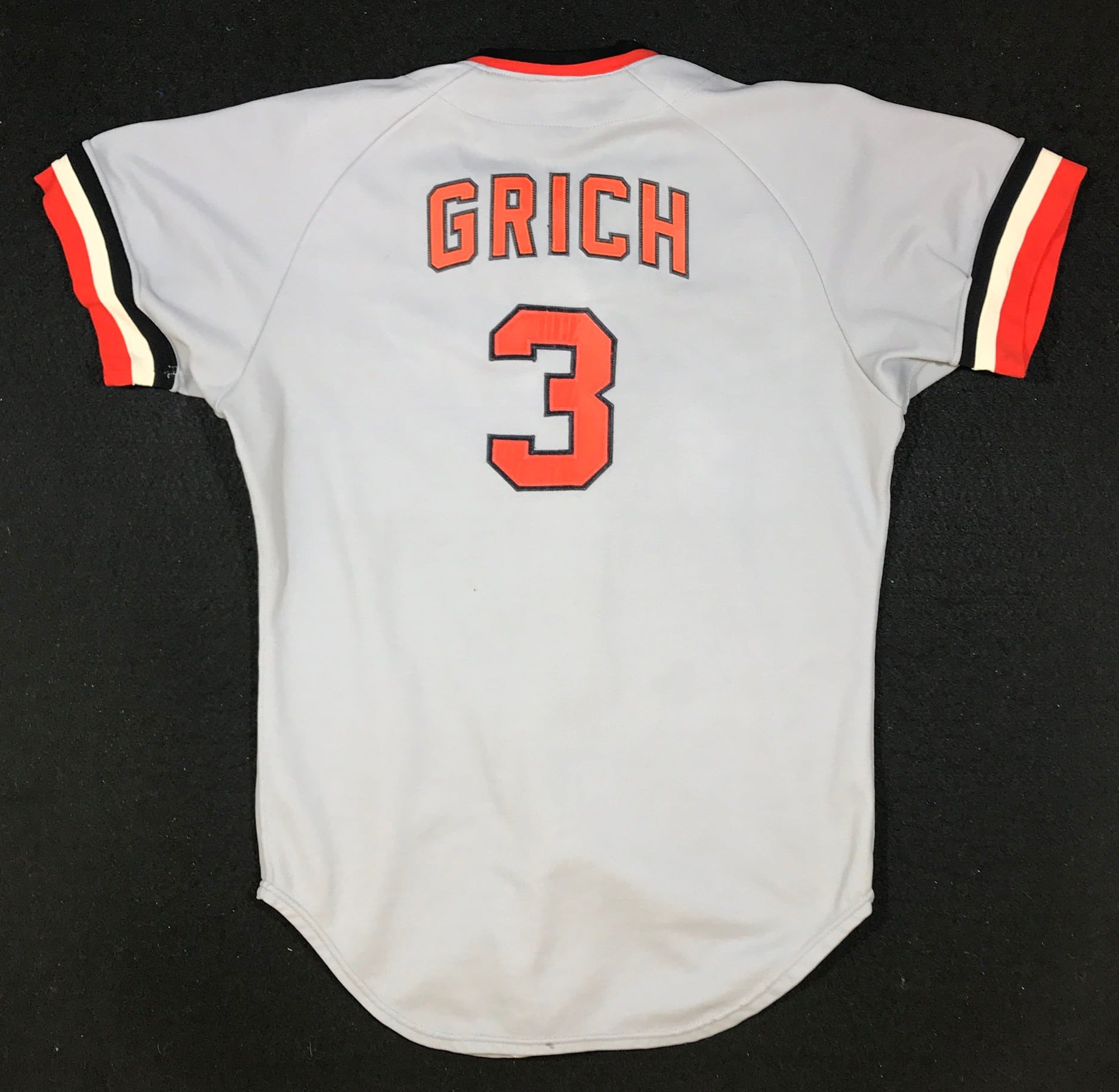
A perfect match, for the discriminating collector. Yes, the original number was sewn by the team slightly off center and crooked. And that's the way it stays...
Direct Embroidery
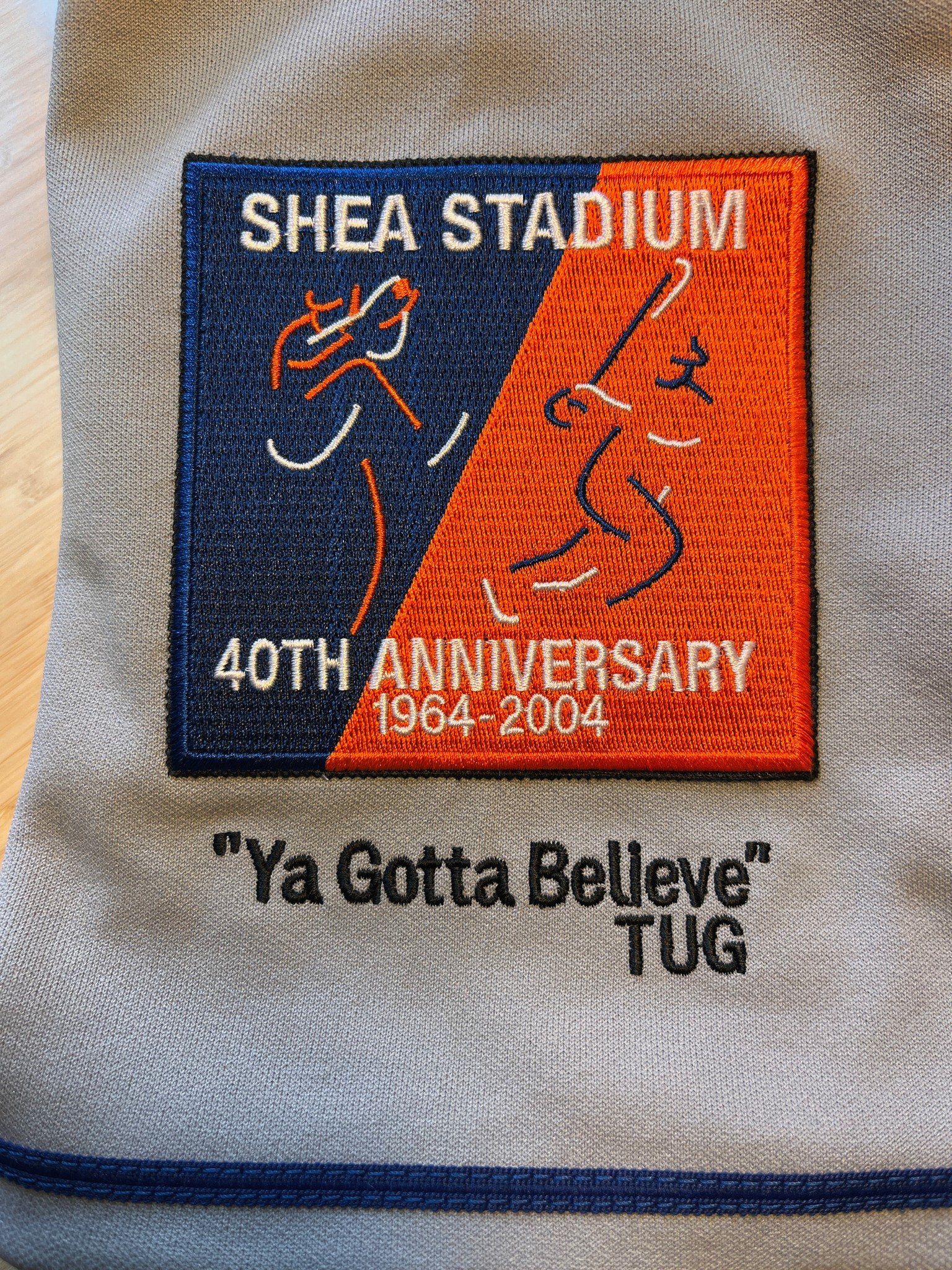
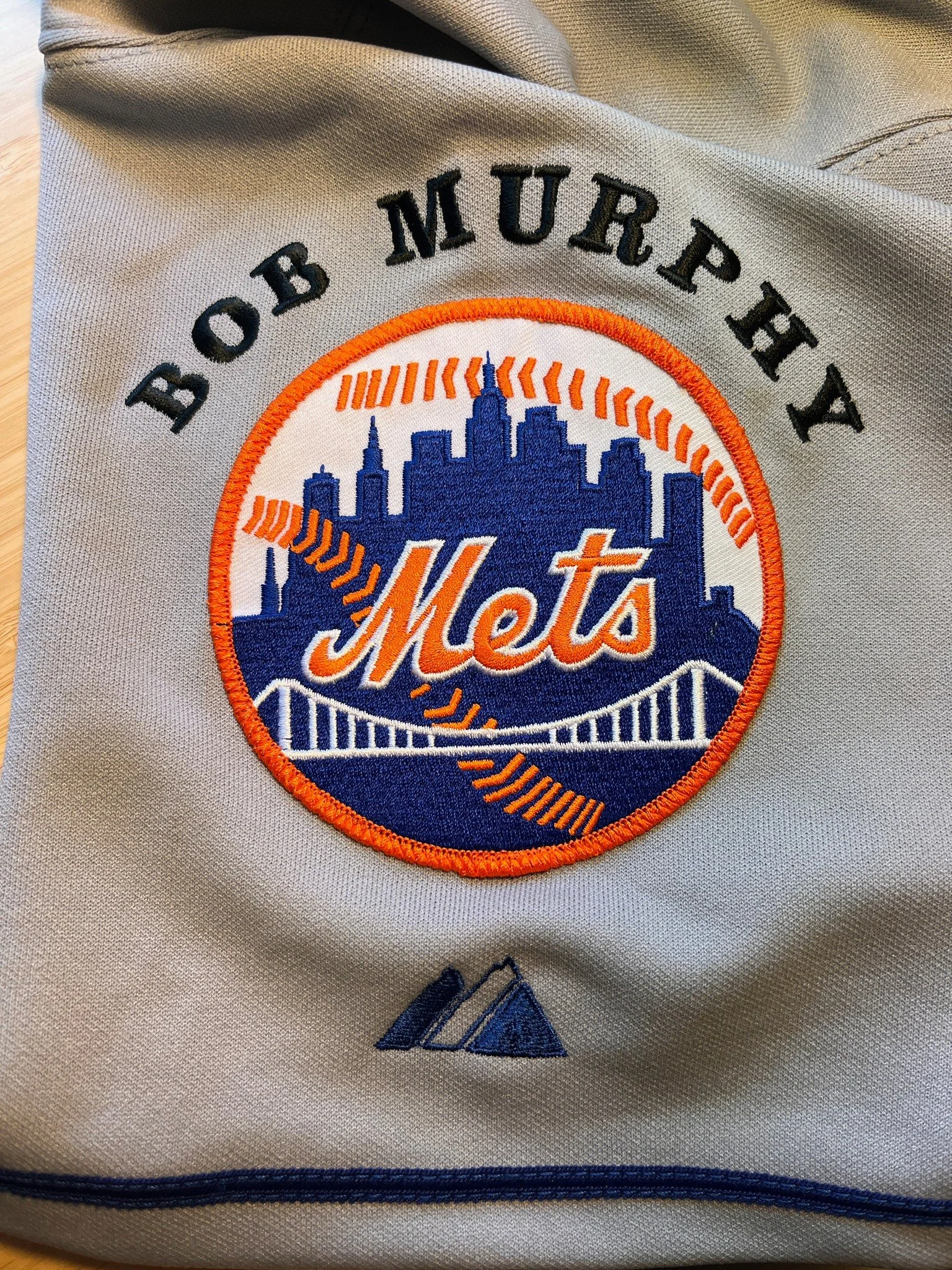
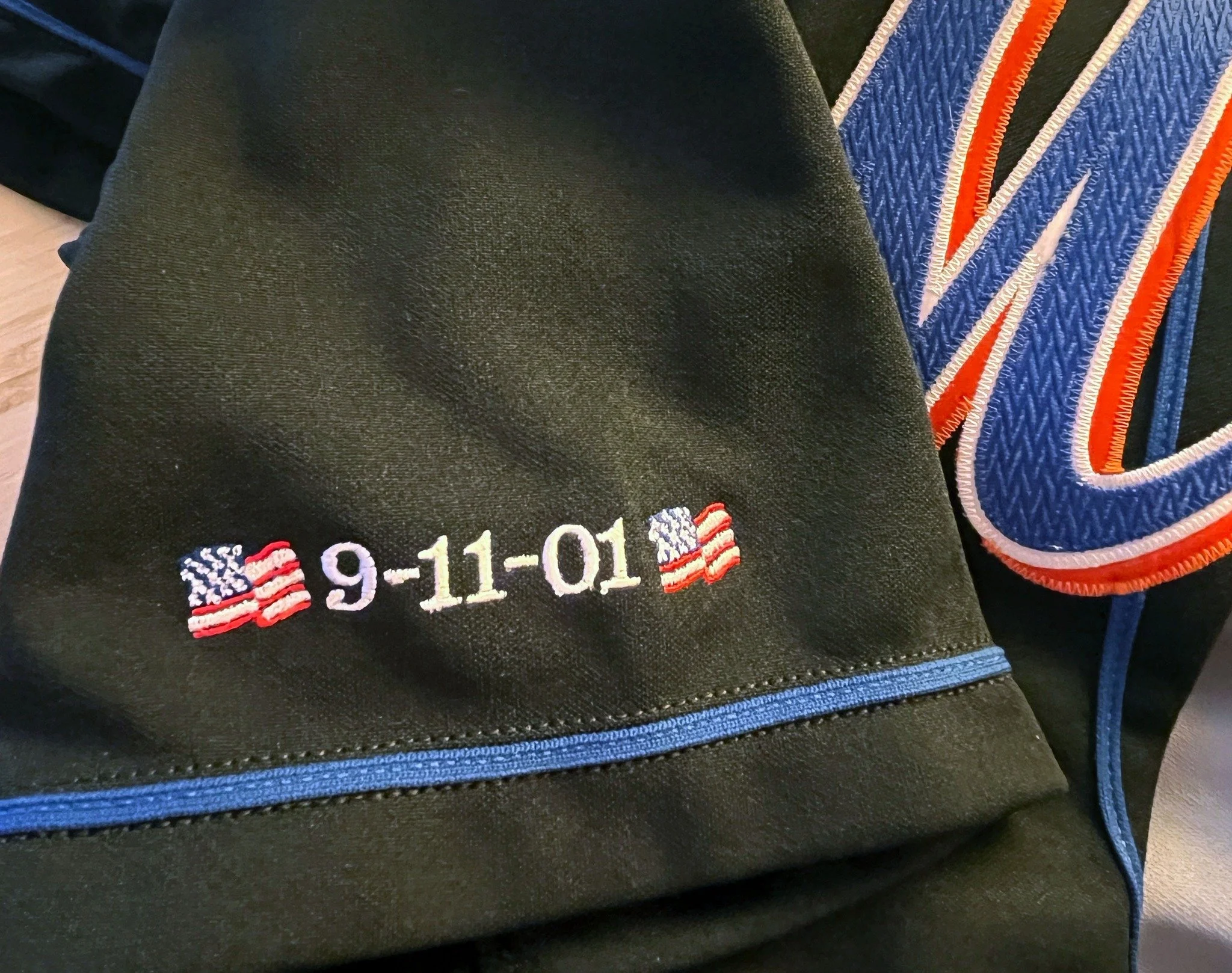
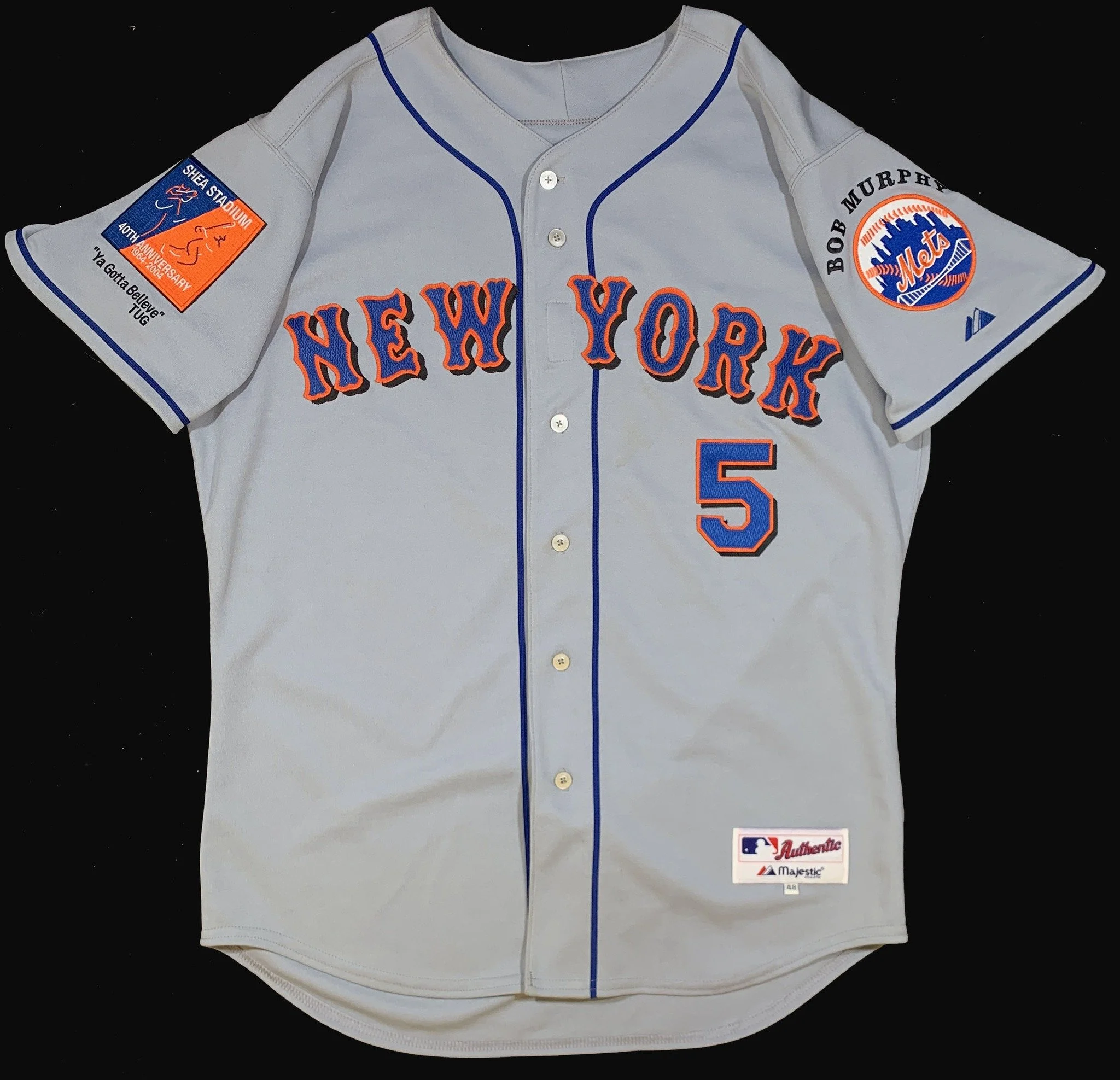
Mets sleeve embroidery- I can now do all three of these Mets direct-embroidered embellishments only found on game jerseys of 2000-2004. $45 each, or Murphy/Tug set of 2 on one jersey for $70. Done exactly as on-field. And I have both Dazzle Twill (1986-1992) and Glacier Twill (1997-2011) to do Mets jerseys properly.
Patch Creation
Word has gotten out that I am capable of making absolutely perfect jersey patches. SO-- I want to explain what I can and what I won’t do, so please read on.
Missing patches can spoil a restoration. Some patches are just not available… a small handful may have been made decades ago, and when jerseys were reissued or sent to the minors, they were almost always stripped off and discarded. Trying to find missing sleeve team patches, death memorials and commemoratives can be a fruitless, frustrating effort.
Then there is the second category of patch woes: reproductions are available but are inaccurate. I hear it often from disappointed collectors: they bought a reproduction patch and it is the wrong size compared to the original. The colors are wrong. The lettering is wrong… why? I don’t know why this is… the patch makers may simply not have had an original on hand to reproduce, so they got close and hoped that was good enough. Or, it’s possible that reproduction patches are made a different size so as not to be confused with the originals, some of which sell for hundreds of dollars from collectors. I really doubt this, but who knows?
I need to start with this disclaimer: I am a restorer. I am one craftsman in a small shop that restores game worn jerseys one at a time for collectors. I respect MLB licensing and am not at all interested in making patches to sell in quantity to anyone. PERIOD. But if someone sends me a vintage jersey to restore and needs ONE sleeve patch to complete an otherwise perfect restoration, that is different.
Working with a small professional embroidery shop, I have now made a few near-exact reproductions of currently unavailable patches to complete collectors’ restoration projects. You can see them here. Caveat: They are not cheap, and they are certainly not plentiful. I am following a very strict set of personally imposed rules before making anything:
1. The exact patch is not made in reproduction by a licensed provider.
2. The original historic patches are simply unavailable in the collector market for any price under, arbitrarily say $150 each.
I will not sell loose patches. My patches are meant to be included as part of a restoration. And yes, as an authenticator, I can tell my reproductions from priceless originals. So, if you are being stymied in your ability to restore a jersey in your collection because it is missing an impossible to find patch, let’s talk.
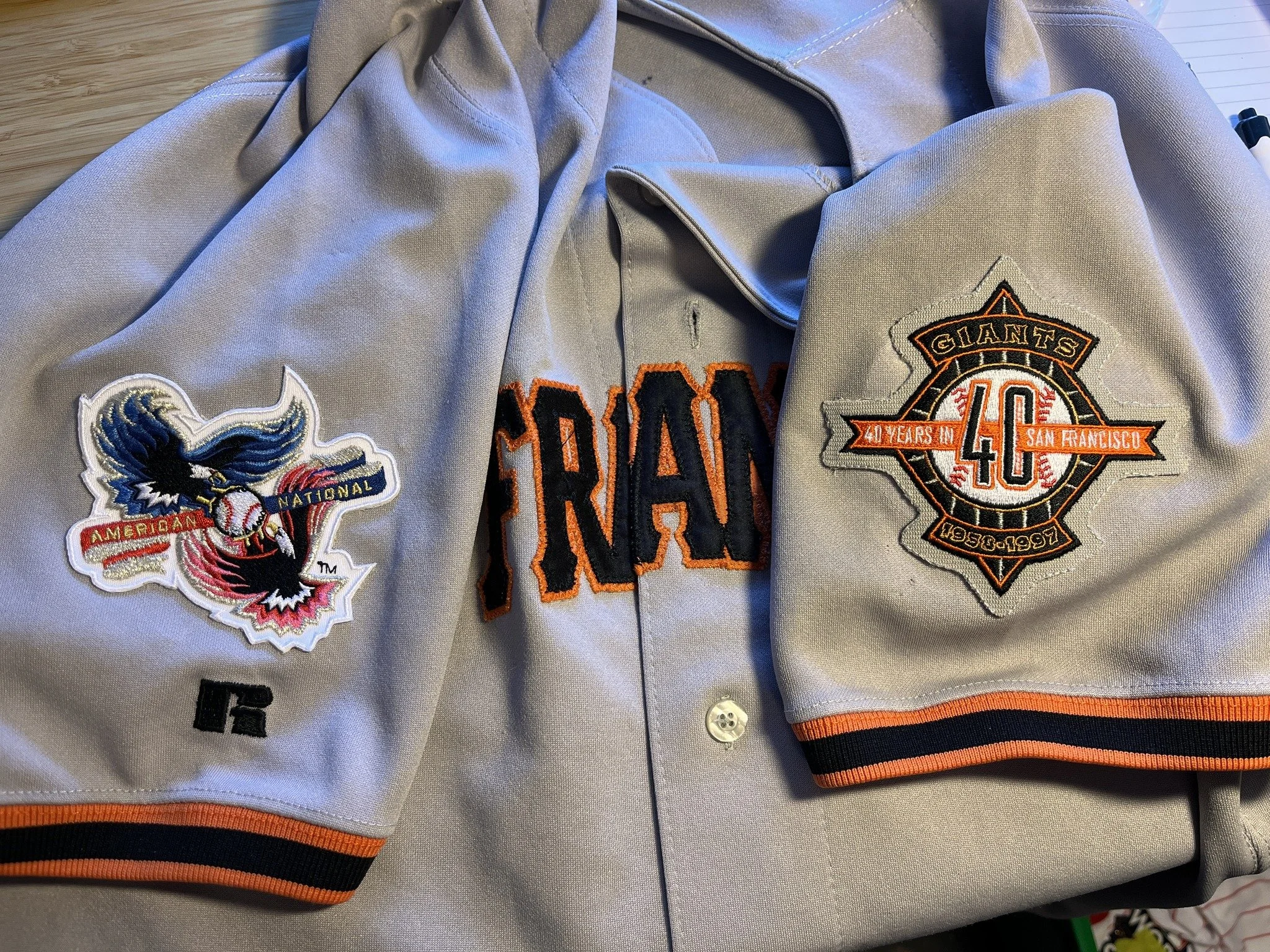
Another very-limited edition: I was commissioned by a collector to recreate the long-unavailable Giants' "40th Anniversary in San Francisco" sleeve patch for his restoration. Oddly, this patch, embroidered on a gray background, was worn in 1997 only of the sleeve of the road jersey, instead of the Jackie Robinson patch that other teams all wore. I have a VERY FEW of these, respecting MLB and their licensing. When they are gone, they are gone. I am not selling them loose, they are intended for projects. Item of interest: These were worn in conjunction with the 1997 Interleague patch, which I recreated last month, and have two left.
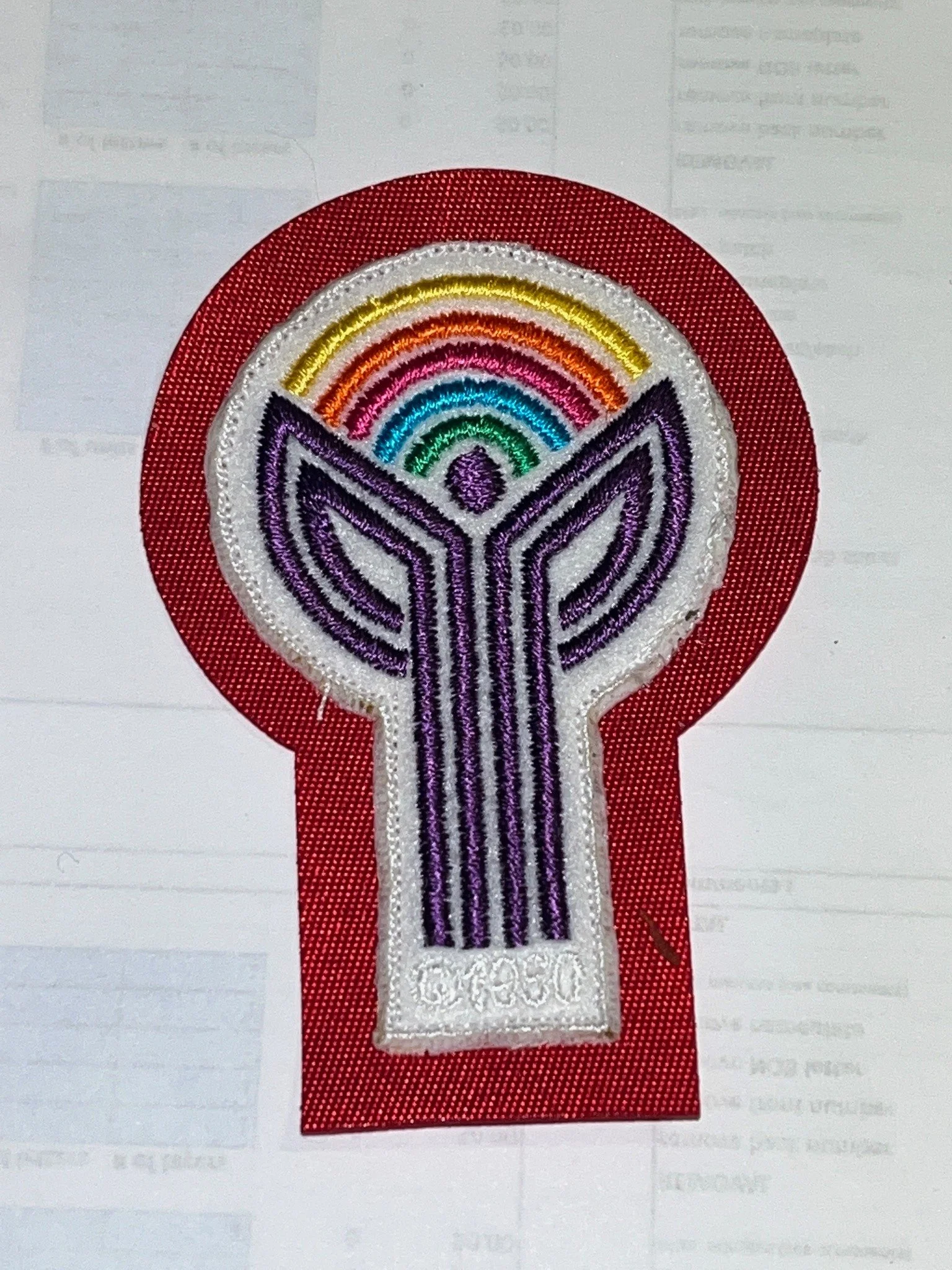
Here, the Los Angeles 1981 Bicentennial patch, complete with the tiny white embroidered 1980 copyright mark at the bottom, for the restoration of a 1981 Dodgers game jersey
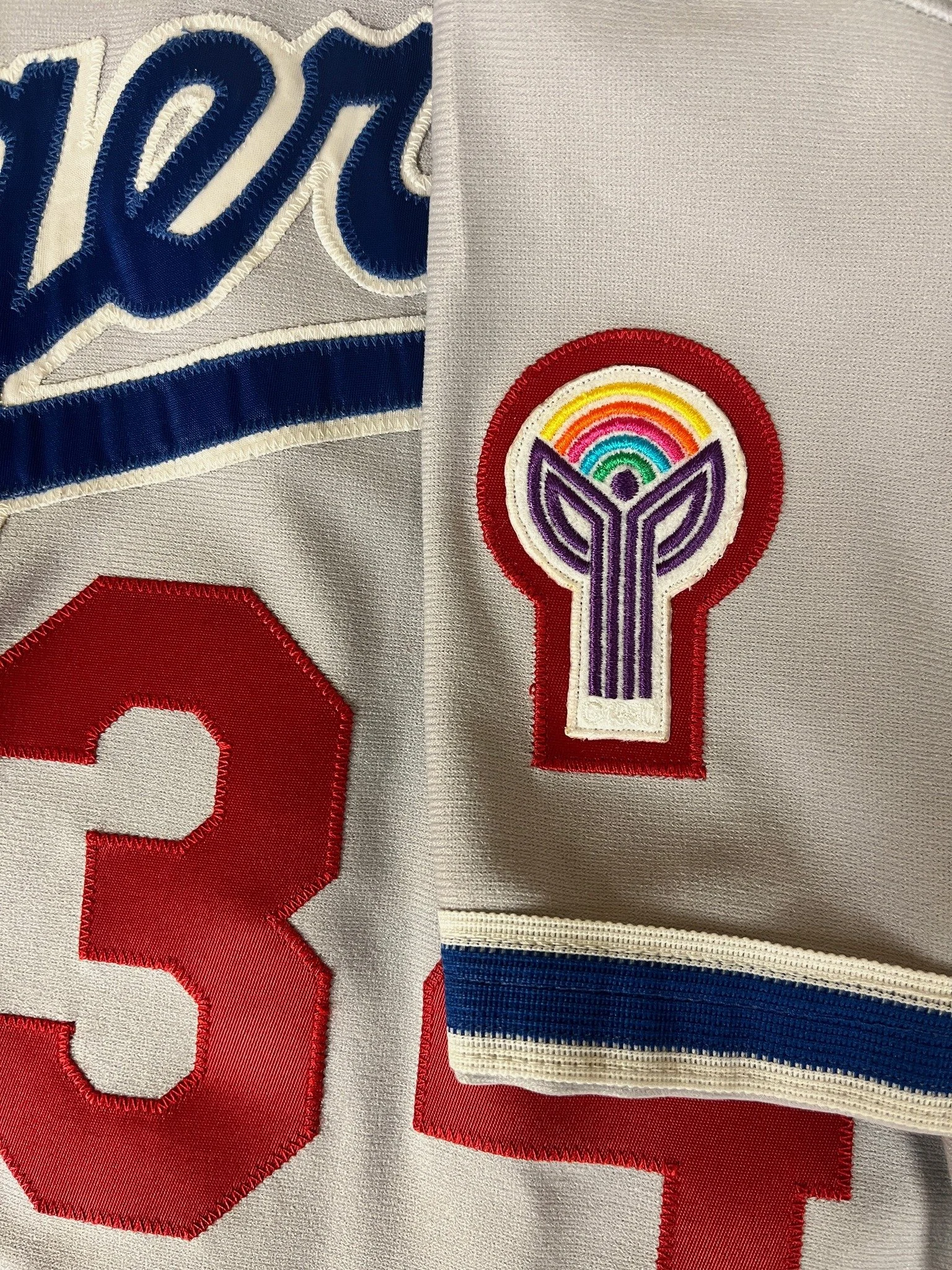
1981 Bicentennial patch, complete with the tiny white embroidered 1980 copyright mark at the bottom, for the restoration of a 1981 Dodgers game jersey Photos The 1981 Dodgers jersey restoration
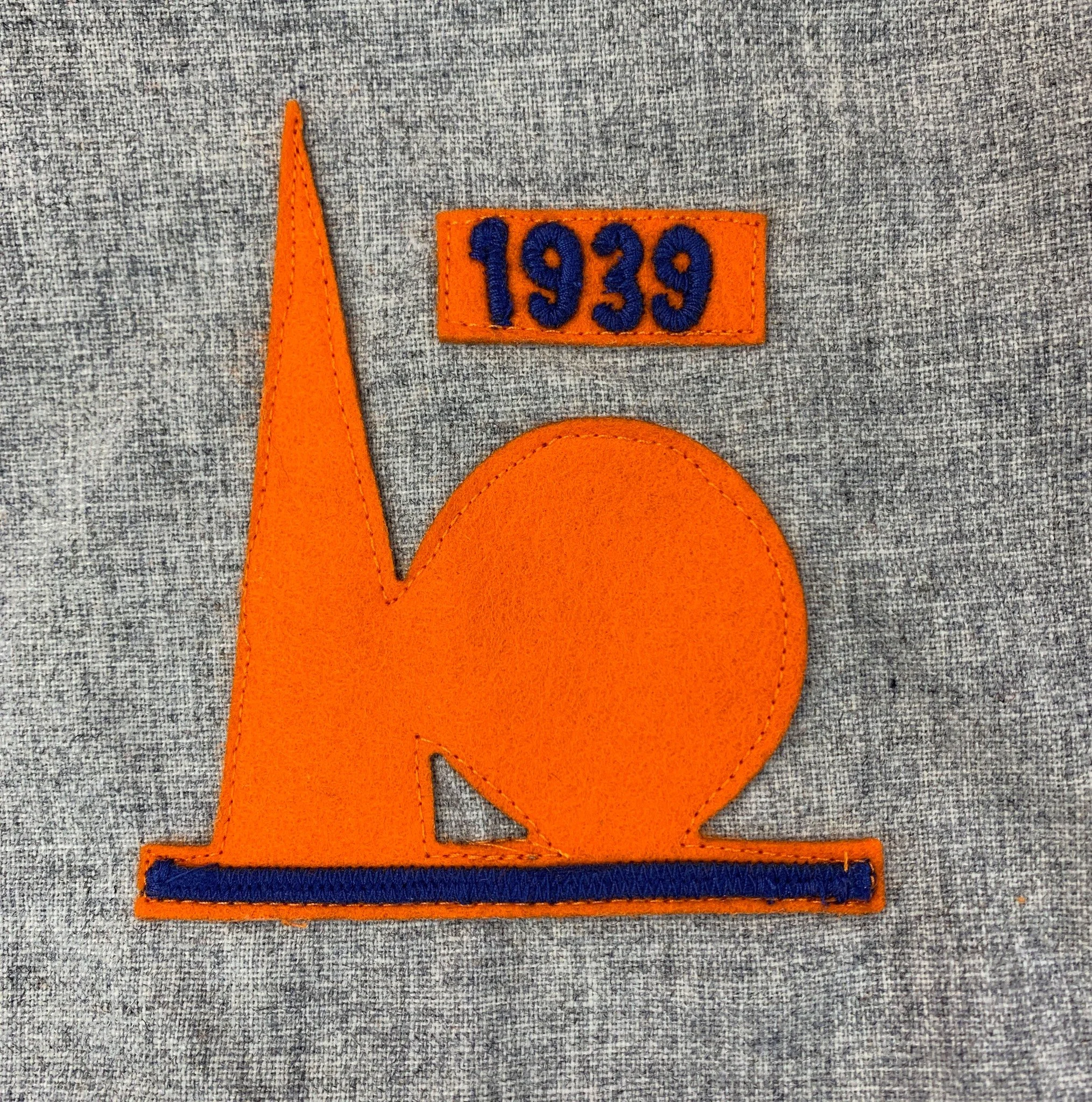
1939 World's Fair patch in felt as worn by the Yankees and Giants
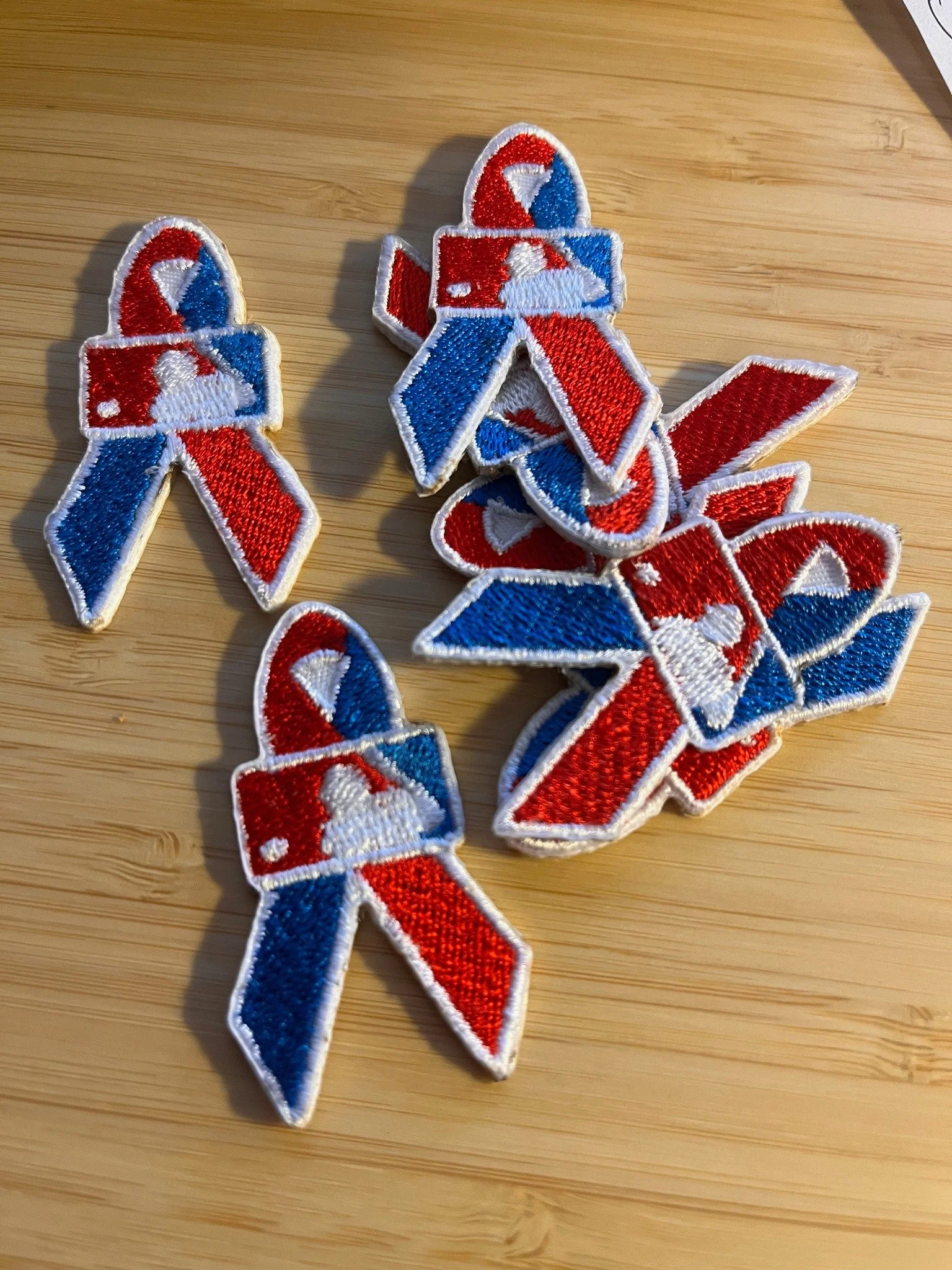
These ribbons were made to draw attention to heart disease
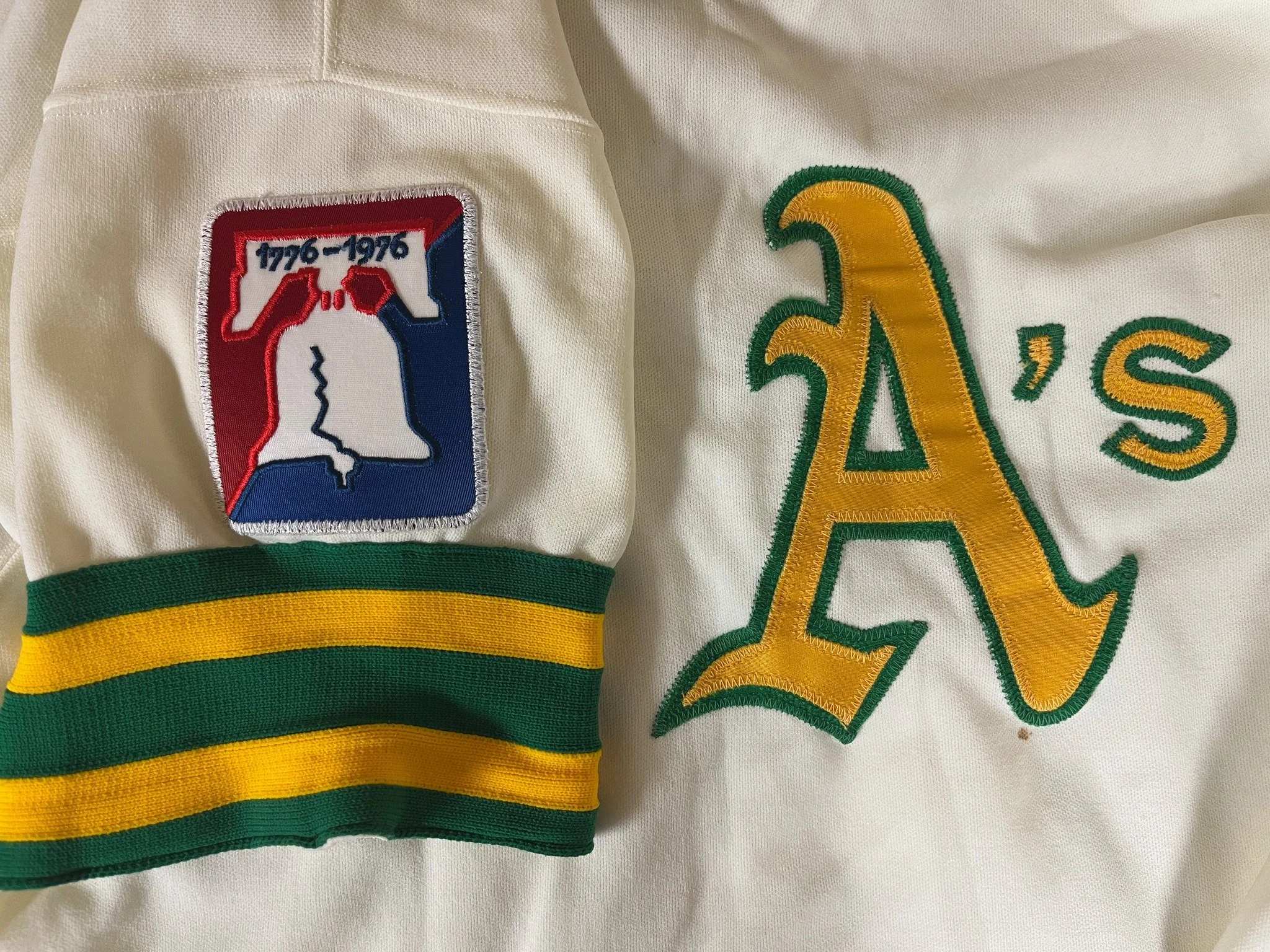
The impossible to find 1976 Oakland Bicentennial patch, properly made using both twill and embroidery like the original
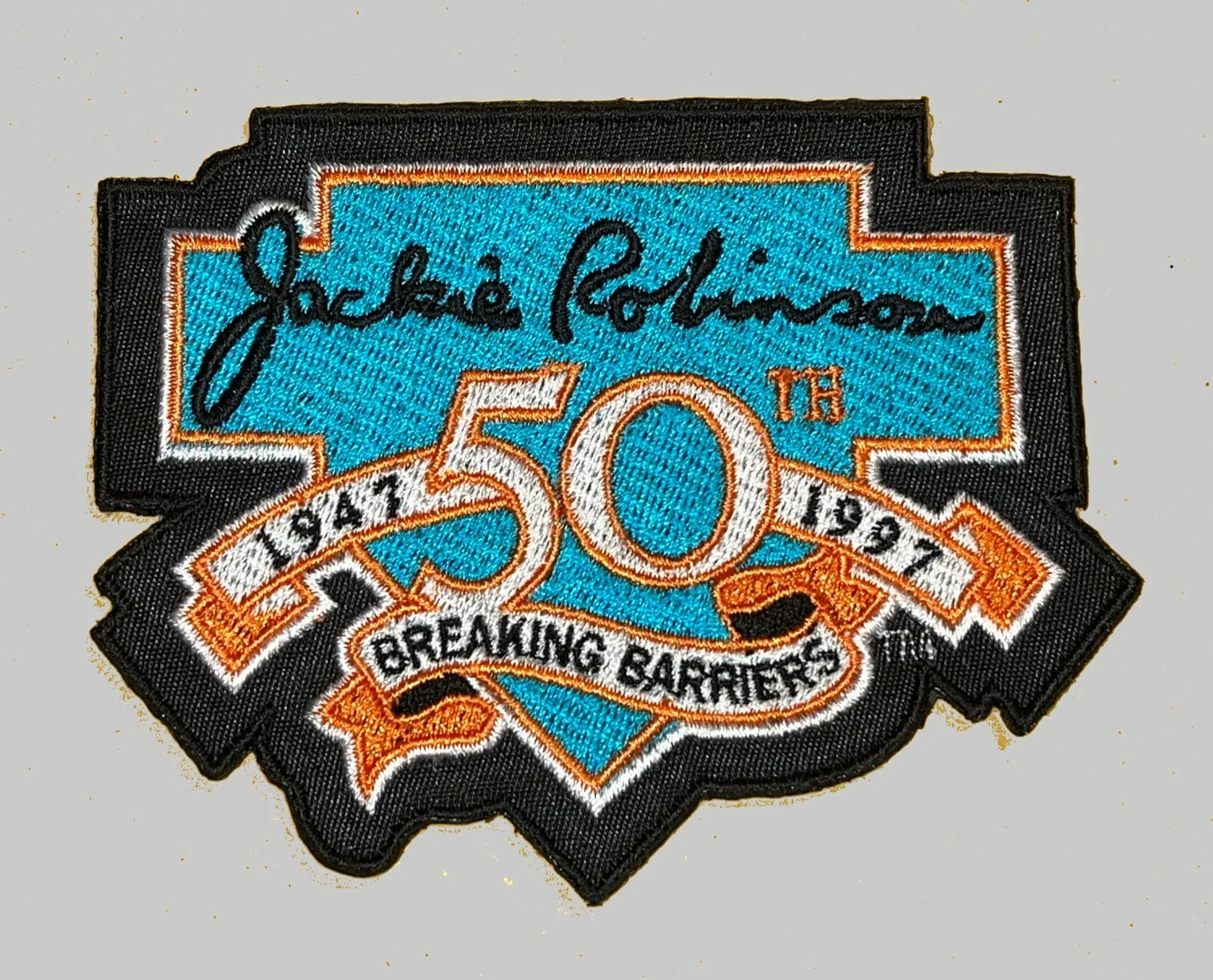
The impossible to find 1997 Marlins-only Jackie patch, from the year the Marlins won the World Series. These patches were stripped off before the jerseys were sold.
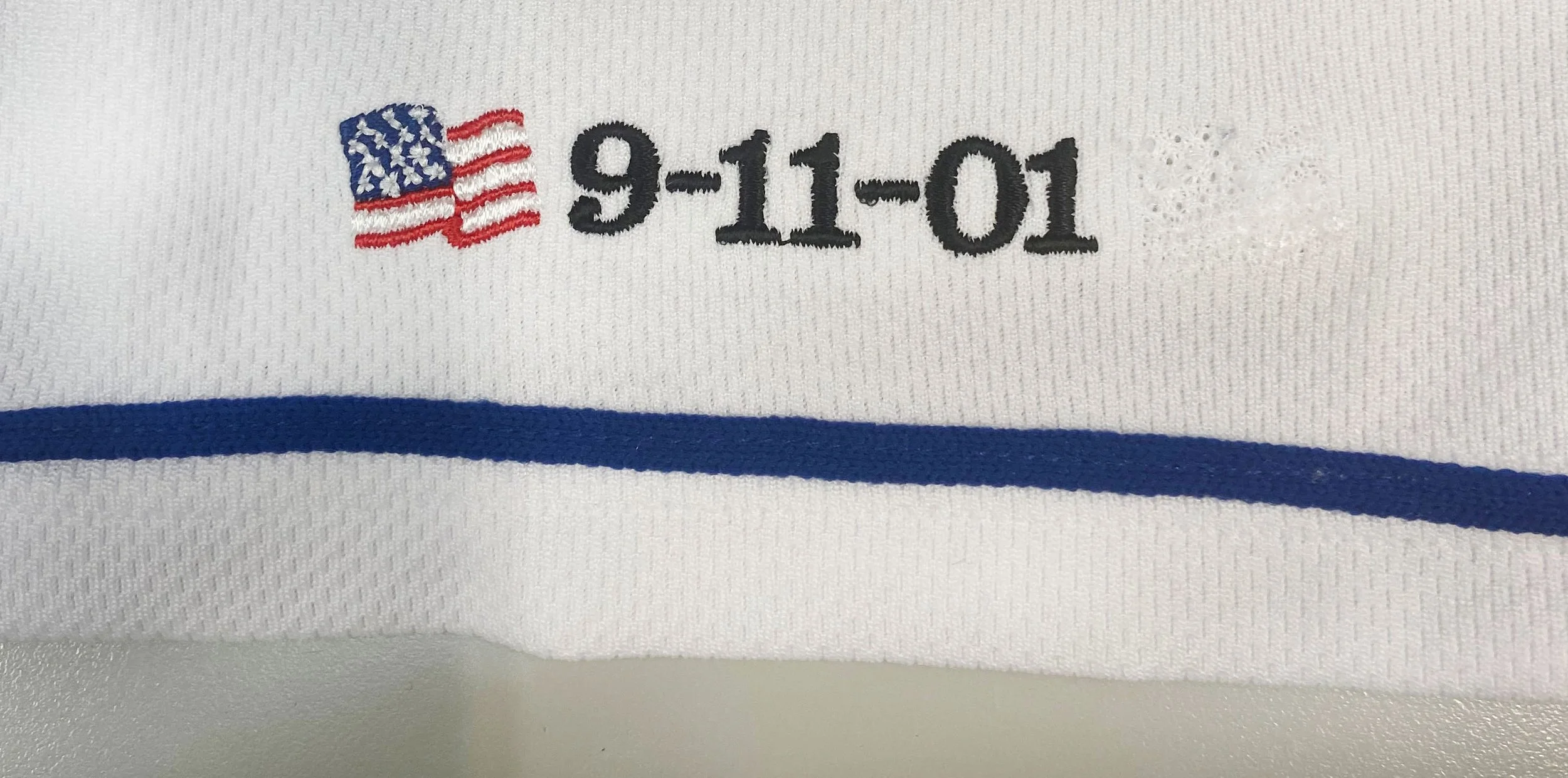
I can do the 2001 Mets sleeve embroidery
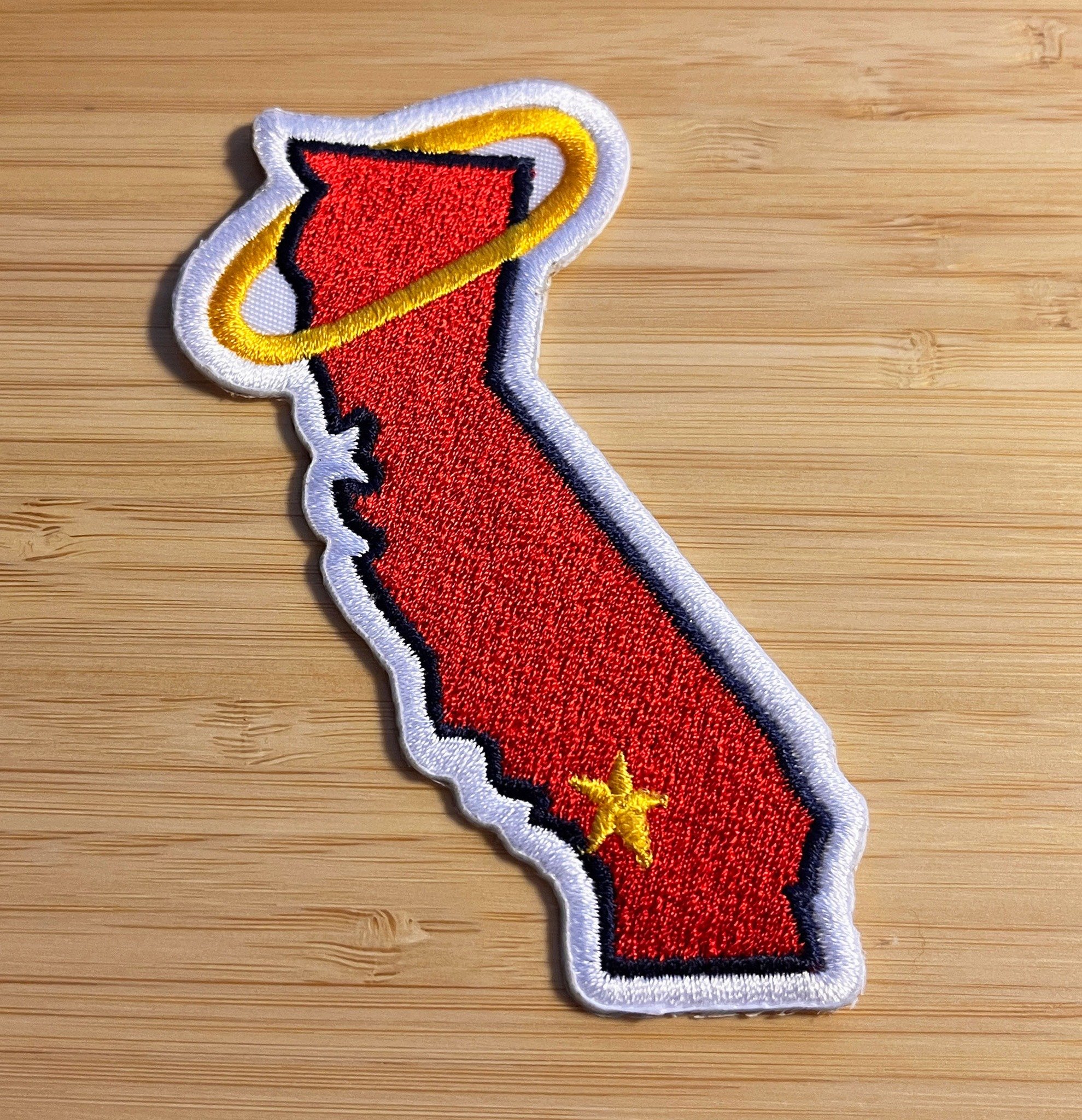
The California Angels sleeve patch of 1970-1985 is not available in reproduction. An older licensed reproduction is available on eBay, but is too big. This is the correct size and shape.
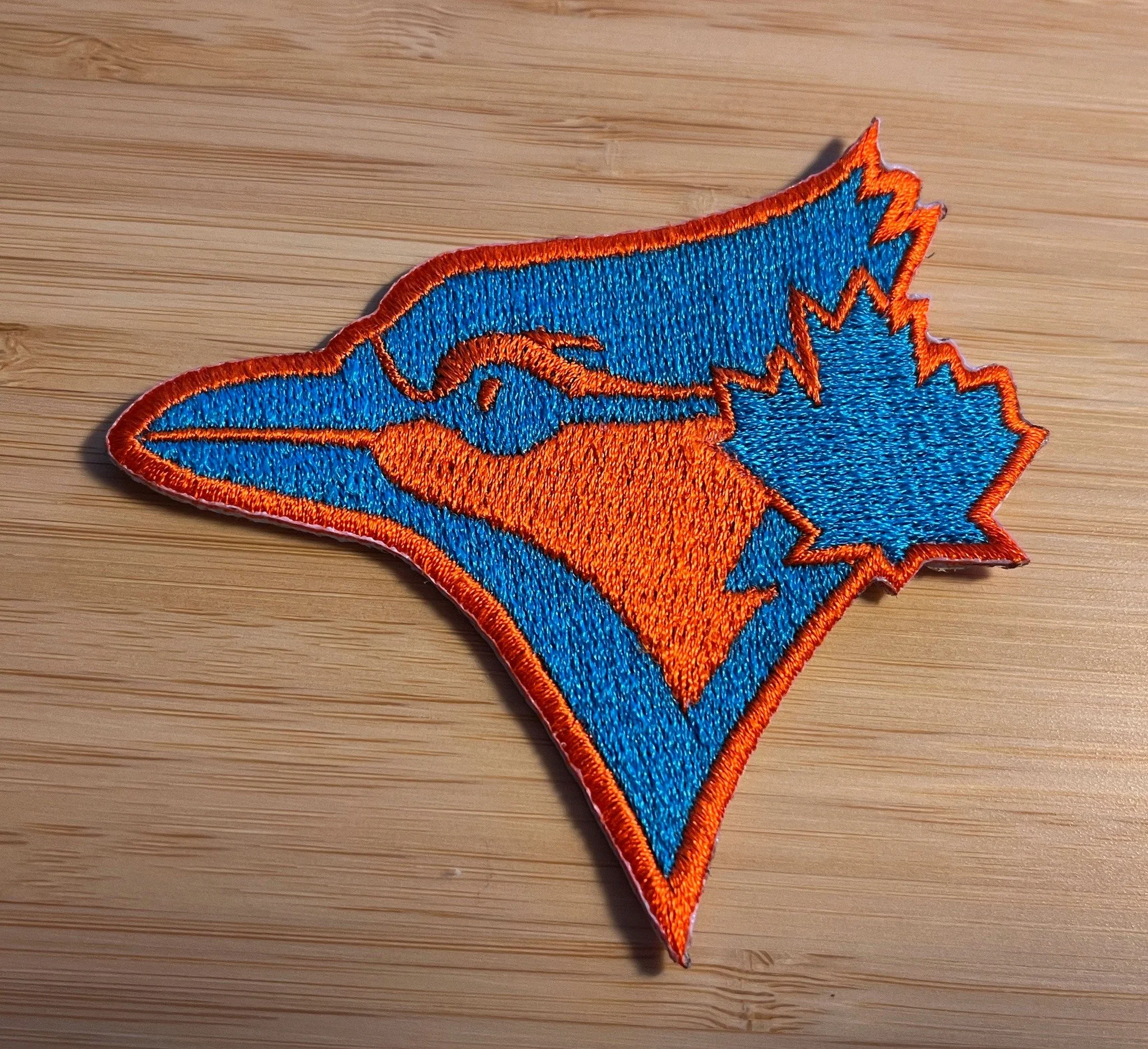
This was created to complete the customization of a MLB Futures Jersey. The patch is not available in these colors.
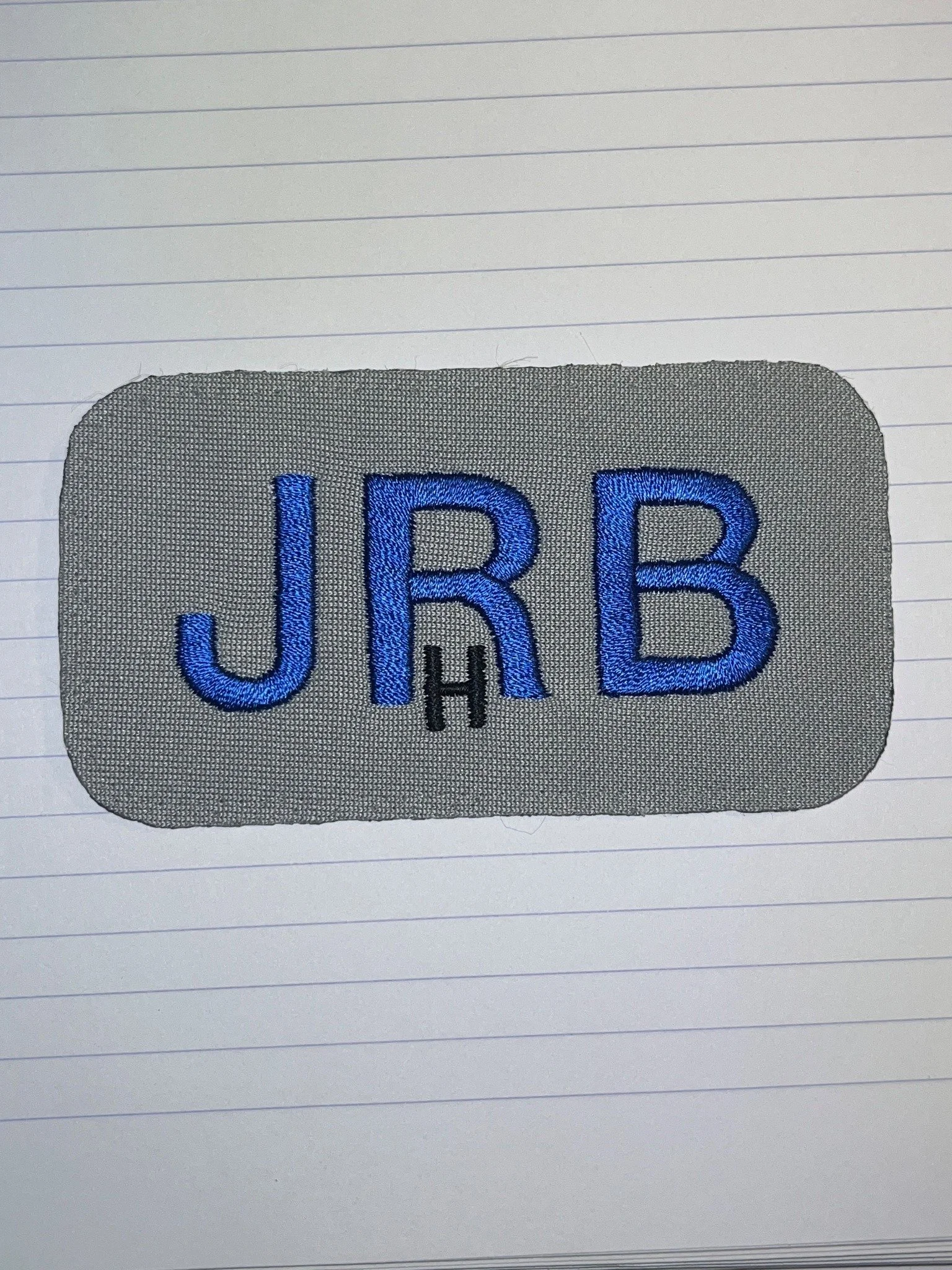
KC Royals 1992 road jersey memorial, this one modified with the "H" as George Brett wore on his sleeve that year as a tribute to his father.
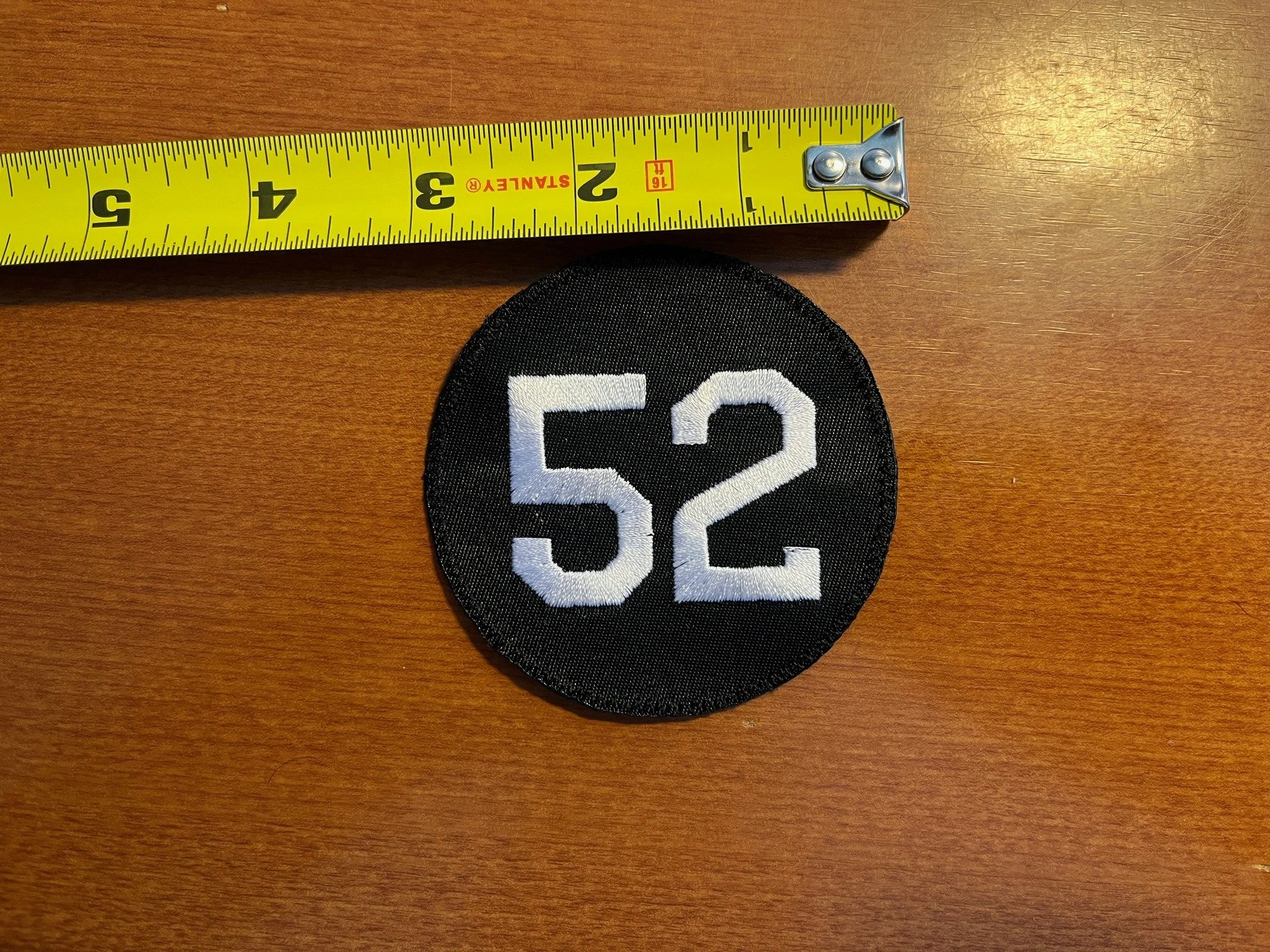
Player death memorials are rarely sold by the teams. Reproductions are often sold on eBay and are inexact. This was for a 1993 Dodgers jersey restoration (Tim Crews patch)
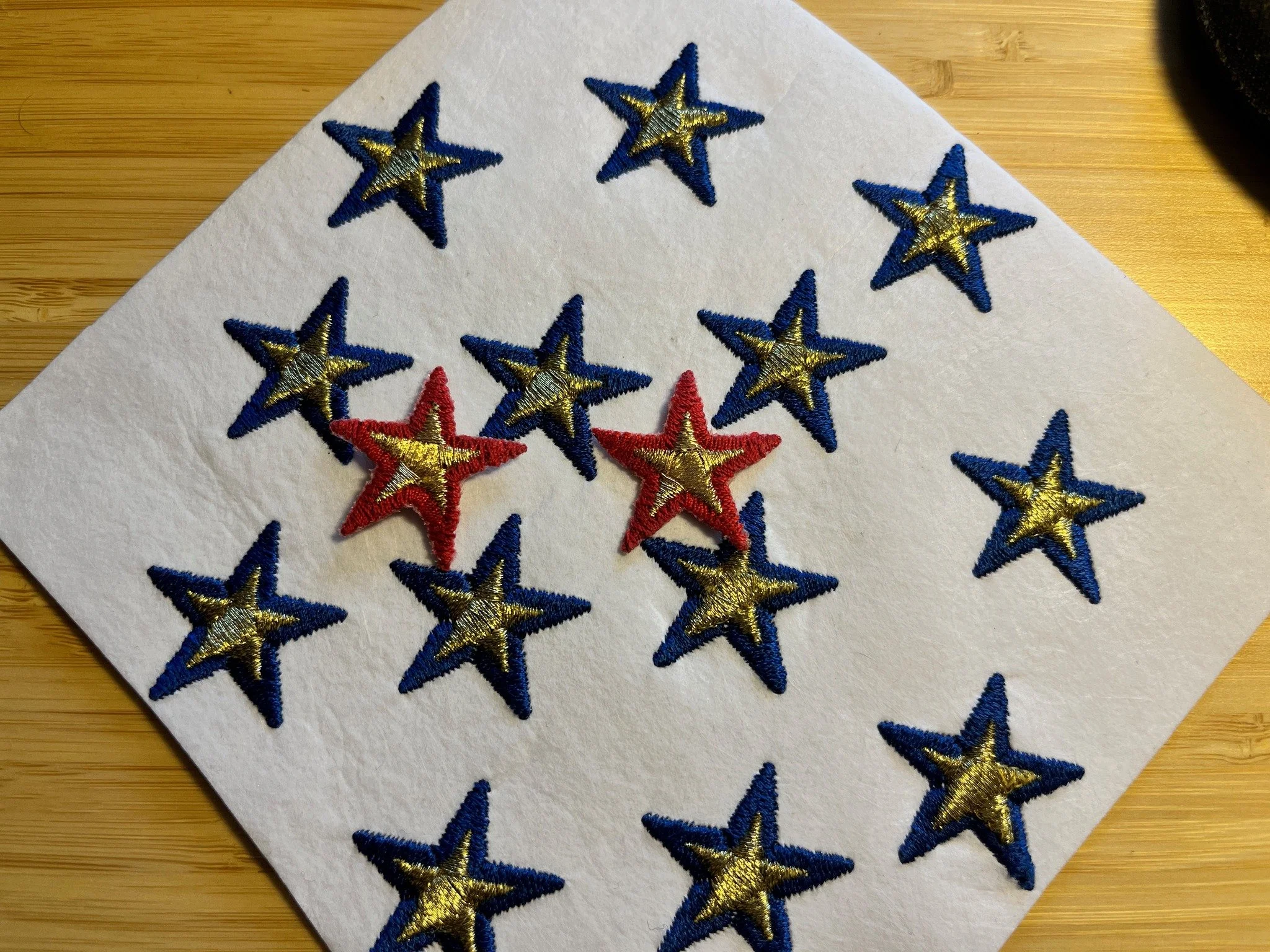
I can make the All-Star game collar stars in all the colors they were produced in.
Laser Cutting
Friends- I have now converted completely to laser cutting. While it was a huge investment, it has added precision and accuracy that was impossible with a blade cutter, especially with the new Kiss Cut lightweight lettering style. Have one minute? watch me cut a perfect set of Blue Jays numbers, ready to sew